

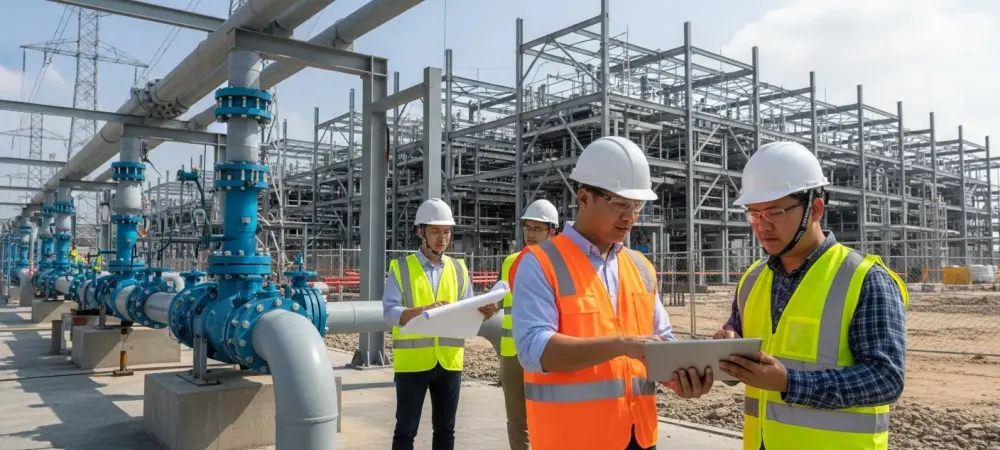
The rapid shift of global computing power from coastal hubs to the American heartland has reached a new milestone as Northwest Ohio prepares for a massive digital overhaul. Google has officially confirmed its role as the lead developer for the $500 million “Project BOSC,” a hyperscale data center located in American Township, Allen County. This move represents a calculated expansion into the Lima region, signaling a departure from traditional industrial models toward a future defined by cloud architecture and high-capacity processing. By situating this facility in the Midwest, the tech giant is effectively diversifying its geographical risk while capitalizing on the state’s affordable land and existing utility corridors.
Google Solidifies Ohio’s Status as a Global Tech Hub
The trajectory of Ohio’s technological influence has been climbing steadily since 2019, when foundational investments first took root in New Albany. What began as a localized cluster near the capital has since blossomed into a statewide network, with Google establishing significant footprints in Columbus and Lancaster. This latest venture into Allen County demonstrates a strategic pivot toward the northwest, reflecting a broader market trend where tech companies seek regions that offer a blend of political stability, business-friendly incentives, and essential infrastructure. As a result, the “Buckeye State” is no longer just a manufacturing center; it has become a critical node in the global internet backbone.
The Evolution of Google’s Infrastructure in the Buckeye State
This expansion represents a maturation of the regional tech ecosystem, moving beyond the saturated markets of “Data Center Alley.” As energy demands for artificial intelligence and cloud services soar, the necessity for massive, scalable sites has led developers to explore untapped territories like the Lima area. This move highlights the strategic importance of proximity to major transmission lines and water sources. By integrating into Northwest Ohio, Google is not merely building a warehouse for servers; it is securing the long-term viability of its services by leveraging the Midwest’s unique environmental and logistical advantages.
Economic and Structural Impacts on Allen County
A Catalyst for Regional Infrastructure: Utility Upgrades
The $500 million investment serves as a powerful engine for local modernization, extending far beyond the walls of the data center itself. To accommodate the facility’s immense requirements, approximately $50 million is being funneled into regional improvements, including the installation of roundabouts to streamline traffic flow. Most notably, a $13.6 million upgrade to the local water infrastructure is underway. This project is essential to provide the five million gallons of water needed daily for cooling systems, a move that simultaneously bolsters the township’s overall utility resilience and capacity for future industrial growth.
Strategic Community Partnerships: Financial Incentives
The fiscal framework of this development relies on a collaborative 15-year tax abatement agreement designed to balance corporate needs with community benefits. In a move that prioritizes local education, Google has committed $250,000 in annual funding to the Elida Local School District. This arrangement ensures that while the company benefits from a predictable tax environment, the local workforce of tomorrow receives direct investment. Such partnerships are becoming the gold standard for large-scale tech projects, creating a symbiotic link between global capital and local social infrastructure.
Navigating Environmental Requirements: Permitting Hurdles
Despite the economic enthusiasm, the project must clear significant regulatory hurdles related to its environmental footprint. The planned installation of 115 diesel-fueled backup generators requires strict permitting from the Ohio Environmental Protection Agency to ensure compliance with air quality standards. This phase underscores the persistent tension between the high-uptime requirements of the digital economy and the necessity of local environmental stewardship. Successfully navigating these mandates is a prerequisite for the construction phase, which is scheduled to run through 2030.
Future Trends in the Midwest’s Digital Transformation
The decentralization of data infrastructure is a trend that is expected to accelerate as artificial intelligence continues to reshape the global economy. As AI workloads require increasingly specialized hardware and high-density power configurations, the Midwest is positioned to become the primary beneficiary of this demand. The Lima facility is likely to act as a magnet for a secondary tier of service providers, ranging from specialized cooling technicians to hardware vendors. This suggests that the current investment is merely the first wave of a broader high-tech migration toward the interior of the United States.
Strategies for Regional Prosperity and Workforce Readiness
To fully capture the “trickle-down” benefits of such a massive project, local stakeholders must adopt a proactive stance toward workforce development. The years between 2026 and 2030 will see a surge in demand for construction labor and technical contractors, providing a significant boost to the hospitality and retail sectors. Educational institutions in Allen County should begin aligning their vocational programs with the specific skills required for data center operations. By building a local pipeline of talent, the region can transform a single construction project into a permanent economic engine that attracts further innovation.
A New Era for Northwest Ohio’s Economy
The arrival of the $500 million data center served as a definitive turning point for the economic identity of the Lima region. Local leaders successfully leveraged this investment to modernize aging infrastructure and secure long-term funding for public education through strategic tax agreements. As the facility moves toward full operational status by 2030, the focus shifted toward maintaining the technological momentum and ensuring that the local workforce remained competitive in a digital-first market. This project proved that even traditional industrial zones can successfully pivot into the high-tech sector when provided with the right combination of corporate partnership and regional foresight.