

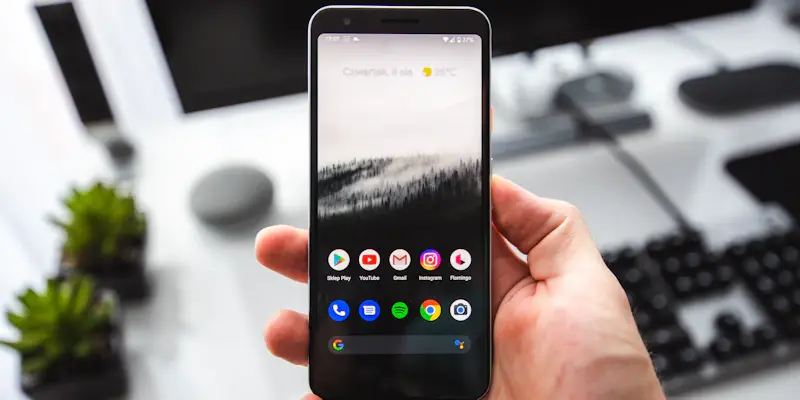
Anticipation has been building around the release of Google’s latest smartphone, the Pixel 9a, which is poised to replace the popular Pixel 8a. Technology enthusiasts and loyal Google customers alike have been eagerly awaiting this new model. The Pixel 9a will be offered in four distinct colors and will become available in 31 countries around the world, although the rollout will not occur simultaneously in all locations.
Despite Google unveiling the Pixel 9a over a week ago, the official release was delayed due to unspecified quality issues. This careful attention to quality indicates Google’s commitment to delivering a product that meets stringent standards. The pre-orders for the Pixel 9a will commence on April 10 for customers in Canada, the UK, and the US. Shortly thereafter, individuals residing in the Eurozone and Switzerland can place their pre-orders on April 14. However, those in Australia, India, Singapore, Taiwan, and Malaysia will have to wait until April 16 for their opportunity to reserve the device.
Global Distribution and Variations
The Pixel 9a will be available in numerous countries, including Austria, Belgium, Czechia, Denmark, Estonia, Finland, France, Germany, Hungary, Ireland, Italy, Latvia, Lithuania, Netherlands, Norway, Poland, Portugal, Romania, Slovakia, Slovenia, Spain, and Sweden. This phased global rollout is part of Google’s strategy to avoid past quality issues and ensure a smooth launch.
By offering the Pixel 9a in multiple colors, Google aims to cater to consumer preferences and enhance its market appeal. This indicates Google’s recognition of its diverse customer base. Although its release in Japan is uncertain, Google is assessing the best approach for that market.
The Pixel 9a isn’t just a minor upgrade; it reflects Google’s efforts to improve its products. Feedback from the Pixel 8a played a crucial role in developing the new model, driving enhancements and fixes for a better user experience. Though specific quality issues weren’t disclosed, the focus on rigorous testing highlights Google’s commitment to readiness.
Ultimately, the Pixel 9a’s release represents a major advancement in Google’s smartphone range, taking over from the Pixel 8a. With launches beginning April 10, the phased rollout addresses past quality issues while ensuring wide availability. Releasing in 31 countries and four colors highlights Google’s effort to meet a diverse global audience’s needs. The meticulous planning and quality emphasis suggest a positive reception worldwide.