

Google is competing in an increasingly crowded physical AI space alongside rivals like Runway’s GWM Worlds 2 and Fei-Fei Li’s World Labs startup. The emergence of Google DeepMind’s Genie 4 marks a significant milestone in the development of world models, which are artificial intelligence systems capable of generating interactive, real-time environments that simulate physical reality. Originally released as a research preview, Genie 4 represents a profound shift from static video generation to dynamic, responsive simulations that mirror the complexity of the tangible world. The primary objective of this technology is to bridge the gap between digital reasoning and physical action, providing a sophisticated sandbox where robots and AI agents can be rehearsed, tested, and refined before being deployed into high-stakes environments like factory floors, warehouses, or public roads. This capability is crucial for the safe and efficient integration of autonomous systems into our daily infrastructure.
Advancements in Interactive Environmental Fidelity
Genie 4 significantly builds upon the foundation of its predecessors by introducing critical upgrades that push the boundaries of digital realism. Unlike traditional video generators that produce a non-interactive output from a simple prompt, Genie 4 creates a frame-by-frame world that reacts instantly to user inputs and agent behaviors. Key technical enhancements include the integration of native audio and synchronized dialogue, which allows for more immersive and communicatively complex simulations than previously possible. For the first time, the model can generate sounds that correspond directly to physical interactions within the virtual space, such as the metallic clang of a dropped tool or the subtle hum of machinery. Furthermore, the refined physics and human kinetics ensure that the movement of characters and the interaction between various objects adhere more closely to natural laws. This reduction in the uncanny nature of AI motion makes the platform a viable tool for studying authentic behaviors.
Beyond basic movement, the system offers unprecedented environmental control through natural-language commands, allowing for on-the-fly modifications. This means that a developer can alter a simulation mid-stream by simply typing instructions, such as triggering a flash flood or adding a series of complex physical obstacles to a robot’s path. When this technology is paired with advanced robotics models, such as those in the Gemini family, it creates an ecosystem where an AI agent can decompose a complex task like sorting inventory into specific, manageable steps. The agent then monitors the generated scene for changes and adjusts its plan in real-time as the environment shifts or new challenges arise. Such high-level responsiveness is essential for training autonomous systems to handle the inherent unpredictability of the physical world. This integration allows for a level of experimentation that was once confined to the most expensive and rigid proprietary simulation software.
Industrial Impact and Risk Mitigation Strategies
The enterprise sector, particularly those industries heavily involved in robotics and autonomous systems, stands to benefit most from these rapid developments. The core value proposition of Genie 4 lies in its ability to facilitate rapid prototyping and risk mitigation in a controlled digital space. Traditionally, training a humanoid robot or an autonomous vehicle requires expensive physical setups and carries the risk of damaging costly hardware during the learning phase. With Genie 4, developers can expose their software to an infinite variety of layouts, lighting conditions, and potential hazards without the financial burden or physical danger of real-world recreation. This approach allows companies to stress-test their autonomous navigation algorithms in virtual blizzards or crowded urban environments before a single motor is ever turned on. By identifying and correcting failure points in a simulated environment, organizations can significantly accelerate their time-to-market while ensuring a higher standard of safety.
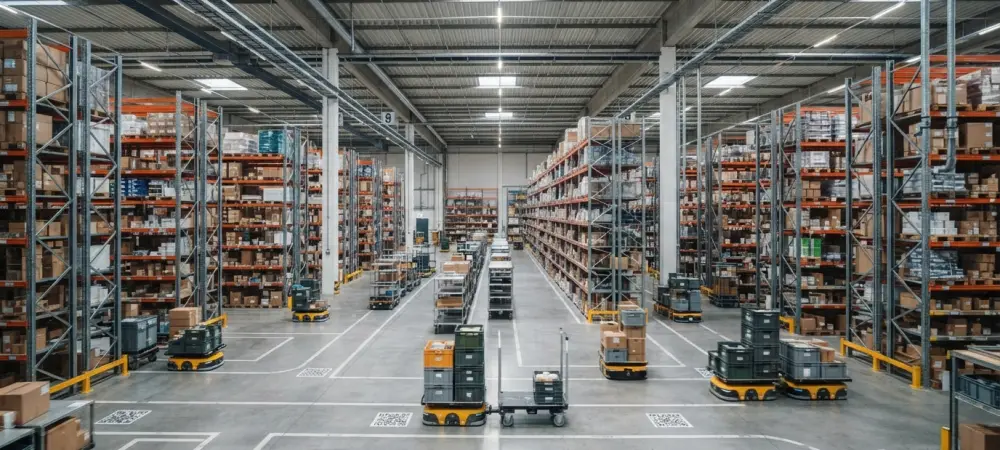
Beyond the scope of physical robotics, this technology enables the creation of interactive sets for media production and the simulation of warehouse workflows to optimize efficiency. For example, a logistics company can use Genie 4 to simulate a complete warehouse redesign and test the efficiency of different floor plans before moving a single piece of equipment. This type of digital twin technology allows for a physicality that standard text-based AI models lack, enabling businesses to visualize the consequences of complex decisions in a three-dimensional space. Furthermore, agentic AI development is enhanced as these digital worlds provide a training ground where agents can learn to interact with objects and navigate barriers. The ability to simulate high-stakes scenarios, such as emergency responses in industrial settings, provides a unique advantage for safety training. Ultimately, the integration of world models into corporate workflows represents a move toward a more data-driven approach to assets.
Technical Challenges and Operational Validation
Despite the impressive technical strides demonstrated by Genie 4, significant hurdles remain that prevent it from being a universal solution for engineering-grade tasks. The most prominent issue identified by researchers is the reality gap, which refers to the persistent discrepancy between a simulated environment and the actual physical world. One major challenge is visual drift, where details within the simulation begin to lose their structural integrity or logical consistency over long-running sessions. For instance, the dimensions of a room might subtly shift or an object might disappear and reappear in a different location after a complex series of prompt changes. For a simulation to be truly useful for high-precision engineering, it must maintain absolute stability and consistency. Currently, while the generative aspects are breathtaking, they do not yet offer the rigorous architectural reliability required for manufacturing processes where even a millimeter of deviation can lead to failure in a real-world setting.
The race to define physical AI became increasingly competitive, with several major players vying for dominance in the world-model sector. Organizations were advised to implement rigorous internal testing protocols to bridge the reality gap before deploying AI-driven systems into public or industrial spaces. Leaders in the field prioritized the integration of world models as a supplement to, rather than a total replacement for, traditional engineering practices. This balanced approach allowed for rapid innovation while maintaining the high safety standards required for heavy industry. By treating these virtual sandboxes as a primary training ground, developers successfully reduced the failure rates of autonomous units in the field. Ultimately, the proactive adoption of interactive simulations established a new benchmark for how enterprises prepared their robotic workforces for the complexities of the physical world. Forward-thinking companies moved beyond simple observation to active validation, ensuring models met operational requirements.