

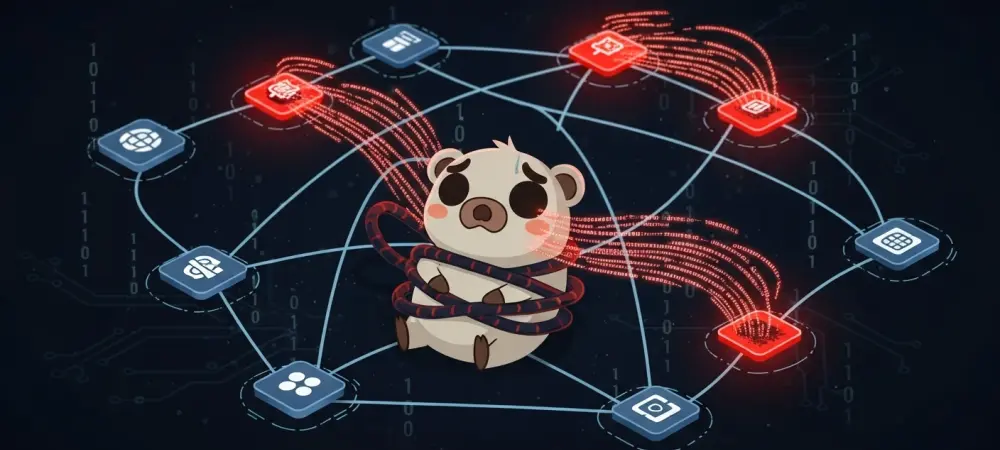
The modern software supply chain operates on a delicate architecture of inherited trust where a single hijacked dependency can bypass the most rigorous perimeter defenses in seconds. Within this framework, the Go programming language has emerged as a cornerstone for cloud-native engineering, offering unparalleled efficiency for microservices and DevOps automation. Its dependency management relies on the go.mod and go.sum files, which are intended to ensure version consistency and cryptographic integrity across distributed environments. By pinning specific versions and recording checksums, the ecosystem attempts to create a reproducible and secure build process that minimizes the risks associated with external code.
However, the very infrastructure that facilitates this ease of use also introduces centralized points of failure. The Go public proxy and the pkg.go.dev registry serve as the primary distribution hubs for the community, creating a massive repository of shared logic. While these tools streamline development, they also provide a high-leverage surface for malicious actors. If a compromised module successfully enters these registries, it can propagate through thousands of downstream applications before security teams even identify a breach. This systemic reliance on shared modules necessitates a deep examination of how trust is established and where the current verification methods might falter under professional scrutiny.
Technical Mechanics of Go Supply Chain Attacks
Tactical Impersonation: The Strategy of Dependency Confusion
Attackers frequently exploit the human element of development by deploying “look-alike” modules that mimic legitimate, highly trusted libraries. A prime example occurred with the impersonation of the foundational golang.org/x/crypto library through a fraudulent version titled xinfeisoft/crypto. By mirroring the internal directory structure and naming conventions of the official source, the attacker capitalized on the high volume of traffic directed toward cryptographic tools. This tactic relies on the Go module resolution process, where developers or automated scripts might inadvertently pull a malicious fork if the naming is sufficiently deceptive or if the resolution path is manipulated to prioritize a rogue repository.
The significance of this impersonation lies in the subtle redirection of the developer’s intent. Unlike traditional malware that requires a user to execute an unknown file, supply chain attacks integrate directly into the build environment. When a developer imports what they believe is a standard utility, they are effectively inviting the attacker to execute code with the same privileges as the application itself. This method is particularly effective because it bypasses many signature-based detection systems that are trained to look for external threats rather than internal library modifications.
Strategic Function Hooking: The Mechanics of Credential Harvesting
Once a malicious module is integrated, the focus shifts to high-value targets within the code, such as the ReadPassword function in the ssh/terminal package. By modifying these specific subpackages, attackers can intercept plaintext credentials at the exact moment they are entered by a user. This strategic hooking of critical functions like bcrypt or argon2 allows for the exfiltration of passwords before they are ever hashed or encrypted. Because the interception happens within the memory space of a legitimate process, it leaves almost no trace in standard system logs.
The technical execution of these hooks often involves capturing the input from interactive sessions and storing it in inconspicuous locations, such as hidden lock files in common system directories. This data is then quietly exfiltrated to external endpoints during the application’s routine network activity. This approach is far more sophisticated than simple data theft, as it targets the fundamental trust between a user and a secure terminal. By compromising the tools used to manage security, the attacker gains a persistent foothold that can be used to pivot deeper into the infrastructure.
Emerging Trends in Developer-Targeted Threats
The focus of cyber campaigns has shifted toward the upstream development environment, targeting CI/CD pipelines rather than end-users. This evolution marks a transition from wide-net phishing to high-precision engineering compromises. Attackers now deploy dormant malware designed to remain completely silent during automated sandbox testing. These payloads only activate when they detect live developer interaction or specific production environment variables. This selective execution ensures that automated security scans return a clean bill of health while the actual threat remains embedded in the source code.
Moreover, modern threats utilize multi-stage infection chains that leverage legitimate platforms like GitHub for dynamic command-and-control redirection. By hosting staging pointers or configuration files on reputable domains, attackers can change their exfiltration targets without modifying the malicious module itself. This agility makes it incredibly difficult for security teams to block malicious traffic permanently. The use of legitimate infrastructure as a staging ground effectively masks the attacker’s footprint, blending malicious signals with the massive volume of routine developer traffic.
Real-World Applications and Case Studies
In the realm of cloud infrastructure and financial services, where Go is the dominant language, the integrity of the supply chain is a critical operational requirement. Recent investigations revealed the deployment of the Rekoobe backdoor within compromised Go modules, a tool historically linked to advanced persistent threat groups. Rekoobe is particularly dangerous because it facilitates remote command execution while using custom encryption protocols to bypass deep packet inspection. In Linux-based server environments, this allows an attacker to maintain a stealthy presence while harvesting sensitive data from high-traffic production nodes.
The deployment of such sophisticated backdoors demonstrates a high level of technical maturity among threat actors. For example, during the infection of Linux hosts, stagers often disable local firewalls and inject unauthorized keys into the authorized_keys file. This ensures that even if the initial vulnerability is patched, the attacker retains a back door into the system. The cybersecurity and cloud hosting sectors have responded by increasing their focus on behavioral monitoring, but the sheer complexity of these delivery mechanisms continues to challenge existing defensive frameworks.
Challenges and Defensive Limitations
Auditing deep dependency trees remains one of the most significant hurdles for the Go community. As projects grow, they often rely on hundreds of transitive dependencies, many of which are several layers removed from the original developer’s direct oversight. Manually verifying the source code of every update is practically impossible for most teams, creating a gap that attackers are eager to exploit. Furthermore, detecting custom-encrypted traffic from backdoors like Rekoobe requires advanced network analysis that many organizations are not equipped to perform at scale.
Regulatory and market pressures also complicate the security landscape. There is a constant tension between the demand for rapid development and the overhead required for thorough security auditing. While tools like the Go vulnerability database and module mirroring have made progress, they often rely on identifying known threats after they have already been reported. This reactive posture is inherently limited against zero-day supply chain attacks that utilize entirely new or obfuscated code patterns.
Future Outlook for Supply Chain Integrity
The future of Go security will likely involve a transition toward more automated code analysis and the implementation of robust transparency logs. These logs would provide a verifiable history of module changes, making it much harder for attackers to slip malicious code into the registry unnoticed. Additionally, the adoption of “Zero Trust” principles within the development lifecycle is expected to gain momentum. This approach treats every dependency as untrusted until its integrity is proven, requiring more rigorous verification before a module is allowed into a production build.
We may also see the rise of behavioral monitoring tools specifically tailored for the Go runtime. These tools could identify anomalous patterns, such as a cryptographic library suddenly attempting to open a network socket or write to a hidden system file. By shifting from static analysis to real-time behavioral observation, security teams can detect threats based on their actions rather than their signatures. This proactive stance will be essential as attackers continue to refine their methods for bypassing traditional defenses.
Summary and Assessment
The technical sophistication of modern supply chain attacks has fundamentally altered the security requirements for Go development. The use of tactical impersonation and strategic function hooking proved that even the most trusted libraries can become vectors for compromise. It was clear that the industry-wide reliance on public registries created a systemic vulnerability that required more than just automated checksums to solve. The integration of advanced backdoors like Rekoobe showed that threat actors were willing to invest significant resources into compromising the upstream development process. Defensive strategies had to evolve to meet these challenges by prioritizing transparency and behavioral analysis. The lessons learned from these incidents highlighted the necessity of maintaining a proactive posture that goes beyond simple dependency management. While the Go ecosystem offered powerful tools for building modern infrastructure, it also required a renewed commitment to security at every level of the development lifecycle. Ultimately, the survival of secure software development depended on continuous collaboration and the willingness to treat supply chain integrity as a foundational engineering discipline.