

The sheer magnitude of the global investment in artificial intelligence has transformed from a speculative venture into the most expansive physical construction project in the history of human civilization. With a projected allocation of roughly $2.7 trillion in 2026 alone, this expenditure represents nearly a fifty percent increase from previous cycles. This surge is not merely a financial statistic but a fundamental restructuring of the industrial world. It marks a departure from the digital-first expansions of the past, focusing instead on a massive, tangible foundation required to support a new era of cognitive computing.
This evolution is rooted in the convergence of massive data sets and the raw energy required to process them. As the technological landscape shifts toward decentralized but highly integrated intelligence, the underlying infrastructure must adapt to handle workloads that were once considered impossible. This context establishes AI not as a simple software add-on, but as a utility-scale requirement comparable to the national power grids or the interstate highway systems of the previous century.
The Foundation of Modern Intelligence: An Introduction to AI Infrastructure
The current state of AI infrastructure relies on a symbiotic relationship between silicon and electricity. At its core, the technology involves a tiered architecture where data moves from storage to high-speed memory and finally to processing units designed for massive parallelism. This setup allows for the training of Large Language Models and the execution of complex inference tasks that define modern automated services. Unlike traditional server architectures, these systems are built to prioritize throughput over individual instruction speed.
The significance of this undertaking lies in its role as a universal enabler for every other sector. By providing a standardized platform for intelligence, the infrastructure allows industries ranging from finance to healthcare to operate with a degree of predictive accuracy that was previously unattainable. Consequently, the global technology sector is no longer just selling code; it is selling the physical capacity to think at scale, necessitating a total reimagining of how digital resources are deployed and managed.
Critical Pillars of the Global AI Stack
High-Performance Hardware and Specialized Compute
The primary driver of performance in the current stack is the shift toward specialized chips that deviate from the general-purpose designs of the past decade. These AI-optimized processors are engineered specifically to handle matrix multiplication, which is the mathematical heartbeat of neural networks. By optimizing hardware at the transistor level for these specific tasks, manufacturers have achieved performance gains that far outpace the traditional trajectory of Moore’s Law.
These servers require high-bandwidth memory to prevent bottlenecks during the massive data transfers required by sophisticated models. Without this specialized compute layer, the latency involved in modern AI applications would render them unusable for real-time decision-making. Therefore, the hardware is not just a component; it is the physical constraint that determines the boundaries of what artificial intelligence can actually achieve in a commercial environment.
Next-Generation Data Centers and Utility Scaling
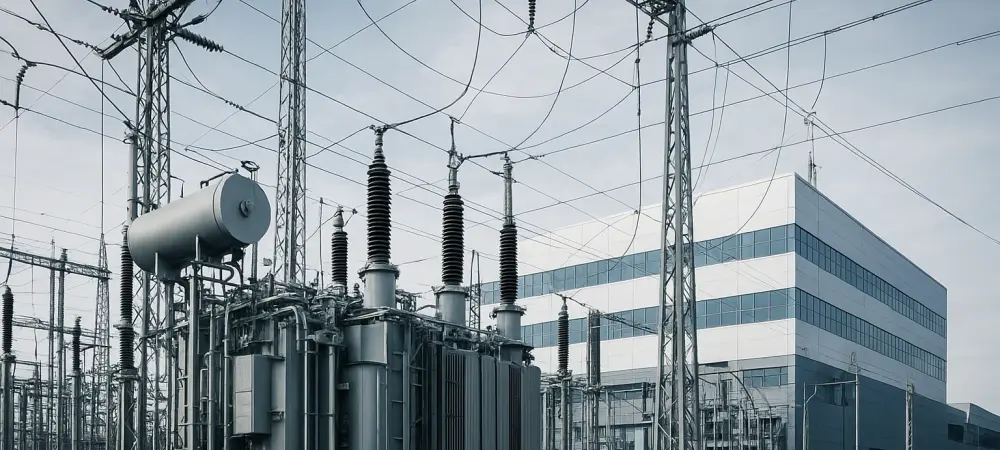
Building the home for these processors requires a radical departure from traditional data center design. Modern facilities must now manage heat densities that would have melted previous generations of hardware, leading to the widespread adoption of liquid cooling and advanced thermal management systems. These physical requirements have made data center placement a strategic geopolitical issue, as access to stable, high-capacity power utilities becomes the most valuable resource in the tech economy.
Moreover, the physical footprint of these centers is expanding to accommodate the massive energy draws required for continuous operation. This utility scaling has forced a closer integration between the technology sector and the energy industry. As the demand for reliable power grows, the expansion of the physical infrastructure must keep pace with the mathematical complexity of the models, ensuring that the growth of intelligence is not throttled by the limitations of the local electrical grid.
Current Market Dynamics and the Supplier-Led Boom
A significant shift in the market is currently visible as major technology providers now account for roughly thirty-five percent of all global spending on AI infrastructure. This is a supplier-led phenomenon where the builders of the technology are also its primary investors, creating a cycle of rapid expansion. Unlike the early days of cloud computing, where adoption was driven by customer demand, the current boom is characterized by “embedded AI,” where intelligence capabilities are integrated directly into the core layers of standard software suites.
This trend makes AI costs an unavoidable part of traditional enterprise IT budgets. Companies are finding that their standard subscriptions for productivity software or database management now include a premium for AI features, whether they actively use them or not. Consequently, the financial burden of this $2.7 trillion build-out is being distributed across the global economy through higher software costs and increased service fees, making the infrastructure a non-negotiable part of modern business operations.
Real-World Applications and Enterprise Integration
The practical application of this massive infrastructure is most evident in the rise of “agentic” layers within established enterprise platforms. Companies like Salesforce and Broadcom are moving beyond simple chatbots to create autonomous agents that can navigate complex workflows and execute tasks with minimal human intervention. These implementations demonstrate that the value of AI lies in its ability to act as a skilled digital worker rather than just a sophisticated search engine.
Organizations are increasingly moving away from experimental, theoretical models toward practical, skill-based integrations that solve specific operational problems. By focusing on these tactical use cases, enterprises can justify the rising costs of the underlying infrastructure. This transition from “fancy tech” to “functional tool” is essential for the long-term sustainability of the sector, as it allows businesses to build the necessary internal expertise to manage increasingly complex automated systems.
Strategic Hurdles and Implementation Risks
Despite the massive capital influx, the path forward is not without significant risks, particularly regarding the difficulty of demonstrating a clear return on investment. The high cost of entry means that many organizations are investing heavily without a guaranteed path to profitability. This financial risk is compounded by the fact that the technology is evolving so rapidly that hardware purchased today may become obsolete within a relatively short timeframe, leading to a cycle of perpetual expenditure.
To mitigate these risks, many savvy operators are adopting a strategy of “tactical adoption.” Instead of attempting a total organizational overhaul, they are building internal “muscle memory” through smaller, high-impact projects. This approach allows them to develop the necessary skills and data governance frameworks without the catastrophic financial consequences of a failed large-scale deployment. Managing these implementation risks is now a primary responsibility for modern technology leadership.
Future Outlook: The Evolution of Scalable Intelligence
The trajectory of this technology suggests a transition from a period of frantic infrastructure construction to an era of refined value creation. As the $2.7 trillion base of hardware and data centers matures, the focus will likely shift toward improving the efficiency of these systems. Breakthroughs in model compression and energy-efficient processing will be necessary to ensure that the infrastructure remains economically viable as it scales to serve billions of users across every imaginable industry.
In the coming years, the impact of this infrastructure will likely be measured by its contribution to global productivity. The sheer scale of the current build-out ensures that intelligence will become a ubiquitous utility, similar to how the internet transformed communication. While the initial costs are staggering, the long-term potential for societal advancement through automated problem-solving and enhanced scientific research remains the ultimate goal of this unprecedented technological endeavor.
Conclusion: Assessment of the Global AI Infrastructure
The review of the global AI landscape confirmed that the massive financial commitment was a necessary precursor to the current era of intelligence. The analysis showed that the shift from intentional investment to unavoidable embedded costs changed the fundamental nature of enterprise IT subscriptions. While the physical infrastructure reached a state of unprecedented scale, the focus moved toward extracting tangible value from these resource-heavy systems. Organizations that succeeded were those that prioritized skill-based implementation over sheer spending volume, effectively turning expensive hardware into a functional business asset.
Future strategies should prioritize the development of internal data governance and energy-efficient operational models to offset the rising costs of this mandatory infrastructure. The transition from a supplier-led boom to an enterprise-driven value era will require a more disciplined approach to resource allocation. As the global economy became increasingly reliant on these cognitive utilities, the emphasis shifted toward sustainable scaling rather than just raw performance. Ultimately, the successful integration of these systems depended on the ability to translate massive compute power into specific, actionable human outcomes.