

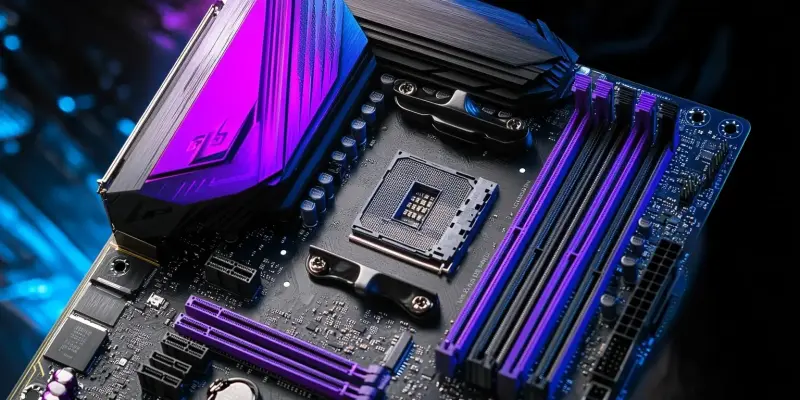
GIGABYTE, a leading manufacturer of motherboards and hardware components, has unveiled an impressive lineup of AMD B850 motherboards with full support for PCIe 5.0. This marks a significant advancement in connectivity technology as it coincides with AMD’s release of the Ryzen 9000 series processors and the X870 and X870E motherboards. The B850 motherboards are intended to offer next-generation performance features while remaining budget-friendly, catering to mainstream users seeking affordable options.
The Importance of PCIe 5.0
Unprecedented Data Transfer Speeds
PCIe 5.0, or Peripheral Component Interconnect Express 5.0, represents the fifth generation of the PCI Express standard. This iteration’s key advantage lies in its doubled data transfer speed, capable of up to 32 Giga transfers per second per lane compared to PCIe 4.0’s 16 GT/s. With PCIe 5.0, a x16 connection can offer up to 64GB/s, ensuring high performance even for entry-level and mid-range components. This substantial increase in data transfer speeds opens new horizons for performance, making PCIe 5.0 a transformative technology for the future of computing.
The significance of these higher speeds manifests in various applications where large volumes of data need to be transferred quickly. It is crucial for emerging technologies that demand increased bandwidth, such as advanced AI algorithms, 8K video processing, and complex simulation software. Furthermore, developers and enthusiasts can expect smoother gameplay and faster load times in graphically intensive games, showcasing PCIe 5.0’s utility beyond professional and enterprise environments into mainstream personal computing.
Impact on Graphics Cards and NVMe SSDs
The importance of PCIe 5.0 becomes particularly evident when assessing its impact on graphics cards and NVMe SSDs. Graphics cards, vital for rendering high-definition visuals quickly and efficiently, benefit enormously from the PCIe 5.0 x16 connection, which ensures the highest possible data transfer rates and reduces latency significantly. This, in turn, results in more fluid and responsive performance in demanding applications, including blockbuster gaming titles and resource-intensive creative software.
On the storage front, PCIe 5.0 SSDs such as the AORUS Gen5 14000 are pushing the boundaries of sequential transfer rates, thereby enhancing system performance in tasks involving large data transfers. This includes activities like artificial intelligence model training and high-resolution video editing. With PCIe 5.0, users can experience faster boot times, reduced latency, and quicker file transfers, contributing to a more efficient and seamless computing experience. The increased bandwidth also supports the forthcoming DirectStorage API from Microsoft, which aims to load games and applications directly from the storage drive, further reducing loading times and enhancing user experience.
GIGABYTE’s B850 Motherboard Lineup
Mainstream and Budget-Friendly Options
GIGABYTE’s B850 motherboard lineup includes models like the AORUS Elite WIFI7, EAGLE WIFI6E, and B850M DS3H, bringing advanced features within reach of mainstream and budget-conscious users. Despite being budget options, these motherboards incorporate various DIY-friendly features aimed at enhancing user experience and simplifying the assembly process. By integrating cutting-edge technology with affordability, GIGABYTE addresses the needs of average users looking for powerful yet accessible upgrade paths.
Despite being more economical, the B850 motherboards do not compromise on performance. They are strategically designed to cater to a wide audience, from gamers seeking enhanced graphics performance to content creators who require efficient data transfer capabilities. The B850 series brings high-end technology to the masses without necessitating a high-end price tag, reinforcing GIGABYTE’s reputation for delivering quality and value in the tech marketplace.
DIY-Friendly Features
A hallmark of the B850 lineup is its DIY-friendly features, exemplified by models like the AORUS Elite WIFI7. This motherboard offers the M.2 EZ-Latch Plus mechanism, allowing for the easy installation of NVMe SSDs without the need for screws. The simplification of this process alleviates common frustrations during setups, particularly for users who may not be seasoned technicians. The PCIe EZ-Latch Plus also stands out, enabling users to release the graphics card effortlessly, thus facilitating system upgrades and modifications with minimal hassle.
Wi-Fi connectivity within these motherboards receives a significant upgrade through the introduction of the Wi-Fi EZ-Plug. This feature simplifies the attachment of the Wi-Fi antenna to the motherboard’s rear, enhancing user convenience and ensuring robust wireless connectivity. These thoughtful design elements underscore GIGABYTE’s focus on improving the user experience, making assembly, upgrades, and maintenance more accessible to casual and advanced users alike.
Future-Proofing and Longevity
Backward Compatibility
One of the significant advantages of PCIe 5.0 is its backward compatibility. This ensures that older devices can function in PCIe 5.0 slots, albeit at their maximum supported speeds. Users with PCIe 3.0 or PCIe 4.0 graphics cards or SSDs can continue using their existing components while benefiting from the enhanced future readiness of PCIe 5.0 slots. This flexibility allows for gradual system upgrades, minimizing the need for complete overhauls and making the technology adoption process smoother and more cost-effective.
Backward compatibility also means greater investment protection for users. By ensuring that older hardware remains operational and relevant in new systems, GIGABYTE supports users’ investments in their technology, creating a seamless pathway for incremental upgrades. This strategic approach helps users extend the lifespan of their existing components while gradually incorporating newer, more advanced technologies.
Upgrade Path and Relevance
Looking ahead, GIGABYTE’s B850 motherboards offer a promising upgrade path given AMD’s commitment to supporting the AM5 socket for at least the next couple of years. This future-proofing aspect is crucial as it allows users to plan for future upgrades without worrying about immediate obsolescence. The support for the latest and upcoming PCIe 5.0 graphics cards, like the NVIDIA RTX 5090, and potential adoption of PCIe 5.0 SSDs guarantee that the B850 motherboards will remain relevant and capable of high performance for years to come.
Anticipating the advancements in the PC industry, especially with the expected arrival of PCIe 6.0 several years away, ensures that current adoption of PCIe 5.0 places GIGABYTE B850 motherboards advantageously. Their design principles underscore longevity and relevance, reflecting a forward-thinking approach that aligns with industry trends. Through thoughtful engineering and cutting-edge technology integration, the B850 series offers users a robust foundation for building systems that can adapt and perform consistently in an evolving technology landscape.
User Experience and Connectivity
Emphasis on User-Friendly Features
GIGABYTE’s emphasis on user-friendly features such as the M.2 EZ-Latch Plus and PCIe EZ-Latch Plus mechanisms, combined with impressive connectivity options and ample expansion capabilities, ensures that their B850 motherboards can support not only the current generation but also forthcoming advancements in hardware technology. This approach markedly enhances the overall user experience, making it easier for users to build and upgrade their systems while enjoying the benefits of next-generation performance features.
Wi-Fi connectivity improvements, such as the introduction of Wi-Fi EZ-Plug, illustrate GIGABYTE’s proactive stance towards integrating innovative and practical solutions. The B850 series also emphasizes expanded I/O capabilities, catering to varied connectivity needs, from high-speed USB ports to advanced audio interfaces. These thoughtful additions significantly enhance everyday usability, ensuring that users enjoy a hassle-free and highly functional computing experience.
Affordable Cutting-Edge Technology
GIGABYTE, a prominent name in the motherboard and hardware components industry, has introduced a new line of AMD B850 motherboards that fully support PCIe 5.0. This launch is particularly noteworthy as it aligns with AMD’s release of the Ryzen 9000 series processors coupled with the X870 and X870E motherboards. The new B850 motherboards aim to deliver next-generation performance while maintaining affordability, making them ideal for mainstream users who want high efficiency without breaking the bank.
This innovative addition addresses the ever-evolving demands for faster, more reliable, and higher-performing computing capabilities. PCIe 5.0 support provides enhanced data transfer speeds and better connectivity, which are critical for modern applications, whether for gaming, professional work, or general use. Furthermore, GIGABYTE’s focus on affordability ensures that these advanced motherboards are accessible to a broader audience, democratizing high-performance computing.
By integrating cutting-edge technology with the new B850 series, GIGABYTE not only keeps pace with the swiftly changing tech landscape but also sets new standards for value and performance in the market. This move underscores the company’s commitment to innovation and its understanding of consumer needs, ensuring that users get the best possible experience without compromising on quality or cost.