

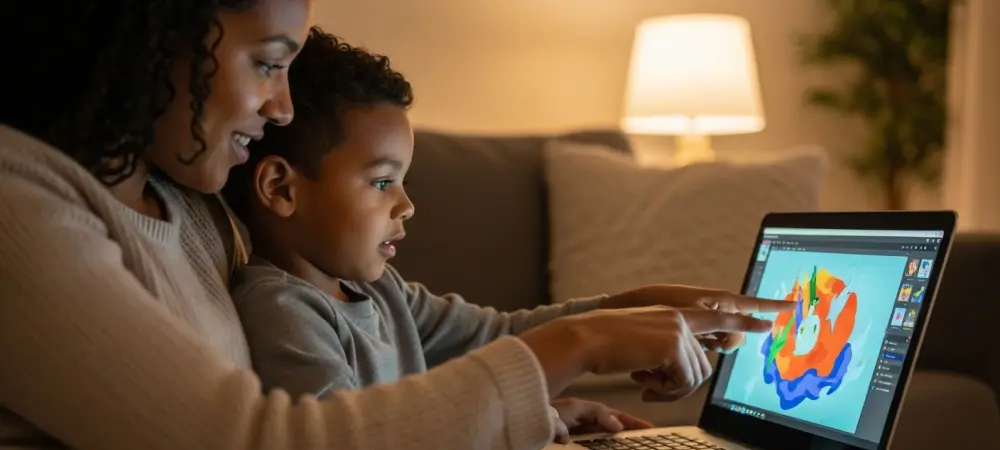
The conversation surrounding artificial intelligence has long been dominated by its capacity to revolutionize the workplace, but its true transformative power is quietly unfolding far from the office, embedding itself into the fabric of our personal lives in profoundly creative and unexpected ways. As these advanced systems become more accessible, their role is shifting from that of a digital intern to a multifaceted partner for imagination, leisure, and personal discovery.
Beyond the 9-to-5 Uncovering the Untapped Potential of AI in Everyday Life
Most discussions about generative AI center on its utility as a productivity engine, a powerful tool for drafting emails, summarizing reports, or writing code. This perspective, while accurate, captures only a narrow slice of its capabilities. The true significance of this technology emerges when it is viewed not just as a tool for efficiency but as a versatile creativity booster, capable of transforming mundane routines and unlocking new avenues for personal expression. Viewing AI through this wider lens reveals its potential to enrich our lives beyond professional obligations.
This exploration will move past conventional applications to uncover the more imaginative and unconventional roles AI can play. From serving as a personal storyteller for a child to acting as a culinary assistant in the kitchen, these systems are breaking free from their initial programming. The journey ahead reveals how AI is becoming an instrument for generating personalized entertainment, sharpening intellectual debates, and even offering novel forms of introspection, demonstrating that its most exciting applications may have little to do with work at all.
From Digital Assistant to Creative Partner How AI Is Reshaping Personal Pursuits
Crafting Personal Narratives AI as the Modern Storyteller and Oracle
The art of storytelling is being redefined as generative AI offers the ability to craft deeply personal narratives on demand. For parents, this technology can become an endless source of unique bedtime stories. By inputting details about a child’s day, their friends, and their favorite toys, AI can generate magical tales that turn ordinary events into grand adventures, making the child the hero of their own personalized saga. This moves the technology from a simple text generator to a co-creator of cherished family moments.
In a more surprising turn, many are exploring AI’s capacity for divination and personal insight. Drawing upon vast datasets of mythology, astrology, and symbolic systems like tarot, these models can produce interpretations and readings that feel remarkably personal. Users can ask for a tarot spread or an astrological forecast and receive detailed, context-aware responses. This application highlights AI’s ability to synthesize complex, abstract information into coherent, human-relatable wisdom.
This intersection of technology and ancient practices raises fascinating questions about the nature of wisdom and authenticity. While the logical conclusion is that an AI cannot possess genuine foresight, the value may lie elsewhere. The psychological impact of receiving personalized guidance—even from an algorithm—can be powerful, offering a mirror for introspection and a novel form of entertainment. The debate then shifts from whether the insights are “real” to how they serve the human need for meaning and reflection in a digital age.
Revolutionizing the Home Your Kitchen’s New AI-Powered Sous Chef
Generative AI is making a practical and immediate impact in the home, particularly in the kitchen. It can act as a personal sous chef, capable of ending the daily “what to cook” dilemma. By simply listing or taking a photo of available ingredients, an individual can receive a custom-generated recipe tailored to their dietary restrictions, culinary preferences, and cooking skill level. This turns a cluttered refrigerator into a source of inspiration rather than frustration.
This functionality marks a significant evolution in how AI interacts with the physical world. Instead of merely processing abstract data, it becomes a direct problem-solver for a common domestic challenge. The AI is not just recalling existing recipes; it is synthesizing information about food pairings, cooking techniques, and nutritional balance to create something new and useful. This practical application demonstrates a shift toward AI as an indispensable household utility.
The potential for further innovation is immense, particularly with the rise of smart homes. The integration of this AI with connected kitchen appliances could create a seamless culinary experience. An AI could communicate directly with a smart refrigerator to know what ingredients are on hand, preheat a smart oven to the correct temperature, and guide a user step-by-step through a recipe, streamlining the entire process from planning to execution.
Engineering Entertainment The Dawn of User-Created Digital Playgrounds
The world of entertainment is being reshaped by disruptive tools that empower anyone to become a creator. Specialized platforms like SlotGPT enable users to design and generate entire games from simple text prompts, turning a casual idea into an interactive experience. This democratization of game development allows individuals to craft personalized digital playgrounds based on unique themes, characters, and rules, all without writing a single line of code.
This trend signals a broader shift toward AI-driven user-generated content, which has the potential to decentralize the entertainment industry. For decades, creating compelling digital experiences was the domain of large studios with extensive resources and specialized teams. Now, generative AI is lowering that barrier to entry, allowing for an explosion of creativity from a much wider pool of creators with diverse visions and stories to tell.
This movement directly challenges the long-held assumption that building complex digital worlds requires deep technical expertise. As these tools become more sophisticated, the focus shifts from technical skill to creative vision. The primary requirement for creation is no longer programming knowledge but the ability to articulate an idea clearly. This paradigm shift promises a future where entertainment is not just consumed but is actively and continuously co-created by its audience.
Mastering the Art of Persuasion How AI Can Settle Debates and Sharpen Your Arguments
Beyond creative and practical uses, AI is emerging as a powerful tool for intellectual sparring and persuasion. A unique application involves using it to formulate compelling arguments for highly subjective debates, such as determining the best film in a genre or the greatest athlete of a generation. By providing the AI with both sides of a friendly dispute, it can analyze the positions and construct a well-reasoned case designed to be persuasive.
A comparative analysis of this approach reveals a fascinating interplay between machine logic and human emotion. An AI can generate an argument built on a foundation of facts, historical context, and logical fallacies to avoid, offering a structured and coherent viewpoint. In contrast, human reasoning in a casual debate is often colored by personal bias, emotional attachment, and anecdotal evidence. The AI-generated argument can serve as a formidable supplement, grounding a passionate stance in objective reasoning.
However, this capability also introduces important ethical considerations. Using AI to reinforce a pre-existing belief raises questions about the line between strengthening a viewpoint and creating a personalized echo chamber. While it can be a tool for sharpening one’s thinking and understanding opposing views, there is a risk of it being used solely to validate one’s own perspective, thereby diminishing the potential for genuine dialogue and mutual understanding.
Shifting Your Mindset Practical Steps to Harness AI’s Creative Power
The key takeaway is that generative AI’s true strength is found in its profound versatility and its capacity to serve as a powerful amplifier for personal expression. Moving beyond its function as a mere productivity tool allows for the discovery of a partner in creativity, problem-solving, and play. Its ability to generate stories, recipes, games, and even arguments from simple prompts underscores its role as a flexible instrument limited only by the user’s imagination. To unlock this vast potential, it is essential to approach AI with a playful and experimental attitude. Instead of focusing solely on task-oriented commands, one can explore its capabilities by posing imaginative “what if” scenarios. This could involve asking it to design a fantasy vacation itinerary, invent a new board game, or write a poem in the style of a favorite author. This mindset transforms the interaction from a transaction into a creative collaboration.
Readers are encouraged to try these applications and see how they can turn abstract ideas into tangible outcomes. Experimenting with AI as a storyteller, a chef, or a debate partner is more than just a novelty; it is an exercise in expanding one’s own creative boundaries. By actively engaging with these tools, users can discover new ways to enrich their daily lives and bring their most inventive concepts to fruition.
The Next Chapter Embracing AI as an Extension of Human Imagination
It became clear that generative AI was fundamentally a tool for life enrichment, not just task completion. Its applications in storytelling, culinary arts, and personalized entertainment demonstrated a capacity to enhance human experience in meaningful and intimate ways. This perspective reframed the technology as less of a cold, calculating machine and more of an accessible extension of our own imaginative faculties.
The horizon of possibilities expanded as the technology continued to evolve in unexpected directions. The integration of AI into everyday objects and routines suggested a future where the line between digital assistance and creative partnership would become increasingly blurred. The evolution pointed not toward a replacement of human ingenuity but toward its augmentation, opening doors to creative endeavors once thought impossible.
Ultimately, the journey concluded with a compelling realization: AI stood as a partner in creativity, ready to bring any imaginative concept to life. The call to action was to view this technology not with apprehension but with curiosity and to embrace its potential to transform personal pursuits, deepen understanding, and add a new dimension of creativity to the human experience.