

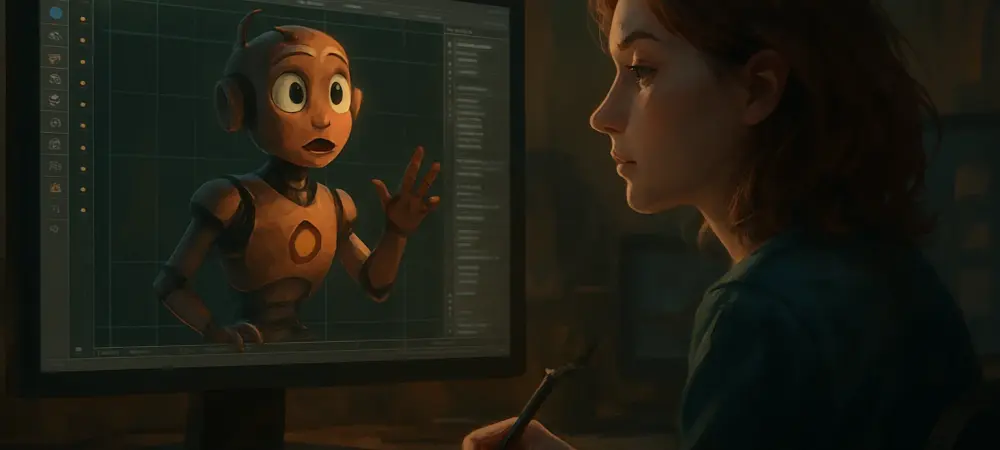
The animation industry is currently navigating a paradigm shift of a magnitude not seen since the advent of computer-generated imagery, with generative artificial intelligence now capable of transforming simple text prompts into vibrant characters and complex, moving scenes. This review will explore the evolution of this technology, its key features, performance metrics, and the impact it has had on various applications from pre-production to final rendering. The purpose of this review is to provide a thorough understanding of the technology, its current capabilities, and its potential future development.
Understanding Generative AI in the Animation Pipeline
At its core, generative artificial intelligence in animation leverages complex algorithms, such as Generative Adversarial Networks (GANs) and diffusion models, to create entirely new content rather than simply analyzing existing data. GANs operate through a competitive process where one neural network generates images and another critiques them, progressively refining the output toward realism. Diffusion models, in contrast, work by adding noise to an image and then learning to reverse the process, enabling them to generate highly detailed and coherent visuals from random noise guided by user prompts.
The rapid evolution of these models from theoretical concepts into practical, accessible tools marks a significant milestone. Initially confined to research labs, generative AI has now been integrated into software plugins and standalone platforms used by artists and studios. This accessibility reflects a broader industry movement toward intelligent automation, where AI acts not as a replacement for human creativity but as a powerful collaborator, capable of handling repetitive tasks and generating a vast array of creative options.
Core Technologies and Evolving Capabilities
AI Powered Concept Art and Asset Generation
The pre-production phase of animation has been dramatically accelerated by text-to-image and image-to-image generation. Artists can now input descriptive prompts to conjure a multitude of character designs, environmental concepts, and prop assets in minutes, a process that once required days of manual sketching. Leading platforms offer increasingly sophisticated controls, allowing for the refinement of style, color palettes, and composition, effectively turning the AI into an indefatigable brainstorming partner.
This technology’s primary significance lies in its ability to broaden creative exploration while compressing timelines. By rapidly visualizing ideas, creative teams can iterate on the look and feel of a project with unprecedented efficiency. However, the current state of these tools still requires a skilled artist’s hand to curate, composite, and refine the AI-generated outputs into a cohesive and intentional final design, ensuring the results align with the project’s specific narrative and aesthetic goals.
Automated Motion Generation and Lip Syncing
Generative AI is making significant inroads into the creation of character movement and dialogue synchronization. Text-to-animation systems can interpret script directions to generate rudimentary body language and character blocking, providing a foundational layer of motion for animators to build upon. Concurrently, AI-driven lip-syncing tools analyze audio tracks to automatically map phonetic sounds to mouth shapes, drastically reducing the manual effort required for dialogue-heavy scenes.
While these tools offer remarkable efficiency gains over traditional keyframing, the realism of the output remains a key area of development. AI-generated motion can sometimes lack the nuance and subtext that a human animator instills, and automated lip-syncing may struggle with complex dialects or rapid speech. Consequently, these technologies are currently best utilized for background characters, pre-visualization, or as a starting point that requires manual refinement to achieve a polished, emotionally resonant performance.
Generative Storyboarding and Pre visualization
The process of translating a script into a visual narrative is being streamlined by AI tools designed for storyboarding and creating animatics. These systems can parse a screenplay and generate a sequence of storyboard panels that visually represent the described actions, characters, and settings. This enables directors and cinematographers to quickly establish shot compositions, camera angles, and pacing without the need for extensive manual illustration. By automating the initial stages of pre-visualization, generative AI allows creative teams to experiment with different narrative structures and visual approaches more freely. Animatics can be produced and revised with remarkable speed, facilitating clearer communication and more informed decision-making before the more resource-intensive stages of production begin. This rapid prototyping capability is invaluable for refining the storytelling backbone of an animated project.
AI Driven In betweening and Style Transfer
In 2D animation, AI is directly addressing the historically labor-intensive task of in-betweening, which involves drawing the intermediate frames between two key poses. Machine learning models can be trained on existing animation to intelligently generate these “tween” frames, maintaining stylistic consistency and fluid motion. This automation frees up animators to focus more on creating expressive key poses and less on repetitive manual labor. Furthermore, neural style transfer has emerged as a powerful tool for defining a project’s visual identity. This technique allows the aesthetic of a source image, such as a famous painting or a specific art style, to be applied to an animated sequence. This not only opens up new creative possibilities for unique visual effects but also provides a method for ensuring stylistic cohesion across scenes or even entire productions, all driven by algorithmic interpretation.
Current Trends and Recent Industry Shifts
One of the most significant recent trends is the integration of real-time generative feedback directly within animation software. This allows artists to receive AI-powered suggestions and modifications as they work, creating a more fluid and interactive creative process. In parallel, the proliferation of powerful open-source models has democratized access to this technology, empowering independent creators and smaller studios to experiment with tools that were once the exclusive domain of large, well-funded research organizations. This technological wave is accompanied by a growing and often contentious discourse surrounding the ethics and authenticity of AI-assisted art. Debates within the industry and among audiences are common, focusing on how to properly credit AI contributions, protect artists’ copyrights, and define the boundaries of human creativity in an increasingly automated landscape. These conversations are actively shaping industry standards and audience perceptions of generated content.
Real World Applications and Notable Use Cases
Major film studios are utilizing these tools for complex tasks like generating realistic environmental textures, populating background crowds, and creating intricate visual effects that would be prohibitively expensive to produce manually. The technology’s ability to produce vast quantities of visual assets makes it ideal for enriching the detailed worlds seen in modern animated features.
Beyond blockbuster films, independent animators are leveraging AI for rapid prototyping of short films and creating engaging content for social media platforms. In the video game industry, generative tools assist in creating procedural landscapes and unique character variations. The advertising sector also employs AI to quickly generate customized animated commercials, while interactive media experiments with narratives that can be dynamically altered by generative content in real time.
Challenges and Ethical Considerations
Despite its potential, the adoption of generative AI is fraught with significant technical and ethical challenges. On the technical side, maintaining visual consistency across a long-form project remains a major hurdle, as models can struggle to keep character designs and environmental styles perfectly stable from shot to shot. Artists also contend with the “uncanny valley,” where AI-generated motion or faces appear almost, but not quite, human, creating a sense of unease. Furthermore, the high computational cost of training and running these models presents a barrier for many creators.
The ethical landscape is even more complex. The use of copyrighted material in training datasets has sparked intense legal and moral debates over intellectual property and fair use. The potential for AI to displace human artists, particularly in roles involving repetitive tasks like in-betweening or asset creation, has created widespread anxiety within the creative workforce. These issues force the industry to confront fundamental questions about the value of human artistry and the definition of creative integrity.
The Future of Animation with Generative AI
Looking ahead, the trajectory of generative AI points toward increasingly sophisticated and autonomous creative capabilities. It is conceivable that future systems will be able to generate entire short films from a single comprehensive prompt, handling everything from scriptwriting and character design to final rendering. The technology may also unlock new forms of entertainment, such as hyper-personalized animated content that adapts its story and characters to an individual viewer’s preferences or interactive narratives that evolve in real time based on audience input.
This evolution will likely redefine the role of the human animator. Instead of focusing on the manual execution of every frame, artists may transition into roles as creative directors, curators, and prompt engineers who guide and refine the output of AI systems. The emphasis will shift from technical proficiency in drawing or modeling to a deep understanding of storytelling, aesthetics, and the ability to collaborate effectively with an intelligent creative partner.
Concluding Analysis
This review found that generative AI has established itself as a transformative, if not yet fully mature, technology within the animation industry. Its capabilities in accelerating pre-production, automating laborious tasks, and enabling new visual styles were shown to be reshaping traditional workflows from the ground up. The technology’s current state presented a duality: it is a powerful tool for ideation and efficiency, yet it still requires significant human oversight to overcome technical limitations like inconsistency and to navigate the prominent ethical dilemmas surrounding copyright and job displacement. Ultimately, generative AI has moved beyond being a mere novelty and became a fundamental force, one that promised to redefine the creative and commercial boundaries of animation for years to come.