

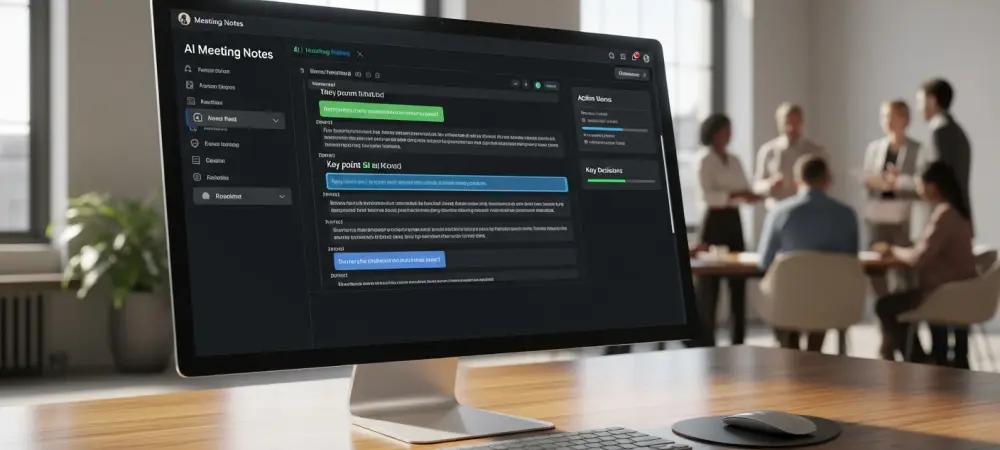
In today’s fast-paced workplaces, a staggering 29% of employees are skipping meetings entirely, entrusting artificial intelligence to capture the key points, reshaping collaboration in 2025. Picture a bustling hybrid office where a young Gen Z worker logs into a virtual meeting, only to mute the call and let an AI tool transcribe every word while focusing on a high-priority project instead. This isn’t a rare occurrence—it’s a growing trend. What drives this shift, and how is it altering the fabric of professional interactions?
This movement toward AI-driven note-taking isn’t just a fleeting fad; it’s a response to the demand for efficiency in an era of hybrid work models. With 19% of workers regularly using AI tools for meetings, the technology promises to save time and boost productivity, especially among younger generations and remote staff. The significance lies in its potential to redefine workplace dynamics—offering career advantages while raising questions about communication depth and data security. This exploration delves into the reasons behind the trend, its benefits, risks, and the voices shaping the conversation.
Why Meetings Are Being Skipped for AI
A notable shift is underway as nearly a third of employees choose to bypass meetings, relying on AI to handle note-taking. This behavior is particularly pronounced among Gen Z, with 43% opting out compared to 30% of Millennials. The primary motivation appears to be time optimization—workers are eager to redirect their focus to tasks that demand creativity or strategic input rather than passive listening.
Hybrid environments amplify this trend, as the flexibility of remote work blurs the lines of traditional meeting attendance. With 26% of hybrid workers adopting AI tools compared to just 13% of in-person staff, the appeal lies in balancing multiple responsibilities without being tethered to every discussion. The data suggests a cultural pivot toward valuing output over presence, raising questions about how collaboration will evolve.
This shift also reflects a broader trust in technology to manage routine administrative tasks. Employees are increasingly comfortable delegating documentation to algorithms, believing that AI can distill essential information without their direct involvement. Yet, this growing reliance prompts curiosity about whether critical nuances of dialogue are being sacrificed in the process.
The Emergence of AI Note-Taking in Hybrid Settings
The rise of AI note-taking tools aligns closely with the unique needs of hybrid workplaces, where flexibility and efficiency reign supreme. As remote and in-person work models blend, employees face mounting pressure to juggle schedules and deliverables, making manual note-taking seem like an outdated burden. AI offers a seamless solution, automating the process and freeing up mental bandwidth for more impactful contributions.
Gen Z, in particular, champions this technology, shaped by a lifetime of digital immersion and a preference for streamlined workflows. Their inclination toward AI—coupled with hybrid workers’ need for adaptable tools—has fueled adoption rates, with studies showing a clear correlation between tech-savvy demographics and reliance on such innovations. This generational and structural shift highlights a broader acceptance of automation as a workplace norm.
Beyond convenience, the trend underscores a deeper transformation in how productivity is measured. Organizations are beginning to prioritize results over hours spent in meetings, and AI note-taking fits neatly into this evolving ethos. As hybrid models continue to dominate, the integration of such tools signals a permanent change in how professional responsibilities are distributed and managed.
Pros and Cons of AI-Powered Meeting Summaries
AI note-taking brings undeniable advantages to the table, with 69% of users reporting significant time savings and 41% appreciating the reduction in manual effort. Career benefits are striking as well— frequent users see a higher promotion rate (28% versus 15% for non-users) and earn more on average ($86,000 compared to $67,700). These figures point to a tangible edge for those who leverage technology to focus on high-value work.
However, the drawbacks cannot be ignored, as 48% of users note a loss of communication nuances, and 46% express privacy concerns over sensitive data being processed by AI. The risk of overdependence looms large, with 87% admitting their workload would spike without these tools. Specific scenarios reveal varied effectiveness—AI excels in structured brainstorming sessions (53% suitability) but struggles in personal onboarding discussions (39% suitability).
Balancing these pros and cons requires a nuanced approach to implementation. While the efficiency gains are clear, the potential for misinterpretation of tone or intent (noted by 32%) and data security risks (42%) suggest that AI cannot fully replace human engagement. The challenge lies in harnessing its strengths without letting it erode the subtleties of workplace interaction.
Insights from Workers and Experts on AI Adoption
Data paints a vivid picture of AI’s foothold in modern workplaces, with hybrid employees leading adoption at 26% compared to 13% of in-person counterparts. Gen Z stands out, with 43% skipping meetings for AI assistance, far outpacing Millennials at 30%. These numbers reflect a divide in how different groups perceive the value of physical presence versus technological substitution.
Consider a hypothetical Gen Z hybrid worker who, by using AI note-taking, gains an extra hour each week to tackle strategic initiatives, boosting their visibility for promotions. Contrast this with a seasoned manager’s perspective, who worries that team cohesion suffers when staff skip meetings, missing out on unspoken camaraderie. These contrasting views highlight the personal stakes in this technological shift.
Experts add depth to the discussion, advocating for a balanced integration of AI that doesn’t undermine human connection. Many emphasize that while efficiency is a clear win, the loss of interpersonal rapport could harm long-term collaboration. This diversity of opinion underscores the complexity of embedding AI into daily routines, urging a thoughtful approach to its workplace role.
Practical Strategies for Effective AI Note-Taking
Adopting AI for meeting notes demands a strategic mindset to avoid common pitfalls while maximizing benefits. Start by using AI for routine discussions like project updates (45% suitability), where structure aids automation, and reserve personal attendance for team check-ins (37% less suitable) that hinge on human interaction. This selective application ensures technology serves as a complement rather than a replacement.
Accuracy remains a concern, with 32% of AI notes risking errors in tone or intent, so reviewing outputs for clarity is essential. Privacy fears, cited by 46% of users, necessitate strict data security measures, such as limiting access to recordings or using encrypted platforms. These steps can mitigate risks while maintaining trust in the tools.
A hybrid approach offers the best path forward—leveraging AI to save time on documentation but staying engaged in discussions that shape team dynamics or strategy. This balance allows workers to reap productivity gains without sacrificing the critical human elements of dialogue. Experimenting with these tactics can help refine how AI fits into individual and organizational workflows.
Reflecting on AI’s Role in Workplace Evolution
Looking back, the integration of AI for meeting notes marked a pivotal shift in how Gen Z and hybrid workers approached productivity. The technology saved countless hours and opened doors to career growth, yet it also exposed vulnerabilities in communication and data handling. Each step forward revealed both the promise and the peril of automation in professional settings.
Navigating this landscape demanded careful consideration of when and how to deploy AI tools. The lesson was clear: pair efficiency with engagement, ensuring that human connection wasn’t sidelined. Workers and leaders alike adapted by setting boundaries for AI use, prioritizing face-to-face interaction for moments that mattered most.
As workplaces continued to evolve, the focus shifted to refining this balance. Exploring hybrid strategies that blended AI’s precision with personal insight became the next frontier. Embracing ongoing dialogue about technology’s role ensured that innovation enhanced, rather than diminished, the collaborative spirit at the heart of every successful team.