

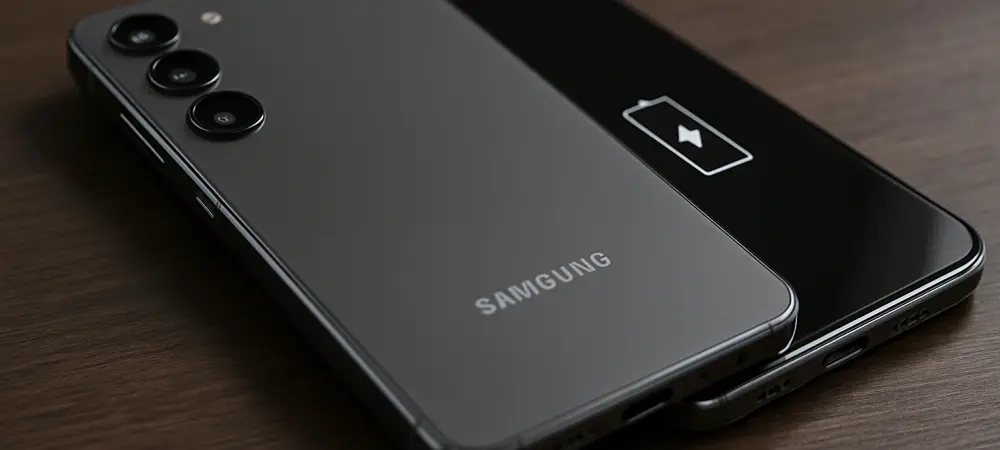
With a deep understanding of how cutting-edge technologies like artificial intelligence and blockchain reshape industries, IT professional Dominic Jainy joins us to dissect the latest developments in the mobile world. Today, we’re diving into the whirlwind of rumors surrounding the upcoming Samsung Galaxy S26 series. The central question revolves around a feature that has become standard for its rivals: native magnetic wireless charging. We’ll explore Samsung’s potential strategy, the nuanced hardware trade-offs that might be forcing its hand, the real-world impact on the user experience, and what this decision signals for the broader Android ecosystem.
Accessory leaks for the upcoming Galaxy S26 series show both magnetic and non-magnetic clear cases. What might this signal about Samsung’s strategy for Qi2 adoption, and what are the primary trade-offs for consumers if built-in magnets are skipped? Please elaborate on the user experience.
The appearance of both magnetic and non-magnetic cases is a very telling clue. It strongly suggests that Samsung is treating Qi2 magnetic charging not as a core, built-in feature but as an optional add-on. This strategy of “user choice” fundamentally alters the experience. For the consumer, the primary trade-off is the loss of seamless convenience. That satisfying, almost magical “snap” when a charger aligns perfectly every time is gone. Instead, you have a fragmented experience where you must first buy the phone, then a specific magnetic case, to unlock a feature that competitors offer right out of the box. It feels like a clunky extra step and frankly, a bit of a letdown for a flagship device in 2026.
Given that competitors have integrated native magnetic charging, what potential market advantages or disadvantages does Samsung face by possibly making it a case-dependent feature for the Galaxy S26? Can you detail the strategic thinking that could lead to such a decision?
The most significant disadvantage is one of perception. Samsung risks appearing behind the curve, as both Apple and Google have already set the expectation for native magnetic charging in a premium device. It could make their flagship feel less advanced, which is a dangerous position in this competitive market. However, the strategic thinking behind this could be a calculated sacrifice. By omitting the internal magnet array, they can preserve a feature they see as a key differentiator: Wireless Power Share. They might be betting that their loyal user base values the ability to charge their earbuds or watch from their phone more than they value the convenience of magnetic charging. It’s a gamble that prioritizes a unique, established feature over adopting a new industry standard.
Samsung is reportedly developing its own magnetic power banks and a 25W wireless charger. If the Galaxy S26 itself lacks built-in magnets, how does this product ecosystem function, and what specific steps would a user need to take to fully utilize these accessories?
It creates a slightly disjointed ecosystem that relies entirely on an intermediary. If the Galaxy S26 itself lacks magnets, those shiny new power banks and the 25W wireless charger won’t “snap” onto the phone on their own. To get that intended magnetic connection, a user would first have to purchase one of Samsung’s official magnetic cases, or a third-party equivalent. The phone would then be placed in this case, which contains its own set of magnets. Only then could you attach the magnetic power bank or align it perfectly on the charging pad. It essentially makes the case, not the phone, the key to unlocking the full potential of the accessory lineup.
The Galaxy S26 is expected to retain Wireless Power Share, a feature often removed from phones with built-in magnets due to technical conflicts. Could you explain this hardware conflict in detail and discuss why Samsung might prioritize reverse wireless charging over native magnetic alignment?
The conflict is a matter of physics and internal real estate. A Qi2 magnetic array is a precise ring of magnets designed to align with a charger. Reverse wireless charging, or Wireless Power Share, uses its own coil to transmit power outward. These two systems, when placed in close proximity inside a phone, can create electromagnetic interference that disrupts one another, often leading to charging inefficiencies, overheating, or failure. Google, for instance, had to drop the feature on the Pixel 10 series to make way for its magnetic “Pixel Snap.” Samsung’s decision to prioritize Power Share suggests they believe it’s a more valuable and established feature for their users. It’s a powerful utility, being able to top off your friend’s phone or your own Galaxy Buds on the go, and they may have decided that retaining this unique capability is worth forgoing the new magnetic standard for now.
What is your forecast for the future of magnetic wireless charging in the Android ecosystem?
I believe magnetic wireless charging is undeniably the future for the entire smartphone market, including Android. While Samsung might be holding out with the S26, this feels more like a temporary strategic delay than a long-term rejection of the technology. The convenience and the robust accessory ecosystem it enables are simply too compelling to ignore. I forecast that other Android manufacturers will continue to accelerate their adoption of the Qi2 standard, putting more pressure on Samsung. Ultimately, engineering will solve the conflict with reverse wireless charging, and I fully expect to see a future Galaxy device that offers both features seamlessly. The market is moving in this direction, and Samsung will have to join it, likely sooner rather than later.