

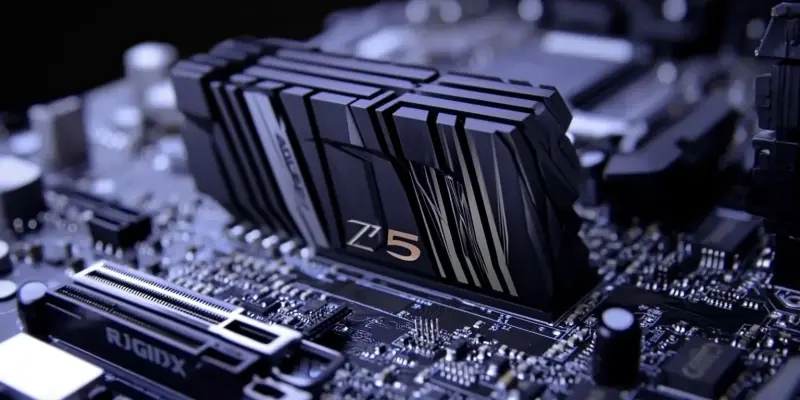
G.Skill has made a significant leap in the technology landscape by introducing the Trident Z5 Royal DDR5 memory kit.The latest 128GB kit combines remarkable capacity with extreme speeds, meeting the needs of high-performance computing environments and setting record-breaking benchmarks. This astonishing new kit features a substantial 128GB capacity, with each module holding 64GB, and achieves speeds of 8000 MT/s.As the first DDR5 memory kit of its kind to reach such impressive overclocking levels and capacity, it is carefully tailored for power users involved in content creation, AI applications, and other demanding workstation workloads.
Breakthrough in Memory Technology
The launch of the Trident Z5 Royal DDR5 memory kit marks an unprecedented milestone in memory technology. Frank Hung, from G.Skill’s Product Marketing division, emphasizes that this achievement transcends previous limits in DDR5 technology, pushing the boundaries of what is possible in memory performance.The 128GB Trident Z5 Royal is characterized not only by its vast memory capacity but also by its unique ability to maintain high speeds, providing a balance that has long been sought after by industry professionals. This dual capability is particularly beneficial for those who rely on both extensive memory and fast processing for their applications.
Moreover, the Trident Z5 Royal DDR5 kit is not the only innovation from G.Skill. To further push the performance envelope,G.Skill introduced an extreme-speed DDR5-9000 CL48-64-64 memory kit with a 64GB capacity, consisting of two 32GB modules. This lineup was rigorously tested and validated on the ASUS ROG MAXIMUS Z890 APEX motherboard paired with the Intel Core Ultra 7 265K desktop processor. Such validation showcases G.Skill’s commitment to not only producing high-performance memory kits but also ensuring compatibility and reliability across various system configurations.
Addressing Modern Computing Demands
The introduction of these advanced memory kits is a clear response to the evolving requirements of modern computing. High-performance computing, artificial intelligence, and other next-gen applications are increasingly demanding higher memory capacities and speeds.G.Skill’s new offerings cater to these needs by combining impressive storage capabilities with unmatched processing speeds. This combination is essential for users who require fast data access and the ability to handle intensive tasks, offering a smoother and more efficient workflow.These advancements also highlight a broader industry trend towards enhancing computing capabilities to meet contemporary demands. Memory solutions need to evolve continuously to keep pace with the increasing complexity and intensity of applications.G.Skill remains at the forefront of this evolution, setting benchmarks that push the industry forward. The company’s innovation demonstrates their strategic focus on addressing the powerful needs of today’s and tomorrow’s computer users, ensuring they have the tools they need to stay ahead in their respective fields.
Future Implications
The introduction of these advanced memory kits represents a considerable step forward in addressing the evolving requirements of modern computing. The G.Skill Trident Z5 Royal DDR5 memory kit, with its remarkable 128GB capacity and extreme speeds of 8000 MT/s, sets a new industry benchmark.As the first DDR5 memory kit to achieve such extraordinary overclocking levels and capacity, it is designed specifically for power users in content creation, artificial intelligence applications, and other demanding workloads. This innovative memory kit is a game-changer for users requiring top-tier performance and reliability in their computing environments.By meeting the stringent demands of modern technology, the Trident Z5 Royal DDR5 sets a new standard for the future of memory solutions, offering both unparalleled speed and capacity.