

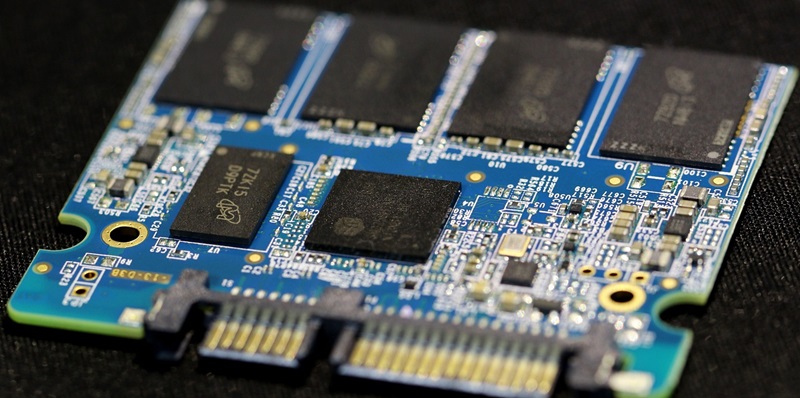
The FlumeIO 5901 U.2 SSD is emerging as a game-changer in the realm of enterprise storage, catering to the needs for larger capacities and faster data transfer speeds. Its introduction to the market is timely, considering the increasing demands for efficient storage solutions in various spheres, including intensive research, large multimedia projects, and servers handling heavy network traffic. This SSD stands out as a vital component for professionals who prioritize storage performance. Its rapid rise in popularity highlights its potential to significantly improve data management and workflow in businesses that rely on quick and reliable data access. The FlumeIO 5901 not only promises enhanced speed but also represents a forward leap in the way high-end storage demands are met, marking it as an asset for any professional setting where data is the lifeblood.
Bridging the Market Gap with FlumeIO 5901
Traditionally, a gap has existed in the market for U.2 PCIe 5.0 SSDs — a gap that the FlumeIO 5900-series effortlessly fills. Designed for the enterprise and specialized creative industries, the 5901 model, in particular, steps in with the promise to alleviate the need for complex configurations. This SSD not only demonstrates the potential to significantly increase performance over previous generations but also presents an opportunity for professionals to bypass the need for cumbersome RAID setups, replacing them with a singular, highly capable drive.
The market has long sought after options that marry the need for speed and storage without the hefty price tag. Here is where the FlumeIO 5901 distinguishes itself. The release of this SSD is nothing short of timely, as it addresses sectors that are rapidly hitting the limitations of older SATA and PCIe technologies. By adopting the 5901, enterprises can leap ahead in performance metrics while simplifying their storage infrastructure.
Pricing and Value Proposition
The FlumeIO 5901 stands out in the market for its high-performance technology at a price that doesn’t break the bank. Starting at $643 for the 4TB option and rising to $2,059 for a substantial 16TB unit, this SSD strikes an impressive balance between cost and capability. Its affordability is particularly remarkable when compared with its enterprise-level contemporaries, which often carry much steeper price tags for similar storage specs.
Not only does the FlumeIO 5901 provide significant financial relief to organizations looking to maximize their storage solutions, but it also doesn’t skimp on quality. Its cost-efficient approach reshapes the playing field, delivering speed and capacity at rates that are accessible without sacrificing top-tier standards. This blend of reasonable pricing and robust performance enshrines the FlumeIO 5901 as a wise choice for businesses watching their bottom line while demanding excellence in digital storage.
Performance Assessment and Real-World Application
FlumeIO 5901’s claim to fame is heavily tied to its performance, boasting impressive 14GB/s sequential read and 10GB/s sequential write capabilities. This review details a comprehensive evaluation, revealing a slight variance between the advertised peak performance and real-world outcomes. Yet, when subjected to the rigorous demands of production environments, the SSD’s true prowess becomes evident, especially when increasing process sizes and block sizes.
In practical scenarios, where high bandwidth and large-scale storage capacity are non-negotiable, the FlumeIO 5901 shines. The assessment, therefore, isn’t just about the numbers on a spec sheet; it’s about realistic performance in the demanding computing conditions of today’s enterprises. Despite initial discrepancies in speed, the SSD is recognized for its ability to handle an enterprise’s heavy workload with resilience and efficiency.
Design Innovations and Features
The FlumeIO 5901 U.2 SSD is more than just a high-performance device; it’s an enterprise-grade solution designed with a sharp focus on security and longevity. With built-in advanced encryption, this SSD caters to organizations that handle sensitive data, ensuring that information is protected at all times. The 5901’s five-year warranty further emphasizes its reliability, providing customers with the assurance of a durable and dependable product.
In crafting the 5901, FlumeIO has paid close attention to the particular needs of enterprise storage, delivering not just speed, but a comprehensive package that addresses the myriad challenges of modern data management. Its design philosophy underscores a commitment to innovation that aligns with the needs of businesses looking for storage solutions that are secure, reliable, and built to last. The result is an SSD that offers a thoughtfully engineered suite of features, reassuring enterprise users of its capability to handle critical workloads with ease.
Market Availability and Potential Impact
Projected for a Q2 2024 release, the FlumeIO 5900-series is poised to reshape the enterprise storage landscape. The impending arrival of the FlumeIO 5901 U.2 SSD signals a game-changing shift for industries that are pushing the limits of current storage technologies. With its competitive pricing, exceptional performance, and a suite of features designed for the enterprise market, the impact of the FlumeIO 5901’s debut is keenly anticipated.
The potential disruption caused by the 5901’s introduction to the market extends beyond immediate upgrades. This series offers a glimpse into a future where high-performance and large-capacity storage solutions are the norm, not a luxury. As industries continue to navigate expansive data growth, the FlumeIO 5901 stands ready to meet these challenges head-on, signifying a major stride in the direction of efficient, high-caliber enterprise storage solutions.