

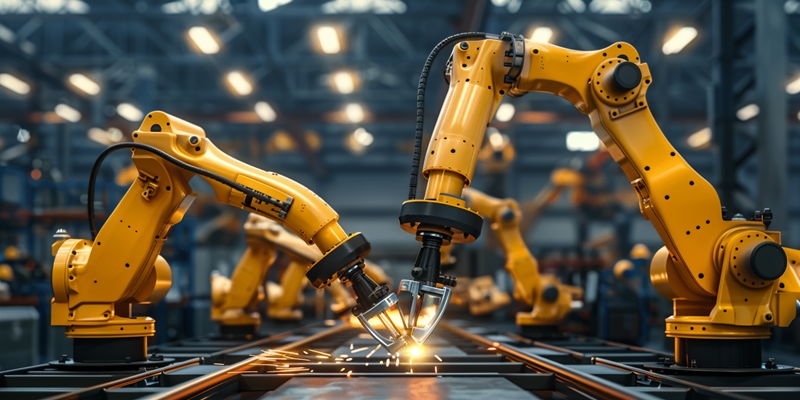
Flexxbotics has taken a bold step into the future of manufacturing with the launch of its revolutionary software solution, setting the stage for the smart factory era. This innovative software is designed to enhance robotic machine tending operations, promising to boost efficiency and productivity across numerous plants. In today’s fiercely competitive manufacturing sector, this leap forward could be the difference-maker for businesses seeking higher profitability and optimized operations.
The Flexxbotics software stands out with its integration of cutting-edge analytics and intuitive, real-time dashboards. This advanced feature provides factory managers with an unparalleled scope of control and insight into their production processes. By facilitating a live feed of robot activity and essential production data, the software empowers managers to swiftly identify and act upon various operational facets, drastically improving the decision-making process.
Enhancing Operational Visibility with Real-Time Dashboards
Intelligent analytics form the bedrock of Flexxbotics’ new software offering; it’s a transformative tool that enables detailed insights into the nuanced workings of modern manufacturing. Real-time dashboards offer a comprehensive picture of robot performance and vital production metrics, fostering a streamlined manufacturing environment ripe for optimization.
Far from being a passive monitoring tool, this software is brimming with predictive capabilities, poised to identify future hurdles in the production journey. By predicting and preemptively addressing potential issues, factory operations can maintain a course of smooth, uninterrupted efficiency. This heightened predictive prowess serves as a beacon of proactive management, ensuring that manufacturers stay ahead of the curve.
Achieving Greater Autonomy in Manufacturing Processes
Flexxbotics’ software is a harbinger of autonomy in the manufacturing realm, creating a network of interconnected automated equipment, robots, inspection systems, and overarching IT infrastructure. Interoperability is the name of the game here, granting manufacturers the versatility to swiftly pivot in response to changing production volumes or design adjustments.
The outcome is an agile, responsive manufacturing operation that not only reacts to changes but does so with minimal friction. The facilitation of this environment implies that integrating new technological advances or processes is not a daunting task. Such flexibility is essential as factories evolve and strive to meet the dynamic needs of ever-shifting market landscapes.
Revolutionizing Operations with Autonomous Process Control
At the heart of Flexxbotics’ revolution lies the concept of Autonomous Process Control (APC), systems that propel manufacturing forward with unprecedented momentum. These systems are alive with intelligence—harnessing real-time data, Advanced Process Analytics (APA), and Model Predictive Control (MPC) to supercharge operational optimization.
APC systems are instrumental in enabling real-time, in-the-moment decisions that refine the manufacturing process. As the backbone of predictive analysis and sensor technology, the software ensures robots autonomously adjust operations for continuous, optimal production. This pivot towards smart, self-sufficient systems sets a new standard for what industries should expect from their automated partners.
Incorporating Closed-loop Autonomy for Quality Assurance
Diving deeper into its toolbox, Flexxbotics’ solution incorporates real-time statistical process control, laying the groundwork for closed-loop autonomy. This feature allows robotic systems to self-adjust operations on the fly, following feedback from in-line inspections. It’s a powerful stride in fortifying quality assurance protocols and ensuring products meet rigorous standards.
The immediate adjustments offered by closed-loop autonomy minimize the need for human intervention, increasing the throughput of high-quality products. As robots take the reins of self-correction, production quality soars, minimizing human error and raising the bar for what automated production lines can achieve.
Seamless Integration and Universal Accessibility
Flexxbotics’ software stands at the forefront of autonomy in manufacturing, establishing an intricate network of automated machinery, robots, inspection apparatus, and integral IT systems. At the core of their offering is interoperability, empowering producers with the flexibility to quickly adapt to changes in production volumes or modifications in design.
This paves the way for a proficient manufacturing operation that efficiently adapts to change, reducing interruption. The creation of such an environment assures that the addition of new technologies or methodologies isn’t overwhelming. This adaptability is fundamental as factories progressively evolve, ensuring they meet the ever-changing demands of a rapidly evolving market landscape.
As factories transform, Flexxbotics is at the forefront of innovation, promoting seamless integration and future-proofing industries against the ebbs and flows of consumer needs. It’s a testament to a smarter, more responsive manufacturing future, where change isn’t an obstacle but an opportunity for growth and advancement.