

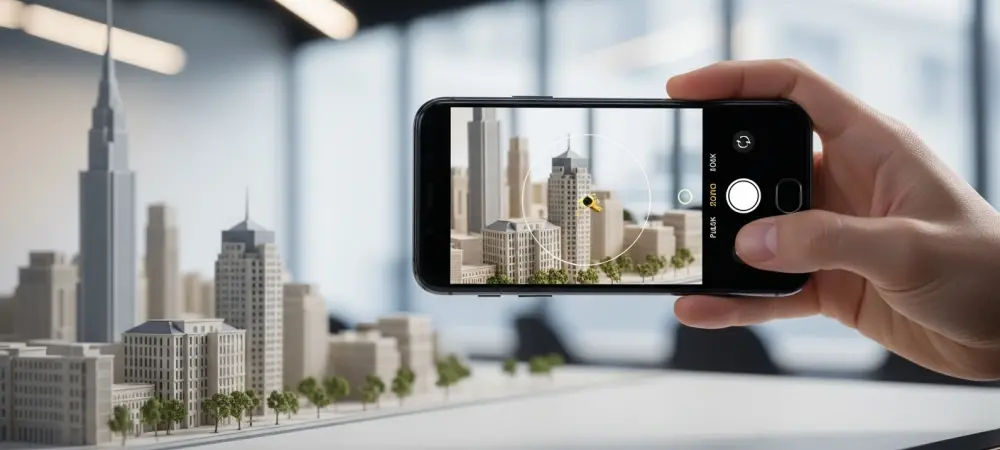
The once-dormant megapixel war has been spectacularly reignited, not with a single cannon but with a dual-barreled assault on the established limits of mobile photography. As the flagship smartphone market reaches a fever pitch of competition, a new hardware-centric trend has emerged, threatening to upend the status quo and redefine what consumers expect from the camera in their pocket. This shift moves the conversation beyond incremental software updates and back to the raw power of the sensor itself.
A New Battleground in the Smartphone Camera Wars
For several years, the flagship smartphone arena seemed to have reached a comfortable equilibrium. After an initial arms race over pixel counts, manufacturers shifted their focus to more nuanced areas of improvement. Computational photography, AI-driven scene optimization, and all-day battery life became the primary differentiators, with hardware specifications taking a relative back seat. This era saw the refinement of user experience over the pursuit of raw numbers on a spec sheet.
However, that period of calm is decisively over. A powerful new wave of innovation, driven primarily by leading Chinese manufacturers, is re-establishing hardware as the central battleground. These companies are aggressively pushing the technological envelope, moving beyond the balanced multi-camera systems that defined the last generation. This resurgence is not merely a repeat of the past; it is a calculated strategy to create a tangible performance gap that software alone cannot bridge.
The Dawn of the Dual High-Resolution Era
China’s Giants Lead the Charge
The clear manifestation of this new hardware-first philosophy is the industry-wide pivot toward equipping flagship devices with dual 200MP camera sensors. This trend represents a monumental leap in imaging capability, spearheaded by devices that have set a new benchmark for mobile photography. Models such as the Xiaomi 18 Pro, Oppo Find X9 Ultra, and Vivo X300 Ultra are the pioneers of this technological shift.
This move signals a strategic departure from the previous standard, where top-tier phones like the Xiaomi 17 Pro featured a trio of competent 50MP sensors. Instead of distributing resolution evenly across wide, ultrawide, and telephoto lenses, the new approach concentrates extreme pixel density in the two most critical sensors: the main and telephoto cameras. This focused strategy aims to deliver an unprecedented level of detail and versatility where it matters most to users.
Redefining Zoom The Practical Power of Pixels
At the heart of this revolution is a clever and effective application of technology: using the immense resolution of a 200MP sensor to deliver high-fidelity digital zoom through cropping. By capturing a vast amount of image data, the camera can effectively “punch in” on a portion of the sensor without the dramatic loss of quality typically associated with digital magnification. This technique blurs the line between optical and digital zoom, offering users remarkable clarity at extended ranges. The performance benefits of this approach are profound, enabling sharp, “lossless” zoom levels that surpass the fixed focal lengths of traditional optical systems. A device might offer a standard 3x optical telephoto lens powered by a 200MP sensor, while also delivering a pristine 5x or even 10x magnification by cropping into that same sensor. This new standard is already putting immense pressure on competitors, fundamentally reshaping consumer expectations for zoom performance in a smartphone.
More Megapixels More Problems The Technical Hurdles
This leap forward is not without significant engineering challenges. The sheer volume of data produced by two 200MP sensors simultaneously places an enormous strain on a phone’s internal components. Processing these massive files in real-time requires next-generation image signal processors (ISPs) and immense processing power, creating potential bottlenecks that could affect shot-to-shot speed and overall device responsiveness. Moreover, such intense processing generates considerable heat, demanding sophisticated thermal management solutions to prevent performance throttling.
Furthermore, there is a tangible risk in prioritizing pixel count above all else. A higher megapixel number does not inherently guarantee a better picture. Core aspects of image quality, such as light sensitivity, dynamic range, and color accuracy, are dependent on the physical size and quality of the sensor and its pixels. If manufacturers chase resolution at the expense of these fundamentals, the result could be images that are detailed in bright light but suffer from noise and poor fidelity in more challenging conditions.
Navigating the Spec Sheet Battlefield Standards and Marketing
In the hyper-competitive premium smartphone market, the adoption of dual 200MP systems is rapidly becoming a matter of survival. As the technology establishes itself as the new high-end benchmark, brands that fail to incorporate it risk being perceived as technologically lagging. This creates intense pressure to feature these impressive numbers on the spec sheet, regardless of whether the implementation is fully optimized.
This marketing-driven reality will likely lead to a wave of claims around terms like “optical quality” and “lossless zoom” that may not always align with the technical reality. Consequently, the role of industry reviewers and benchmarking standards becomes more critical than ever. Evaluating these complex camera systems will require a move beyond simple side-by-side comparisons to a more nuanced analysis that considers processing, sensor quality, and the real-world usability of these powerful zoom features.
Beyond 200MP The Future of Mobile Imaging
With dual 200MP cameras solidifying as the industry standard, the question naturally turns to what comes next. The next frontier in mobile imaging may shift back toward computational advancements, leveraging the massive data from these sensors to enable even more sophisticated AI-driven photography and videography. Other potential disruptors include the integration of larger, one-inch-type sensors for superior light gathering or the refinement of liquid lens technology for seamless variable zoom.
The response from Western manufacturers like Apple and Samsung will be a key storyline to watch. Historically, these companies have favored a more conservative approach, prioritizing software optimization and ecosystem integration over engaging in a direct hardware arms race. However, the tangible performance benefits offered by the dual 200MP systems from their Chinese rivals may force a strategic reconsideration, compelling them to accelerate their own hardware innovations to remain competitive at the highest end of the market.
A Clearer Picture Why This Is More Than Just a Numbers Game
The industry’s decisive move toward dual 200MP camera systems was ultimately a significant and practical evolution in smartphone technology. What could have been dismissed as another marketing-driven numbers game proved to be a genuine leap forward, particularly in the critical area of zoom performance. It effectively re-established hardware as a central pillar of mobile camera innovation.
This trend set an aggressive new benchmark for the entire industry, forcing a re-evaluation of what a flagship camera should be capable of. For consumers seeking the pinnacle of mobile photography, this shift delivered a tangible improvement, providing a level of detail and versatility in a handheld device that was previously unimaginable. The era of dual high-resolution cameras had not just arrived; it had redefined the boundaries of the possible.