

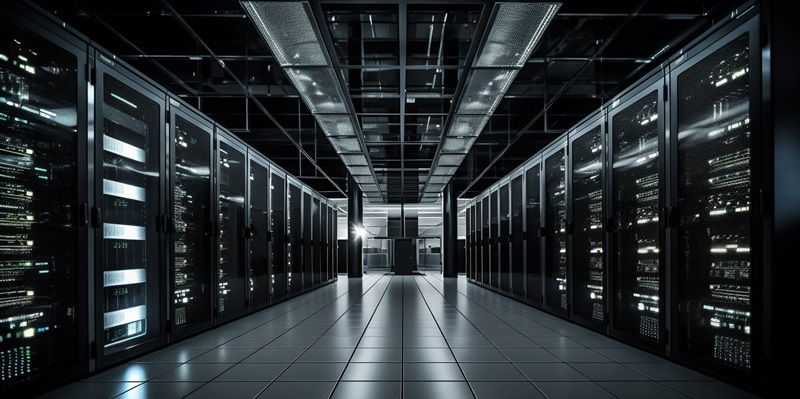
The data center industry has long been at the forefront of adopting innovative solutions for sustainability. As data centers play a crucial role in our increasingly digital world, finding ways to reduce their environmental impact has become a priority. Recent research has delved into the feasibility of utilizing blimp-like data center facilities that leverage the naturally cool temperatures of the stratosphere. This exploration opens up exciting possibilities for sustainable computing.
Utilizing naturally cool temperatures in the stratosphere
Data center-enabled high-altitude platforms (HAPs) offer tremendous energy efficiencies by capitalizing on the naturally low temperatures found in the stratosphere. These floating data centers could potentially revolutionize the industry, reducing the need for traditional cooling systems that contribute to the significant energy consumption of data centers. Additionally, HAPs have the advantage of being able to harness abundant solar energy in the stratosphere, further minimizing their reliance on non-renewable energy sources.
Integration with traditional data centers
To fully realize the potential of HAP-based data centers, integration with traditional ground-based data centers is necessary. The HAP would be electronically tethered to a more conventional data center on the ground, allowing for the seamless transfer of workloads. Furthermore, offloading some of these terrestrial workloads to the flying data center could result in significant energy savings, estimated to be up to 14% of total energy requirements.
Technical and financial challenges
While the concept of HAP-based data centers is intriguing, there are significant technical and financial challenges that need to be addressed for these innovative facilities to become a reality. Balancing the weight of the data center and ensuring stability in the stratosphere pose engineering hurdles. Moreover, financing the development, deployment, and maintenance of these costly structures requires careful consideration. Overcoming these challenges will necessitate collaboration and innovation from various stakeholders.
Advantages of HAP-based data centers
One of the most captivating aspects of HAP-based data centers is that they eliminate the need for cooling systems. The naturally cool temperatures in the stratosphere make it possible to create a self-cooling environment, reducing energy consumption and carbon emissions. Additionally, these data centers can operate independently from the grid, relying on solar power generated during the day and stored energy in batteries or fuel cells at night. The potential environmental impact of this sustainable approach is immense.
Need for sustainable solutions in data centers
Data centers currently account for approximately 1.5% of worldwide electricity consumption, making sustainability crucial for the industry’s future. As data consumption continues to skyrocket, traditional approaches to data center infrastructure may not be sustainable in the long run. It is essential to explore innovative solutions, such as HAP-based data centers, to drastically reduce energy consumption, minimize the carbon footprint, and mitigate the environmental impact of our digital age.
Long-term goals for sustainability
Becoming completely sustainable in data center operations will require a significant effort and changes at a societal level. It is not solely the responsibility of data center operators, but it requires collaboration from various stakeholders, including governments, technology companies, and users. Long-term goals should focus on developing policies and infrastructures that support sustainable data centers and fostering a culture of responsible data usage.
Future plans and practicality
To validate the feasibility and practicality of HAP-based data centers, researchers plan to collaborate with an industrial partner to develop a working proof-of-concept. This partnership aims to address technical challenges, test the viability of the concept on a smaller scale, and gather empirical data to support further development. Such an initiative would provide invaluable insights into the potential of HAP-based data centers and pave the way for their broader adoption in the future.
The concept of blimp-like data center facilities utilizing naturally cool temperatures in the stratosphere is undeniably exciting. By leveraging this unique environment, these data centers have the potential to revolutionize the industry, offering significant energy efficiencies and reducing the environmental impact of computing. Although there are challenges to overcome, the pursuit of sustainable data centers is vital. Continued research, collaboration, and innovation in this field will propel us towards a more sustainable future and a greener digital infrastructure.