

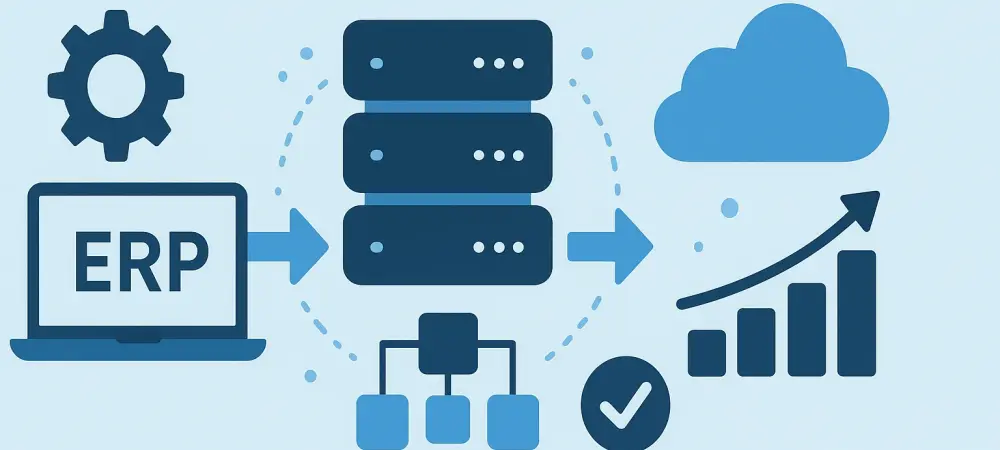
The rapid dissolution of legacy enterprise support has transformed ERP migration from a discretionary upgrade into a high-stakes survival tactic for modern organizations. These migration strategies represent a significant advancement in the corporate technology sector, moving away from high-risk transitions toward calculated, phased evolutions. This review explores the maturity of these methodologies, their key features, and the impact they have had on mid-market operational stability. As businesses navigate the fiscal landscape from 2026 to 2029, the purpose of this analysis is to provide a thorough understanding of the current technical capabilities and the strategic logic required to move from aging infrastructure to cloud-native environments without compromising business continuity.
Strategic Frameworks: The Shift Toward Business Continuity
The modern ERP migration landscape has transitioned from a “rip-and-replace” methodology to a sophisticated framework focused on incremental modernization. This evolution is largely driven by the practical realities of sunsetting legacy platforms, such as Microsoft Dynamics GP, in favor of agile, cloud-native solutions like Dynamics 365 Business Central. Rather than attempting a singular, disruptive leap, organizations are now treating migration as a series of manageable, value-driven phases. This approach allows a company to maintain its operational rhythm while systematically addressing technical debt, ensuring that the move to the cloud does not result in systemic shocks or prolonged downtime.
In the broader technological context, these strategies reflect a shift toward agile digital transformation. The fundamental principle is “preserving while preparing,” which involves making strategic investments in the current environment that remain valid in the future state. Standing still in 2026 presents a significant risk, yet moving too quickly without a structured map can lead to cost overruns. Consequently, the strategic framework focuses on building a functional bridge between old and new systems, allowing teams to gain proficiency in modern workflows long before the final technical cutover occurs.
Core Components: The Mechanics of Incremental Migration
Cross-Platform ISV Integration
A cornerstone of modern migration is the utilization of Independent Software Vendor solutions that function seamlessly across both legacy and modern platforms. By implementing ERP-agnostic tools for functions like payment processing or specialized accounting, organizations create a consistent user experience that persists through the migration. This implementation is unique because it effectively decouples the user interface from the underlying database architecture. When staff members use a tool like Binary Stream for multi-entity management within a legacy system, they are mastering the logic that will remain identical in a cloud environment, thereby flattening the learning curve and reducing training costs.
Decoupled DatEnsuring Financial Reporting Continuity
Modern strategies prioritize the separation of the reporting layer from the ERP core to prevent the loss of historical intelligence. Utilizing external repositories and advanced tools like Jet Reports or Cosmos ensures that data remains accessible regardless of whether it resides in an on-premises SQL database or a cloud-based environment. This separation matters because it allows for the preservation of historical records in formats like Excel-based cloud repositories, which are easier to manage and audit. By decoupling this data, businesses avoid the expensive and often error-prone process of migrating decades of historical transactions into a new system, choosing instead to maintain a high-fidelity archive that is both searchable and functional.
Emerging Trends: Automating the Cloud Transition
The latest developments in the sector highlight a significant push toward self-service ecosystems and automated data mapping. Innovations in API-driven connectivity are allowing for smoother data flows between on-premises environments and the cloud, effectively bridging the gap that once required extensive manual intervention. There is a growing industry trend toward utilizing automated scripts that can map legacy schemas to modern structures with high precision. This reduces the reliance on custom-coded middleware, which has traditionally been a major source of failure during system transitions.
Furthermore, the shift toward “intelligent preparation” means that businesses are now investing in operational improvements that are inherently compatible with their future cloud state. This strategic alignment avoids the common pitfall of wasting resources on legacy-only customizations that would eventually be scrapped. By focusing on modernizing specific sub-systems—such as credit card processing or intercompany management—companies are realizing an immediate return on investment while simultaneously checking off critical requirements for their ultimate migration goals.
Real-World Applications: Sector Implementations
Migration strategies are being aggressively deployed across sectors such as manufacturing, distribution, and professional services where downtime is not an option. In the manufacturing sector, for example, firms are utilizing these strategies to modernize project accounting without interrupting active production lines. Notable implementations involve the use of integrated payment portals like EBizCharge to automate revenue cycles in real-time. These applications demonstrate that a company can achieve modern efficiency levels within a legacy framework, creating a “best-of-both-worlds” scenario that serves as a temporary but highly effective staging ground for full cloud adoption.
In distribution, the focus has shifted toward real-time visibility and intercompany synchronization. By adopting multi-entity management tools that operate across different ERP versions, distributors can manage complex mergers and acquisitions without waiting for a total system overhaul. This modularity allows for the immediate standardization of financial practices across a growing corporate footprint. It proves that migration is no longer a technical hurdle to be cleared, but a strategic tool that can be leveraged to support rapid business expansion even during the transition period.
Technical Hurdles: Identifying Market Obstacles
Despite the strategic advantages, several hurdles remain, particularly regarding data silos and the high cost of migrating heavily customized modules. Many organizations still struggle with the “learning cliff” that employees face when moving from familiar, if outdated, interfaces to sophisticated cloud platforms. Furthermore, regulatory issues surrounding data residency and PCI compliance continue to complicate the transition for global enterprises. These obstacles necessitate a cautious approach where each customization is scrutinized for its long-term value versus the cost of its cloud equivalent.
Current development efforts are focused on creating more robust “bridge” technologies to mitigate these risks. However, the complexity of legacy code often makes automated migration a challenge for mid-market enterprises with limited technical staff. There is also the persistent issue of data integrity; if the source data in a legacy system is disorganized, the migration process will simply move those problems to the cloud. Therefore, a significant portion of the current migration effort is dedicated to data cleansing and restructuring before any actual movement of bits and bytes takes place.
Future Trajectory: AI and the Evolution of ERP
The future of ERP technology points toward deeper integration of machine learning and autonomous financial processing. We are moving toward a landscape where the migration process itself will likely be managed by algorithms capable of identifying and correcting data anomalies in real-time. This evolution will transform ERP systems from static software installations into fluid, ever-evolving services that adapt to business growth. Such a shift effectively eliminates the need for massive “version jumps” in the future, as updates will be continuous and non-disruptive.
In this coming era, the core of the ERP will act as a central nervous system, with AI-driven modules handling repetitive tasks like bank reconciliations and expense mapping. This trajectory suggests that the current focus on migration is merely a precursor to a state of “continuous modernization.” Organizations that master the incremental migration strategies of 2026 will be the best positioned to leverage these autonomous capabilities, as their data architecture will already be optimized for the cloud and their teams will be accustomed to a culture of constant, manageable change.
Comprehensive Assessment: Navigating the Strategic Outcome
The transition from legacy systems to modern cloud platforms proved to be a multi-faceted endeavor that required more than just technical proficiency. Success depended on the strategic decision to adopt a phased approach, which minimized operational risks while maximizing early returns on investment. The review established that firms that prioritized cross-platform compatibility and decoupled their reporting layers achieved a much smoother transition than those that attempted radical shifts. These organizations benefitted from reduced training times and preserved the integrity of their historical data, which remained a critical asset for business intelligence.
Ultimately, the analysis of these migration strategies indicated that the most resilient businesses were those that treated technology as a fluid asset rather than a static installation. By evaluating the cost-benefit of every legacy customization and leveraging bridge technologies, companies were able to navigate the sunset of older platforms with confidence. The move toward cloud-native ecosystems provided a scalable foundation for global competition, ensuring that the digital infrastructure could support growth long after the initial migration was completed. Strategic planning, rather than technical brute force, emerged as the primary driver of successful enterprise modernization.