

The decision to automate accounts payable processes often marks a critical architectural fork in the road for an organization’s IT department, with long-term consequences that extend far beyond the finance team’s immediate efficiency gains. ERP-Embedded Accounts Payable (AP) Automation represents a significant advancement in financial technology and enterprise resource planning. This review will explore the evolution of this architectural approach, its key features, performance metrics, and the impact it has had on business operations. The purpose of this review is to provide a thorough understanding of the technology, its current capabilities, and its potential future development.
Understanding the Core Technology
At its heart, the discussion around AP automation architecture centers on two distinct models: integrated solutions and truly embedded solutions. The more common integrated approach involves a standalone, third-party application that communicates with the Enterprise Resource Planning (ERP) system through an API or a custom connector. While functional, this creates a separate system with its own database, user interface, and release cycle, introducing architectural complexity and potential points of failure at the integration layer. In stark contrast, an ERP-embedded solution is built natively within the core framework of the ERP itself. It is not an external application that merely talks to the ERP; it is an extension of the ERP’s own functionality. This model leverages the existing database, business logic, and security protocols of the host system. Consequently, all AP processes, from invoice capture to approval workflows and payment posting, occur within a single, unified environment, eliminating the system sprawl and operational friction inherent in managing a separate, connected application.
An In-Depth Look at Key Features
Unified Data and Process Architecture
One of the most compelling advantages of the embedded model is the creation of a single, authoritative system of record. When AP automation operates natively within the ERP, all invoice data, approval histories, and transaction logs reside directly in the central ERP database. This completely removes the need for the often-brittle data synchronization jobs required by external systems, which are notorious for failing during ERP upgrades or under heavy processing loads. The result is a more resilient and reliable financial data environment.
This unified architecture also profoundly simplifies governance and visibility for both finance and IT teams. With no separate database to reconcile, financial reporting becomes more accurate and timely, drawing directly from the core system. For IT, this eliminates the complexity of managing and securing an ancillary platform, reducing the overall technology footprint. This centralization ensures that the ERP remains the undisputed source of truth, strengthening data integrity and streamlining audit processes.
Inherited Security and Compliance Model
A fundamental benefit of the embedded approach is its ability to inherit the comprehensive security and compliance framework already established within the ERP. User access, role-based permissions, and authentication protocols are managed through the same controls that IT has already implemented and vetted for the entire organization. There is no need to build, maintain, and audit a parallel security model for a separate AP application, which drastically reduces the attack surface and simplifies risk management.
This direct inheritance of security controls provides a clear and defensible compliance posture. During audits, organizations can demonstrate that all financial processes are governed by a single, consistent set of rules enforced by the core ERP. This simplifies the audit trail and reduces the burden on IT to prove the integrity of data transfers between disparate systems. For regulated industries, this native alignment with existing governance structures is not just an efficiency gain but a critical component of risk mitigation.
Native User Experience and Workflow Management
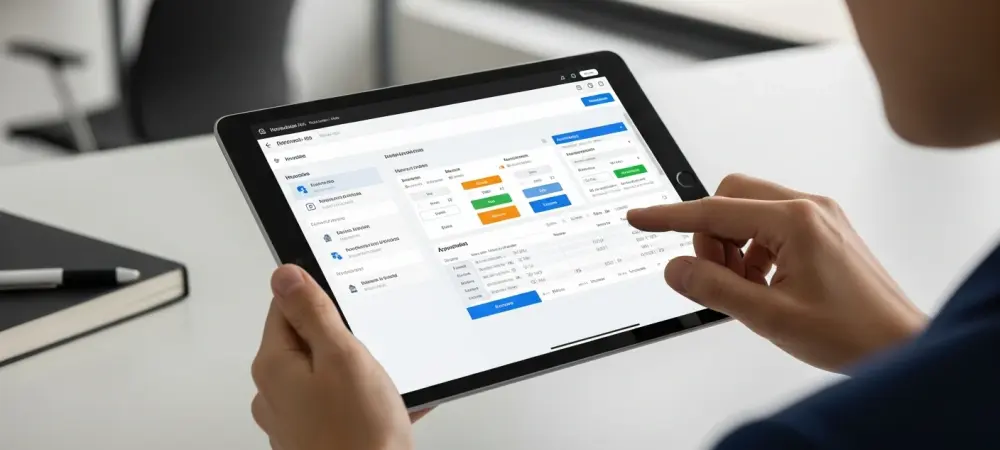
The user experience within an embedded system is inherently more cohesive than that of an external tool. Finance and operations staff perform their AP tasks directly within the familiar ERP interface, eliminating the need to learn and navigate a separate application. This continuity reduces the training burden and accelerates user adoption. Because the workflows are built using the ERP’s native logic, they feel like a natural extension of existing processes rather than a bolted-on function.
Furthermore, this native integration gives finance teams greater autonomy over their own processes. They can configure and manage approval workflows directly within the ERP environment they use daily, establishing a cleaner boundary of responsibility. IT’s role shifts from being the first line of reactive support for a third-party tool to a strategic governor of the unified ERP ecosystem. This empowers the business users while freeing up valuable IT resources from day-to-day troubleshooting of integration issues.
Emerging Trends and Recent Innovations
The landscape of embedded automation is evolving rapidly, driven by advancements in artificial intelligence and machine learning. Modern solutions are moving beyond simple optical character recognition (OCR) to incorporate intelligent data extraction that can learn from corrections and improve its accuracy over time. This technology can now handle complex, multi-line invoices and non-standard formats with minimal human intervention, dramatically increasing straight-through processing rates.
Another significant trend is the development of embedded solutions that offer seamless continuity across different versions of an ERP, such as the migration from legacy on-premise systems like Microsoft Dynamics GP to cloud-based platforms like Business Central. Vendors are creating tools that work natively in both environments, allowing organizations to preserve their established workflows and controls during a complex ERP migration. This de-risks the transition by ensuring that critical AP processes are not disrupted, which is a major concern for IT and finance leadership.
Impact Across Industries and Applications
The adoption of ERP-embedded AP automation has demonstrated a broad impact across various sectors, from manufacturing to professional services. In manufacturing, where invoice processing is often tied to complex three-way matching against purchase orders and receiving documents, an embedded solution provides real-time access to ERP data, accelerating validation and resolving discrepancies faster. This ensures that supplier payments are timely, which is crucial for maintaining a healthy supply chain.
In service-based industries and non-profits, where approvals often involve multiple stakeholders across different departments, the native workflow capabilities are particularly beneficial. Workflows can be easily configured to reflect complex organizational hierarchies and approval matrices directly within the ERP. This not only enhances efficiency but also provides a clear and auditable trail for every transaction, reinforcing financial controls and accountability without requiring staff to log into a separate system.
Implementation Hurdles and Key Challenges
Despite its advantages, the path to implementing an embedded solution is not without its challenges. A primary hurdle is the internal alignment between finance and IT departments. Finance teams are often focused on the functional features and efficiency gains of a solution, while IT prioritizes architectural stability, security, and long-term maintainability. A successful selection process requires these two departments to collaborate and agree that the architectural model is as important as the feature set.
Another key challenge lies in the change management required to transition from manual or semi-automated processes. Even with a user-friendly native interface, resistance to change can slow adoption. Organizations must invest in proper training and clearly communicate the benefits of the new system to all stakeholders, from AP clerks to department heads who approve invoices. Without a comprehensive change management strategy, even the most technologically elegant solution can fail to deliver its full potential.
The Future of Embedded Automation
Looking ahead, the trajectory of embedded automation is pointing toward deeper, more intelligent integration with broader financial operations. The next generation of tools will likely feature predictive analytics capabilities directly within the ERP, enabling finance teams to forecast cash flow with greater accuracy based on real-time AP data. These systems could also proactively flag potential fraudulent invoices or identify opportunities for early payment discounts, transforming the AP function from a cost center into a strategic financial hub.
Moreover, the principles of embedded automation are expected to expand beyond accounts payable to other transactional processes like accounts receivable, expense management, and procurement. The ultimate vision is a fully unified financial ecosystem operating entirely within the ERP, where data flows seamlessly between modules without the need for external integrations. This evolution will further solidify the ERP’s role as the central nervous system of the enterprise, with embedded tools serving as its intelligent extensions.
Concluding Analysis and Summary
The decision between an integrated and an embedded AP automation solution represents a fundamental choice about long-term technological strategy. The evidence suggests that standalone or merely integrated systems, while often quick to deploy, can introduce a hidden “technical debt” of system complexity, security vulnerabilities, and support overhead that falls squarely on IT departments. This architectural friction often creates more long-term problems than it solves.
In contrast, the ERP-embedded model presents a more sustainable and architecturally sound approach. By leveraging the native platform of the ERP, these solutions offer a unified system of record, an inherited security framework, and a seamless user experience. This alignment not only delivers the process efficiencies that finance teams require but also reinforces IT’s core principles of risk mitigation, system stability, and streamlined governance. For organizations committed to their ERP ecosystem, the embedded path offers a clear road map to scalable, secure, and manageable financial automation.