

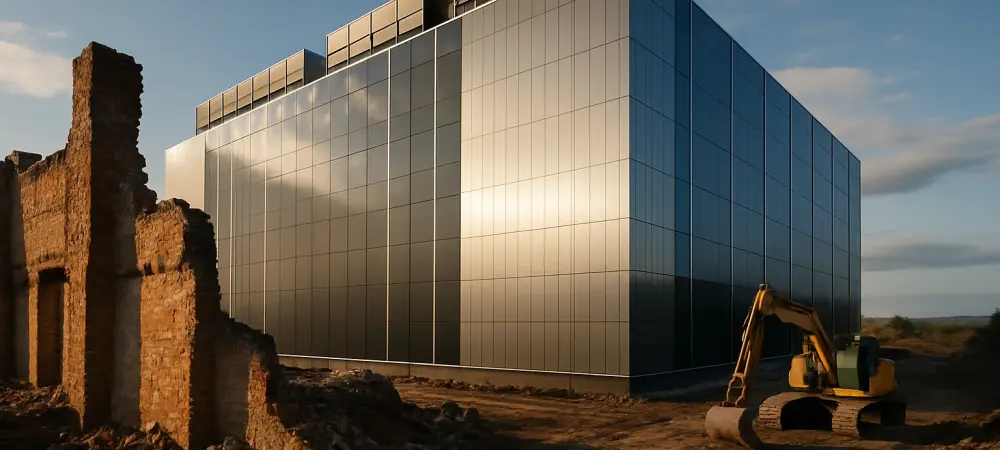
A Landmark Digital Infrastructure Project Takes Root in the UK
In a move set to significantly bolster the UK’s digital infrastructure, colocation giant Equinix has secured planning permission to develop a major new data center campus in Slough. The approval from Slough Borough Council gives the green light to transform a historic former industrial site into a state-of-the-art digital hub, underscoring the region’s critical importance to the global data economy. This article will explore the strategic context behind this decision, examining the site’s unique history, the economic implications for the local authority, and how this development fits into Equinix’s broader strategy of market consolidation in one of Europe’s most vital technology corridors.
From Paint Production to Data Processing: The Site’s Strategic Evolution
The land approved for development on Wexham Road is steeped in industrial history, having long served as the home of an AkzoNobel paint factory, manufacturing iconic brands like Dulux. This legacy of industry set the stage for its next chapter. In 2019, the Slough Borough Council acquired the site for £38.5 million with ambitious plans to build a 1,000-home residential community. However, the project was ultimately shelved after feasibility studies revealed that the costs of development would be prohibitively high, leaving the council with a valuable but underutilized asset. This pivot away from housing and toward digital infrastructure highlights a crucial shift in urban land use, where the economic realities and immense value of data centers are reshaping development priorities.
Analyzing the Impact of Equinix’s Slough Expansion
Solidifying Slough’s Status as a Premier European Data Hub
The approval for Equinix’s campus is more than a simple real estate transaction; it’s a powerful affirmation of Slough’s standing as a cornerstone of the UK’s data infrastructure. Located within the highly sought-after London-Amsterdam-Frankfurt-Paris (FLAP) market, Slough offers unparalleled connectivity and proximity to London. For Equinix, the new three-building campus provides the capacity needed to meet escalating customer demand driven by cloud computing and AI. For the Slough Council, the 2022 sale to Equinix represented a strategic financial victory. One official lauded the deal as “the single biggest beneficial transaction” for the council, demonstrating how data center development can provide a much-needed economic injection for local governments managing legacy industrial portfolios.
The Growing Trend of Industrial Redevelopment for Digital Needs
This project exemplifies a growing global trend: the repurposing of former industrial sites, or brownfields, into cutting-edge data centers. Such locations are often ideal for digital infrastructure, possessing robust access to power grids and fiber optic networks—remnants of their power-intensive industrial past. The prohibitive costs that made residential development unviable on the AkzoNobel site—such as land remediation and infrastructure upgrades—are more easily absorbed within the high-value business model of a data center operator. This strategic redevelopment turns potential liabilities into highly productive assets, creating a blueprint for other regions to follow.
A Calculated Move in Equinix’s Market Consolidation Strategy
This new campus is not an isolated investment but the latest move in Equinix’s deliberate and sustained expansion in the Slough market. The company already operates a significant number of facilities in the area and is actively developing another large-scale data center, the 30MW LD14. The Wexham Road project will further cement its dominant position, creating a “landmark” campus that enhances its ecosystem and provides a clear growth path. By securing a large, strategically located parcel of land, Equinix ensures it can scale its operations alongside client demand, reinforcing its competitive advantage in a market where available land and power are increasingly scarce.
The Future of Data Infrastructure in a Power Constrained Landscape
As the demand for data processing and storage skyrockets, driven by the proliferation of AI, IoT, and cloud services, the need for new data centers like the one in Slough will only intensify. This project positions Equinix to capture that future growth. However, this expansion also occurs within a challenging landscape. Key data center clusters, including West London and Slough, face significant constraints on their power grids. Future success will depend on Equinix’s ability to design and operate this new campus with maximum energy efficiency and to work with utility providers to secure the necessary power, a critical hurdle for all major developments in the region.
Strategic Takeaways for Local Governments and Industry Stakeholders
The Equinix Slough project offers several key takeaways. First, it reinforces the immense economic value data centers bring to local communities, turning underperforming industrial land into a significant source of revenue. Second, it highlights the viability of brownfield redevelopment as a primary strategy for data center expansion in mature markets where greenfield sites are rare. For local authorities, this serves as a powerful case study in monetizing legacy industrial assets. For industry stakeholders, it signals that strategic partnerships with local councils can unlock prime real estate opportunities, providing a path to growth even in crowded markets.
A New Digital Landmark on the Horizon for the UK
In conclusion, Equinix’s successful bid to build a new data center campus in Slough represents a pivotal moment in the transformation of industrial heritage into digital future. The project breathes new life into a historic site, provides a major financial boost to the local council, and solidifies Equinix’s leadership in a globally significant market. More broadly, it is a testament to the insatiable demand for the digital infrastructure that underpins our modern economy. As this former paint factory is reborn as a hub for data, it serves as a powerful symbol of the UK’s enduring role at the heart of the global digital revolution.