

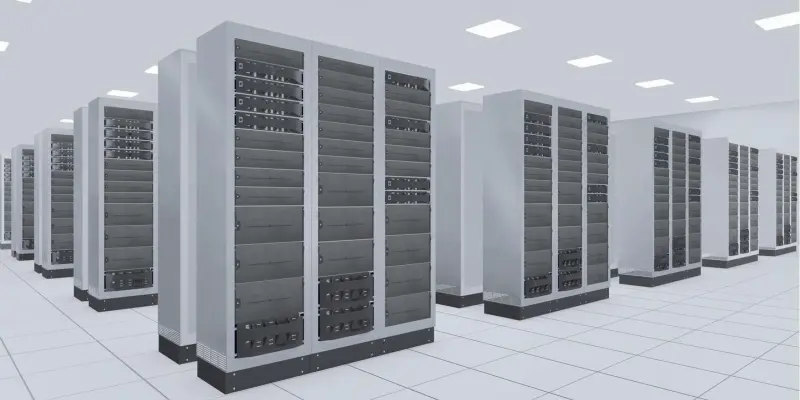
In an increasingly digital world, data centers stand at the forefront as vital pillars sustaining everything from everyday online services to complex enterprise operations. These critical infrastructures are persistently under threat from sophisticated cyberattacks aiming to exploit vulnerabilities. As these attacks grow in complexity and frequency, the need for robust cybersecurity measures has never been more pressing. Concurrently, the security landscape is further complicated by physical threats such as targeted assaults on essential cooling facilities designed to disrupt operations. Uninterrupted functionality of data centers is imperative, given their foundational role in supporting myriad digital activities. Amidst this backdrop, innovative security solutions are being sought to counteract threats effectively. The integration of artificial intelligence (AI) and quantum computing emerges as a promising avenue. These technologies promise to enhance security protocols, enabling data centers to anticipate, detect, and mitigate security breaches proactively while maintaining operational integrity.
The Role of Artificial Intelligence in Data Center Security
Artificial intelligence is setting new standards in the realm of data center security by bringing unprecedented levels of efficiency and precision to threat detection and response. AI’s capacity to analyze large sets of data and learn from patterns enables data centers to foresee potential threats before they materialize. By continuously scanning network activity and identifying anomalies, AI systems can effectively alert operators to prospective breaches and recommend appropriate actions. This real-time analysis is pivotal in reducing the time between detection and response, minimizing potential damage.
Moreover, AI programs enhance security by automating routine processes such as system audits and malware scans, which previously depended heavily on human oversight. By assuming these roles, AI not only liberates human resources for strategic tasks but also dramatically lowers the error margin inherent in manual operations. Its self-learning capabilities mean AI systems can evolve alongside evolving cyber threats, ensuring they remain one step ahead of malicious actors. As AI technology matures, predictive analytics become a powerful tool for data centers, allowing them to simulate attack scenarios and adjust their defenses accordingly, resulting in an adaptive security posture.
Quantum Computing: A Future Force in Cybersecurity
Quantum computing, although still in its nascent stages within cybersecurity, holds transformative potential in crafting unassailable security measures for data centers. Capitalizing on phenomena unique to quantum mechanics, such as superposition and entanglement, quantum computers can execute complex calculations with incomparable speed, creating encryption methods impervious to current hacking strategies. This capability of generating indestructible cryptographic keys ensures the confidentiality and integrity of sensitive data, crucial for thwarting unauthorized access. In the realm of key distribution, quantum key distribution (QKD) exemplifies the benefits of quantum technology. It facilitates the secure exchange of encryption keys, ensuring the transmitted data remains uncompromised. This aspect brings a new level of confidence in data transactions, even across vulnerable networks. Furthermore, quantum-based systems boast a high degree of resilience against attacks due to their unique error-checking mechanisms inherent in quantum operations. Although widespread commercial implementation is not yet realized, ongoing research suggests that quantum capabilities will soon become integral to security frameworks. Proactively embracing such advancements will empower data centers to remain secure against sophisticated future threats.
Building a Holistic Security Framework
To ensure comprehensive protection, data centers must adopt an integrated, holistic security framework that amalgamates diverse defensive measures. At the core of this framework is the concept of situational awareness, essential for maintaining a vigilant oversight of the data center environment. Through continuous monitoring and real-time data analysis, situational awareness ensures that potential threats are detected early, enabling swift mitigation. As data centers expand, especially those hosting multiple tenants, the interconnected nature of these spaces necessitates a centralized approach to security management. A security breach affecting one tenant can swiftly escalate into a wider threat, making consolidated monitoring indispensable. Such a framework incorporates centralized systems that unify disparate security events into a cohesive hub, encompassing activities like video surveillance, access management, and data reporting. This integration minimizes the risks associated with information silos and coverage gaps, thereby fortifying the overall security posture. Coordination between different departmental systems is also pivotal. Automated responses that trigger actions, such as activating CCTV on detecting alarms, illustrate efficient interdepartmental collaboration. Harmonized operation between various segments, including IT and human resources, particularly in high-security areas like server environments, enhances organizational resilience against both physical and cyber threats.
Leveraging Advanced Technologies and Strategies
Looking ahead, data center operators are urged to integrate cutting-edge security measures that leverage advancements in both AI and quantum computing. Quantum security holds immense promise, employing quantum-enhanced randomness in unbreachable key generation that bolsters data defenses. This forward-thinking approach anticipates and counters emerging cyber threats dynamically, safeguarding highly sensitive information. Substantial investments in AI-enabled data centers similarly mark a transformative shift within the industry, as evidenced by notable corporate undertakings aimed at fortifying digital infrastructures.
Furthermore, the adaptation of military-grade solutions for commercial applications reinforces a strategic trend of repurposing robust security systems. These solutions, rigorously tested and certified under extreme conditions, offer assurance against multifaceted security challenges faced by civil data centers. Future-oriented strategies also highlight a shift toward modular systems, facilitating smooth integration with emerging technologies. Modularity permits facilities to expand without incurring prohibitive costs, promoting energy efficiency and seamless scalability amid rapid technological advancements. This modular approach ensures continued effectiveness and operational harmony in the evolving landscape.
Future Directions in Data Center Security
In today’s increasingly digital era, data centers are critical infrastructures that enable everything from routine online services to complex business operations. They face constant threats, primarily from advanced cyberattacks that seek to exploit vulnerabilities. As these attacks become more sophisticated and frequent, the demand for strong cybersecurity measures intensifies. Additionally, the security environment is complicated by physical threats, such as targeted attacks on vital cooling systems meant to disrupt operations. The uninterrupted operation of data centers is crucial due to their essential role in supporting various digital activities. In response to these challenges, innovative security solutions are actively being developed. The incorporation of artificial intelligence (AI) and quantum computing is emerging as a promising path. These advanced technologies aim to strengthen security protocols, allowing data centers to anticipate, identify, and address security breaches proactively, all while safeguarding their operational integrity.