

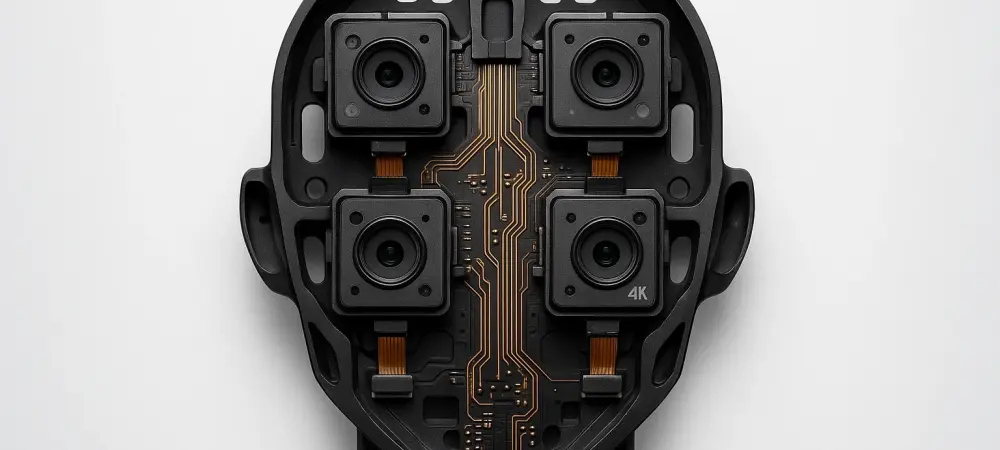
The sophisticated digital intelligence of a modern humanoid robot often captures the global spotlight, but its operational survival depends entirely on a microscopic network of copper and gold that functions as a synthetic nervous system. While developers frequently prioritize the software “brain,” the physical interconnects acting as the robot’s nerves are often the most common point of failure. In the high-stakes environment of a humanoid head, components like 4K cameras and LiDAR must operate in absolute synchronicity. This engineering challenge creates a significant hurdle for the commercialization of mobile robotics. The difference between a high-performance machine and a pile of expensive components usually comes down to the integrity of its internal wiring. As these machines move from controlled research facilities to unpredictable industrial floors, the requirement for robust physical hardware becomes just as critical as the refinement of the AI itself.
The Invisible Architecture: Artificial Intelligence
A humanoid robot can process a billion operations every second, yet this massive computational power is useless if the data cannot move between sensors and processors. In the confined space of a robotic head, the interconnects must handle an immense load of high-speed data while remaining small enough to fit within the skull’s geometry. This invisible architecture is what determines whether the robot perceives its environment in real-time or suffers from debilitating latency. The reliability of these physical connections is no longer an afterthought but a primary design requirement. When a robot operates in the field, even a momentary loss of signal in a vision system can lead to a catastrophic failure or a safety violation. Engineers now treat the selection of connectors and cables with the same rigor once reserved for high-level neural network architectures.
The Scaling Crisis: Humanoid Hardware
With the humanoid robotics market projected to surge to $15.26 billion from 2026 to 2030, the industry is hitting a significant physical bottleneck. The transition from lab prototypes to mass-deployed industrial workers requires hardware that can survive the transition into high-intensity environments. Engineers are currently grappling with the hardware gap, where sophisticated sensors generate massive volumes of data that traditional wiring simply cannot handle within mobile confines.
Reliability is the primary hurdle to commercial viability as companies look toward large-scale deployment. Hardware must now withstand thousands of hours of operation without maintenance, a feat that requires a departure from standard consumer electronics. This shift necessitates a new breed of interconnects specifically designed for the high-vibration and high-movement reality of a working humanoid.
Mechanical and Electrical Constraints: Robotic Vision Systems
The robotic head is a masterclass in spatial constraints, requiring a delicate balance between high-bandwidth data transmission and mechanical flexibility. Unlike stationary industrial equipment, a humanoid head is in constant motion, creating a unique set of engineering challenges that threaten signal integrity. The integration of 4K cameras and interactive displays creates a massive data throughput requirement that frequently exceeds 10 Gb/s. Constant panning, tilting, and nodding movements introduce significant cable fatigue over time. Traditional linear wiring schemes often lead to cable slack or routing congestion, which can snag or wear down during repetitive tasks. To solve this, developers are shifting toward localized branch topologies, which place high-density connectors strategically near sensors to minimize the length of moving wire harnesses.
Strategic Interconnect Integration: Expert Solutions
Industry leaders emphasize that interconnect selection must be a day-one design priority rather than a final assembly task. Failure to integrate robust connectors early in the development cycle frequently results in system-wide failures during vibration testing. Utilizing specialized components is essential for maintaining a compact form factor without sacrificing the durability required for industrial use.
Products like the ix Industrial™ Series provide the necessary 10 Gb/s data rates while utilizing robust locking mechanisms to prevent accidental unmating during high-acceleration movements. In the cramped environment of a robotic head, PCB stacking using high-density connectors like the DF40 Series allows for stable board-to-board connections. Furthermore, flexible printed circuit connectors like the FH34 Series provide the low-profile, high-reliability wiring needed for intricate facial sensors.
Engineering Frameworks: Large-Scale Deployment
To move beyond the prototype phase and achieve multi-shift uptime, developers applied a rigorous framework to their interconnect strategies. The transition toward localized branch topologies allowed engineers to replace centralized wiring hubs with more efficient systems. By placing connectors closer to peripheral subsystems like the eyes and ears, teams reduced the total volume of cabling and alleviated mechanical strain on the main data bus.
The industry determined that prioritizing long-term mechanical durability was the only way to achieve certified fenceless safety. Selecting connectors with high mating cycle ratings and effective shielding became a prerequisite for reducing the long-term cost of ownership for end-users. These strategic hardware decisions ensured that the next generation of robots could operate autonomously and reliably in diverse environments.