

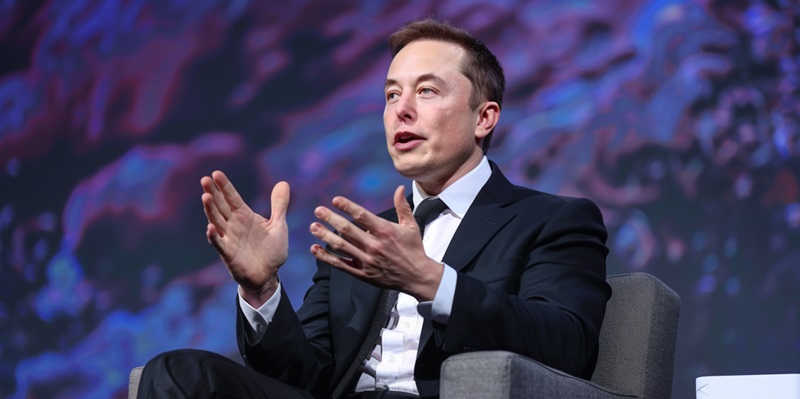
Elon Musk’s recent venture into the realm of artificial intelligence has caused a stir within technology and investment communities as his startup, xAI, secures a monumental $6 billion in Series B funding. This investment not only signifies one of the largest Series B investments in the AI sector, but it also reflects the robust confidence of investors in xAI’s potential and Musk’s vision for the future of AI.
A Record-Breaking Investment Round
The Significance of Series B Funding
The massive $6 billion funding round positions xAI among the AI elite, highlighting the growing enthusiasm surrounding advanced AI. This influx of capital demonstrates the unwavering belief in the company’s trajectory and the expansive market potential that lies ahead. With a staggering pre-money valuation of $18 billion, investors are not just betting on xAI’s current capabilities; they’re investing in a future where AI is pivotal to every industry.
Notable Investors Backing xAI
The financial titans placing their bets on xAI are as prominent as the investment itself. Venture capital heavyweights such as Valor Equity Partners, Andreessen Horowitz, and Sequoia Capital, alongside influential figures like Prince Alwaleed Bin Talal, have come together in a display of confidence. The diversity and caliber of investors highlight the collective belief in xAI’s strategic direction, indicating that Musk’s AI startup is poised for significant advancements.
xAI’s Grok-1: Spearheading Advanced AI
Inspired AI with a Human Touch
Grok-1 stands as the epitome of xAI’s ambitions to blend sophistication with a human element. This model and chatbot, with its whimsical nods to literature classics, is engineered to deliver assistance to humans seeking understanding. Its design not only highlights xAI’s innovative approach to AI but also symbolizes a commitment to technology that is inherently beneficial and empathetic to users.
Aggressive Moves in the AGI Arena
xAI’s Grok-1 is a valiant contender in the race for AGI, where industry behemoths like OpenAI and Google are its rivals. By prioritizing improvement and competitive performance, xAI demonstrates a tenacious resolve to carve out a space in this fiercely contested domain. Despite trailing behind some established models, Grok-1’s emergence indicates that xAI is a force to be reckoned with in the AGI landscape.
Musk’s Critique and Vision for OpenAI
Shifting Away From OpenAI’s Path
Musk’s dissatisfaction with OpenAI’s shift away from fully open-source models has been palpable. His response through xAI’s open sharing of the Grok-1 source code not only bucks the trend but also reveals a deeper philosophy; one that embraces transparency and inclusivity in the cultivation and utilization of AI technology. This move sends a clear message about xAI’s priorities in the wider AI ecosystem.
xAI’s Progressive Iterations
Introducing further iterations like Grok-1.5 and Grok-1.5V, xAI is swiftly on the trail of refinement and expansion of capabilities. Each version brings with it improved reasoning, elevated problem-solving, and enhanced multimodal interactions. Through these progressive enhancements, xAI is steadfast in maintaining its position at the vanguard of AI technology.
Strategic Allocation of Investment
Investment in Cutting-edge Hardware
The investment decisions at xAI are nothing short of strategic. A significant portion of the funds is being allocated to acquire state-of-the-art GPU clusters, which are indispensable for advancing AI capabilities. This forward-thinking approach is meant to enable xAI to not only develop its products further but also maintain a competitive stance against leading AI model developers.
Talent Acquisition and Product Enhancement
Redirecting funds toward attracting top industry talent and enhancing product technologies is crucial for xAI’s long-term strategy. With these actions, xAI ensures its competitive edge and cements its place as a credible alternative to renowned models such as ChatGPT and Google’s Gemini, promising an intriguing battle amongst AI titans.
The “Gigafactory of Compute”
A Vision for Supercomputing
xAI is on track to build what Elon Musk calls the “gigafactory of compute”. This ambitious project, targeting a completion date by fall 2025, is set to shape the future of AI supercomputing. Utilizing Nvidia’s cutting-edge H100 GPUs, xAI is not merely expanding its resources but is ambitiously constructing a supercomputer with quadruple the capacity of the largest existing AI-dedicated GPU clusters.
Timeline and Technological Endeavors
Elon Musk’s foray into artificial intelligence has sparked excitement among tech and finance circles. His new AI venture, xAI, has just clinched an astounding $6 billion in a Series B funding round, standing out as one of the AI industry’s most sizeable Series B financings to date. This hefty sum is a testament to the investor community’s strong belief in both xAI’s prospects and Musk’s ambitious outlook for AI’s trajectory.