

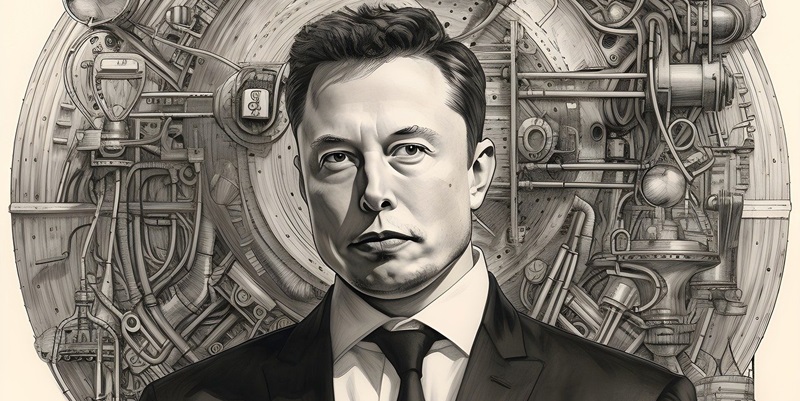
The legal battle between Elon Musk and OpenAI marks a critical juncture in the realm of artificial intelligence. With Musk advocating for the public disclosure of research, a discourse unfolds that may well dictate the trajectory of AI development. The tech community is polarized, with strong arguments on both sides of the transparency spectrum.
Legal Implications and AI Research Ethics
Musk’s Legal Challenges
Elon Musk has initiated a legal tangle with OpenAI, demanding greater transparency in their research developments. Musk’s legal strategies hinge on an array of contractual and fiduciary obligations purportedly owed by OpenAI to its founders and the public, given its original nonprofit ethos. Musk argues that the organization’s pivot to a capped-profit model breaches its commitment to democratizing AGI.
This lawsuit touches on fundamental questions regarding intellectual property and the ethics of AI dissemination. The case is poised to set important precedents for the ownership and sharing of technology that could potentially redefine human life.
Impacts on AI Research Ethos
The litigation also probes deeper into the philosophy guiding AI research. Should advancements in AI be confined within the walls of corporations amassing intellectual property, or should they be freely accessible, fostering collective progress? Musk’s stance presses for the latter, championing an open-source view that could pave the path for accelerated innovation and the scrutiny necessary to ensure safer AI.
This clash of ethos raises the question of whether AGI—a form of AI that emulates human intelligence—should be a guarded secret or a shared tool. OpenAI’s transition from a nonprofit to a profit-capped entity has, according to critics, marginalized its capacity to commit fully to the open-sharing principle.
The Ethical and Safety Dimensions
Constructing Ethical AI
The propagation of AI technologies carries immense ethical responsibilities. As Musk calls for OpenAI to lift the veil on their research, the tech community wrestles with the conception of an AI governance that is ethical in intention and practice. The public’s need to trust AI capabilities and the developers behind them renders transparency not just a legal issue but also a moral imperative.
Ensuring AI innovations align with societal benefits goes beyond mere transparency; it includes a robust framework for ethical conduct. As AI systems become more sophisticated, they increasingly touch on issues of privacy, autonomy, and societal change. How these technologies are developed—and who has a say in that process—assumes crucial significance.
Balancing Openness and Safety
Elon Musk’s dispute with OpenAI shines a spotlight on a pivotal moment in artificial intelligence (AI). Musk advocates for openly sharing AI research to ensure transparency and safety. This has sparked a significant debate within the tech world, striking at the core of AI’s future path. Some see the public release of AI research as essential to universal progress and oversight. Others argue that unrestricted sharing could lead to potential misuse or exacerbate competitive disparities. The tech community finds itself divided, navigating the delicate balance between innovation and security. This controversy underscores the broader implications of AI’s evolution and the ethical considerations of its dissemination. As the dialogue continues, the decision on whether to keep AI’s inner workings private or expose them to public scrutiny could have profound consequences for the technology’s development and its role in society.