

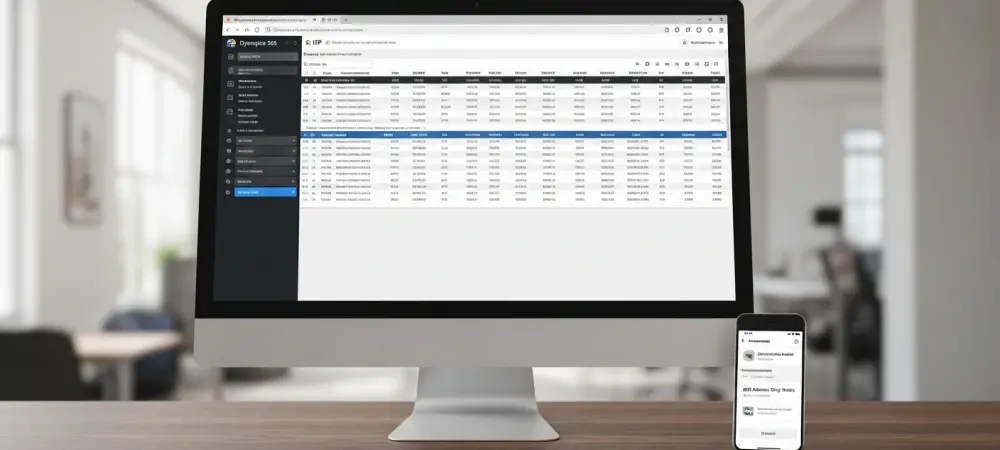
The global manufacturing landscape in 2026 demands a level of operational synchronization that renders manual data entry not only obsolete but actively dangerous to a company’s long-term financial stability. While modern Application Programming Interfaces (APIs) receive the bulk of attention in technology circles, the industrial world remains firmly anchored in Electronic Data Interchange (EDI) due to the massive infrastructure investments of global automotive giants, aerospace leaders, and major retail chains. For any organization utilizing Microsoft Dynamics 365 Finance and Supply Chain Management, EDI serves as the essential digital gateway required to secure and maintain high-value contracts with these large-scale trading partners. Beyond simple compliance, this technology acts as the digital nervous system for a manufacturer’s supply chain, allowing for the automated exchange of high-volume documents without the friction of human intervention. The transition from manual data entry to a fully integrated EDI system represents a fundamental shift from an error-prone administrative environment to a highly scalable business model where data flows directly into the core ERP. In a competitive landscape where speed and precision are the primary differentiators, the ability to process thousands of transactions instantly is what separates growing enterprises from those struggling with administrative bottlenecks and operational silos.
Optimizing Supply Chain Operations Through Transaction Standards
Managing Incoming Demand Signals: Automation of Sales and Planning
The integration of inbound transactions into Microsoft Dynamics 365 allows demand signals to drive production and procurement cycles automatically, creating a seamless link between the customer and the shop floor. The foundational document in this digital ecosystem is the 850 Purchase Order, which triggers the automatic creation of sales orders within the ERP and eliminates the significant risks associated with manual re-keying of complex part numbers and quantities. Furthermore, the 860 Purchase Order Change Request is vital for keeping internal production schedules in perfect sync with real-time customer needs, ensuring that the manufacturer’s internal resources and materials are always focused on the most current demand profile. Without this automated synchronization, manufacturers often find themselves producing obsolete components or missing critical deadlines because a change request sat unread in an inbox for several hours. By automating these inputs, the ERP becomes the single source of truth that reflects exactly what the customer expects at any given moment.
In specialized industrial environments such as automotive manufacturing or high-tech electronics, planning and shipping schedules play an even more critical role than simple purchase orders. The 830 Planning Schedule provides long-term visibility into future requirements, allowing procurement teams to secure raw materials well in advance of actual production needs. Meanwhile, the 862 Shipping Schedule offers granular, short-term requirements for Just-In-Time (JIT) delivery, specifying exact arrival windows down to the hour. Both of these documents feed directly into the Dynamics 365 master planning engine, allowing the shop floor to maintain lean inventory levels while still meeting the strict delivery windows imposed by major OEMs. This level of responsiveness is impossible to achieve with manual processes, as the sheer volume of schedule updates would overwhelm even the largest administrative departments. Consequently, integrated EDI becomes the engine that powers lean manufacturing principles, ensuring that every minute of machine time is dedicated to a verified customer requirement rather than a projection or a guess.
Closing the Fulfillment Loop: Outbound Accuracy and Visibility
Outbound transactions represent the manufacturer’s primary way of communicating operational progress and financial claims back to their trading partners in a standardized format. The process typically begins with the 855 Purchase Order Acknowledgment, which serves as a formal confirmation that the partner’s order has been received, parsed, and accepted for production. This is followed by the 856 Advance Ship Notice (ASN), which is widely considered the most sensitive and complex document in terms regarding regulatory and partner compliance. The ASN provides a detailed digital manifest of a shipment, including container hierarchies and tracking numbers, that must align perfectly with the physical goods and packaging to avoid costly penalties. Many retailers and automotive plants will refuse to unload a truck if the ASN has not arrived and been processed before the physical vehicle hits the receiving dock. By generating this document directly from the packing records in Dynamics 365, manufacturers can ensure that the digital shadow of the shipment is an exact match for the physical reality on the trailer.
Once the shipment is underway, the 810 Invoice utilizes data pulled directly from the shipment and receipt records in the ERP to accelerate the billing cycle and drastically improve corporate cash flow. By removing the delay between shipment and invoicing, companies can realize revenue days or even weeks earlier than they would with manual billing processes. Furthermore, the 846 Inventory Inquiry allows manufacturers to provide distributors or major retailers with real-time stock visibility, which helps prevent the twin problems of stockouts and overpromising on limited inventory. Specialized technical feedback loops, such as the 997 Functional Acknowledgment and the 824 Application Advice, provide the necessary confirmation that these documents were received and processed correctly by the partner’s system. These automated handshakes ensure that both parties are always in agreement regarding the status of their digital exchanges, providing a level of transparency that reduces disputes and strengthens long-term business relationships between manufacturers and their global customers.
Technical Architecture and Integration Methods
Building the Connection Layer: Data Mapping and Logic
The core technical challenge of any EDI integration lies in the translation layer, which is responsible for converting standardized formats like ANSI X12 or EDIFACT into a data structure that Dynamics 365 can natively understand. This process involves sophisticated data mapping where every specific field, such as a customer’s unique internal part number or a specific unit of measure code, must be cross-referenced and mapped to its corresponding field within the ERP database. This mapping requires extreme logical precision to ensure that variations in how different partners report data do not lead to corrupted records or failed transactions. For instance, one partner might send weights in kilograms while another uses pounds, necessitating a transformation step within the integration layer that converts these values before they are posted to the Dynamics 365 ledger. Robust mapping ensures that the ERP remains a clean environment where data from dozens of different sources is normalized into a consistent and actionable format.
A truly resilient EDI system is defined by its ability to manage “dirty” data through sophisticated exception handling and business logic validation. When a transaction fails due to an unrecognized carrier code, an invalid shipping address, or a quantity mismatch that exceeds predefined tolerances, the system must flag the error and notify the appropriate personnel immediately. Rather than allowing the integration to fail or, worse, allowing incorrect data to propagate through the production system, effective exception workflows quarantine the problematic transaction. This approach ensures that human intervention is only required when a genuine business conflict arises that cannot be resolved by software logic, such as a price discrepancy that requires a manual override. By filtering out the noise and automating the routine, the integration layer allows the IT and operations teams to focus their attention only on the transactions that truly require professional judgment. This protective barrier is essential for maintaining the integrity of the master data within Microsoft Dynamics 365 across thousands of daily messages.
Selecting the Right Connectivity Model: VANs and Cloud Platforms
Manufacturers have several distinct options for connecting their internal EDI traffic to their external trading partners, ranging from traditional private networks to modern cloud-based integration platforms. Value-Added Networks, commonly known as VANs, act as a secure digital post office for electronic documents, offering a high degree of simplicity and reliability for companies with a diverse range of partners. However, these networks often come with complex fee structures based on the volume of characters transmitted, which can become prohibitively expensive as a business scales its operations. Alternatively, direct AS2 (Applicability Statement 2) connections offer a point-to-point method that eliminates character-based fees and provides high-speed data transfer. While cost-effective at high volumes, managing direct connections requires a significant internal IT effort to handle security certificates, firewall configurations, and individual partner communication protocols, which may be beyond the scope of many mid-sized manufacturing organizations. The modern industry consensus has shifted toward the use of an Integration Platform as a Service (iPaaS), which acts as a centralized, cloud-based hub for all mapping, translation, and monitoring activities. Because an iPaaS connects to Microsoft Dynamics 365 through native, high-performance APIs, it is far more resilient to ERP updates and version changes than traditional custom-coded solutions that rely on direct database access. This modern approach offers a more predictable cost structure and allows manufacturers to onboard new trading partners significantly faster by utilizing a library of reusable mapping templates and pre-built connectors. Furthermore, a cloud-based integration strategy provides superior visibility into the status of all transactions through real-time dashboards, allowing managers to spot trends or issues before they impact the physical supply chain. By outsourcing the technical complexity of connectivity to a dedicated platform, manufacturers can ensure that their digital infrastructure is as flexible and scalable as their modern production lines.
Strategic Execution and Avoiding Common Implementation Risks
Navigating Compliance and Operational Challenges: Standards and Labels
EDI is rarely a uniform solution, as compliance requirements vary significantly depending on the geographic region and the specific industry vertical in which a manufacturer operates. While North American trading partners generally adhere to the ANSI X12 standard, international trade and European partners often dictate the use of the EDIFACT standard, meaning that global manufacturers must possess the technical capability to support both formats simultaneously. Beyond these broad regional standards, individual retail giants like Walmart, Amazon, or Target frequently have their own highly specific EDI specifications and business rules that must be met to the letter. Failing to adhere to these minute details can result in significant financial chargebacks and the eventual loss of preferred vendor status. Therefore, the integration strategy must be flexible enough to handle these partner-specific nuances without requiring a complete redesign of the core data flows within the Dynamics 365 environment.
One of the most rigorous operational requirements for modern manufacturers is the absolute synchronization between the digital 856 Advance Ship Notice and physical barcode labeling on the warehouse floor. If the digital data transmitted in the ASN does not match the physical GS1-128 label on the pallet or carton, the customer’s automated receiving dock will fail to process the shipment, leading to immediate financial penalties and a damaged reputation. Successful manufacturers treat this synchronization as a high-priority quality control step, often integrating their EDI platform directly with their warehouse management system (WMS) to ensure that the label is generated at the exact moment the pallet is scanned onto the truck. This tight coupling of physical and digital workflows is essential for maintaining the high velocity required by modern supply chains. By treating the digital document and the physical product as two halves of a single transaction, manufacturers can eliminate the discrepancies that lead to receiving delays and administrative disputes.
Maintaining Long-Term System Health: Testing and Scalability
To maintain a high-performing digital ecosystem, manufacturers must avoid the common strategic trap of treating EDI integration as a static, “set-and-forget” project. Trading partners frequently update their technical specifications, adjust their business rules, or change their communication protocols, and failing to proactively monitor these changes leads to a phenomenon known as “map drift.” This occurs when the logic used to translate documents becomes outdated, resulting in increased error rates and manual workarounds that erode the value of the automation. By investing in thorough end-to-end testing during the initial certification phase and maintaining a schedule for periodic system reviews, manufacturers can ensure that their integration remains robust over time. This proactive maintenance is particularly important for companies that experience significant seasonal fluctuations in order volume, as the system must be capable of scaling rapidly to handle peak loads without a degradation in processing speed.
Establishing a culture of continuous improvement around digital integration allows manufacturers to transform what was once a technical burden into a powerful strategic asset that attracts higher-value customers. When a potential partner sees that a manufacturer can onboard their specific EDI requirements in days rather than months, it creates a significant competitive advantage in the bidding process for new contracts. Furthermore, the data collected through the EDI system provides valuable insights into partner performance, lead times, and order patterns that can be used to further optimize production schedules in Dynamics 365. Rather than viewing EDI as a cost of doing business, forward-thinking organizations leverage it as a source of competitive intelligence and operational agility. By ensuring the system is documented, monitored, and regularly updated, leadership teams can guarantee that their investment in Microsoft Dynamics 365 continues to deliver maximum value as the company grows and evolves in an increasingly digital marketplace.
Establishing a Roadmap for Digital Integration
The leadership teams that successfully navigated the complexities of digital transformation recognized that EDI was not a legacy hurdle to be cleared, but a foundational pillar of their supply chain strategy. They moved away from fragmented, manual processes and instead built a cohesive environment where Microsoft Dynamics 365 functioned as the brain of the enterprise, fed by a constant stream of accurate, real-time data from their global partners. By prioritizing the synchronization of digital manifests with physical goods, these organizations effectively eliminated the financial drag of compliance penalties and administrative rework. They invested in scalable cloud-based integration platforms that offered the flexibility to pivot as market demands shifted, ensuring that their technical infrastructure never became a bottleneck for business growth.
Looking ahead, the most effective next steps for manufacturers involve a deep audit of current transaction error rates and an assessment of how many manual touchpoints still exist within the order-to-cash cycle. Organizations should evaluate whether their current connectivity model can handle the projected increase in transaction volume over the next three years and whether their mapping logic is resilient enough to handle new global partners. Transitioning to an API-led integration approach for Dynamics 365 will provide the necessary agility to meet evolving retailer mandates and international standards. By shifting the focus from simple message delivery to strategic data utilization, companies can turn their EDI infrastructure into a source of actionable insights that drive leaner production and faster delivery times. Those who acted decisively to modernize their integration layers found themselves better positioned to capture market share in an era where the speed of data is just as important as the quality of the physical product.