

The concept of a centralized digital brain is rapidly losing its luster as the sheer volume of data generated at the network’s edge begins to outpace the capacity of the pipes designed to carry it. While the last decade was defined by the migration of every conceivable workload into massive, distant data centers, the current landscape demands a more immediate form of intelligence. Edge cloud infrastructure has emerged not as a replacement for the traditional cloud, but as a necessary extension that brings compute, storage, and networking into the same physical space as the users and devices they serve. This shift represents a fundamental rebalancing of the internet’s architecture, transforming the cloud from a destination into a ubiquitous presence that resides just a few miles—or even a few meters—away from the point of impact.
The Shift Toward Distributed Computing
The transition from hyperscale centralization to decentralized edge models is driven by the immutable laws of physics. In an environment where every millisecond counts, the physical distance between a data center and an end-user acts as a performance tax that no amount of software optimization can fully eliminate. Historically, enterprises accepted this latency in exchange for the cost savings and management simplicity of the central cloud. However, as digital interactions become more integrated with physical safety and real-time automation, the traditional model has reached its breaking point.
By deploying localized nodes at the network’s periphery, organizations are effectively creating a responsive nervous system. This distributed approach allows for data to be triaged and processed locally, ensuring that only the most critical or summarized information is sent back to the core. This not only preserves expensive backbone bandwidth but also ensures that local operations remain fluid and reactive. The evolution toward distribution reflects a growing realization that for the cloud to be truly effective in the physical world, it must be as geographically dispersed as the problems it intends to solve.
Core Components and Technical Architecture
Low-Latency Connectivity and Real-Time Processing
At the heart of edge infrastructure lies the pursuit of sub-ten-millisecond response times. This is achieved through a tight integration of local compute clusters with high-speed 5G and fiber-optic interconnects. By bypassing the multiple hops and congested exchange points of the public internet, edge nodes can facilitate feedback loops that feel instantaneous to the end-user. This technical capability is the foundation for technologies like augmented reality and remote precision surgery, where any perceptible lag can lead to disorientation or catastrophic failure.
AI Inference at the Edge
While the training of deep learning models still requires the massive parallel processing power of centralized GPU farms, the execution of those models is increasingly happening at the edge. Edge clusters are now equipped with specialized AI accelerators that allow for sophisticated inference to happen in situ. This is particularly transformative for video analytics and high-frequency sensor data. Instead of streaming raw, high-definition video feeds to a distant server—a process that is both costly and slow—edge nodes can identify anomalies, recognize faces, or detect safety hazards locally, triggering immediate alerts while discarding irrelevant data.
Regional Data Sovereignty and Compliance
Technical architecture is also being reshaped by the geopolitical reality of data privacy. Edge cloud infrastructure provides a physical answer to the legal requirement for data residency. By keeping sensitive information within local nodes that never leave a specific jurisdiction, enterprises can satisfy stringent regulatory frameworks without the performance degradation typically associated with compliant storage. This localized approach allows for a “privacy by design” architecture where raw personal data is processed and redacted at the source, ensuring that only anonymized insights ever reach the global cloud.
Drivers of Technological Evolution
The current trajectory of edge technology is defined by a push for operational autonomy. Modern systems are being designed to function in a “disconnected” state, where local nodes can continue to manage mission-critical tasks even if the primary link to the central provider is severed. This shift toward resilience is a direct response to the vulnerability of over-centralized systems. Furthermore, the rise of “metro edge” facilities is filling the gap between the device and the hyperscaler. These facilities, often repurposed from older telecommunications hubs, provide a middle ground where significant compute power can be accessed with lower latency than a regional data center but with more resources than a simple on-site gateway.
Real-World Applications and Sector Implementations
Industrial Automation and Smart Manufacturing
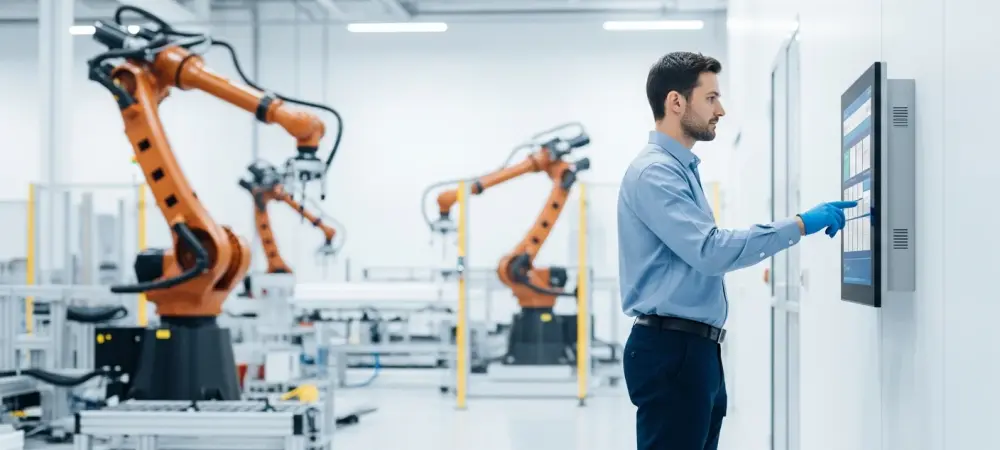
In the context of the smart factory, edge cloud infrastructure is the invisible hand that coordinates high-speed robotics and machine vision. These systems require a level of synchronization that cannot be achieved over long-distance networks. By processing telemetry data locally, factories can implement predictive maintenance models that catch a failing bearing before it causes a line stoppage. This localized intelligence ensures that the factory floor remains an autonomous environment where decisions are made at the speed of the machinery itself, rather than the speed of a distant network.
Smart City Infrastructure and Public Safety
Urban planners are utilizing the metro edge to transform city management from a reactive process into a proactive one. In these deployments, edge nodes process data from thousands of environmental sensors and traffic cameras to optimize city flow in real-time. For public safety, this means traffic lights can be preemptively turned green for approaching emergency vehicles based on local sensor data. The reliability of the edge is paramount here; public safety systems cannot be subject to the vagaries of a standard internet connection, making local processing a non-negotiable requirement for urban digital transformation.
Healthcare and Clinical Monitoring
Hospitals are perhaps the most demanding environments for edge computing due to the combination of high data volumes and the critical nature of patient care. Edge clouds allow for the real-time processing of high-resolution medical imaging and continuous vitals monitoring without overwhelming the hospital’s external bandwidth. Moreover, this infrastructure ensures that AI-driven clinical decision support tools remain available during a network outage. By keeping the most sensitive patient data on-site, healthcare providers can leverage advanced analytics while maintaining the highest levels of patient confidentiality and system uptime.
Challenges and Operational Limitations
Despite the clear advantages, the move toward a distributed model is fraught with significant management hurdles. The primary difficulty is the sheer scale of the estate; maintaining hardware across hundreds of unstaffed, remote locations is fundamentally different from managing a few centralized data centers. Security is another critical concern, as each edge node represents a new physical and digital entry point for attackers. This necessitates a “zero trust” approach where every node is treated as potentially compromised, requiring automated patching and rigorous identity verification that many organizations are not yet equipped to handle.
Furthermore, the industry is currently struggling with a lack of standardization. Many edge solutions are built on proprietary stacks, leading to a risk of vendor lock-in that can stifle future flexibility. There is also the issue of “observability gaps,” where IT teams find it difficult to gain a holistic view of system health across a fragmented environment. Without sophisticated orchestration tools that can treat the edge and the core as a single, unified entity, the complexity of managing a distributed cloud can quickly outweigh the performance benefits it provides.
Future Outlook and Technological Trajectory
The next phase of edge cloud evolution will likely be defined by the emergence of a unified, AI-driven control plane. We are moving toward a future where software will automatically determine the optimal location for a workload based on a real-time analysis of cost, latency, and energy consumption. This dynamic orchestration will allow applications to “float” between the edge and the core as conditions change, maximizing efficiency without human intervention. Additionally, the proliferation of specialized edge silicon will continue to lower the power requirements for high-performance computing, making it feasible to embed significant intelligence into even the smallest pieces of infrastructure.
Conclusion and Summary of Findings
The assessment of edge cloud infrastructure revealed a technology that has transitioned from a niche requirement to a foundational pillar of modern IT strategy. The evidence showed that the previous reliance on extreme centralization had created a bottleneck that hindered the development of real-time, safety-critical applications. By successfully moving compute power closer to the data source, the industry mitigated the “distance tax” and provided a viable path for large-scale AI deployment and regulatory compliance. However, the review also highlighted that these gains were frequently offset by a substantial increase in operational complexity and security risks. The findings suggested that the most effective implementations were those that did not attempt to replace the central cloud, but instead used the edge as a strategic filter and accelerator. Organizations that treated the edge as an isolated silo often struggled with management overhead, whereas those that integrated it into a hybrid architecture saw significant improvements in resilience and performance. Ultimately, the verdict on edge cloud infrastructure was that it is no longer optional for enterprises operating at the intersection of the digital and physical worlds. Moving forward, the focus must shift toward creating standardized, interoperable frameworks that can simplify the management of these distributed systems, ensuring that the cloud remains a cohesive tool rather than a fragmented liability.