

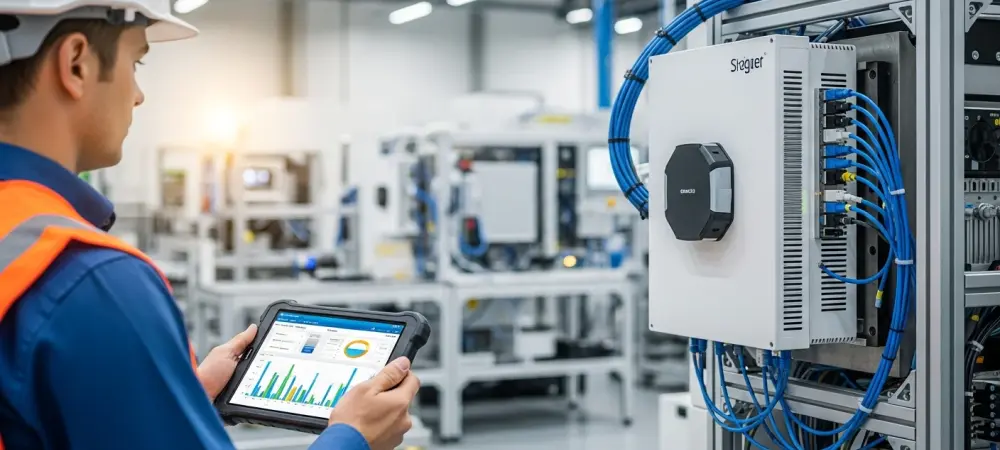
The relentless expansion of connected technologies has created an unprecedented demand for real-time data processing, pushing the limits of traditional cloud computing models. As data generation skyrockets at the network’s periphery—from factory floors and retail stores to autonomous vehicles and smart cities—the latency inherent in sending information to a distant central cloud for analysis is no longer acceptable for many critical applications. This has given rise to edge computing, a transformative network philosophy that strategically places data processing and storage physically closer to the sources of data creation and consumption. Its primary objective is to dramatically reduce network latency, but it also delivers significant secondary benefits, including the conservation of network bandwidth, enhanced data privacy, and improved resilience during connectivity disruptions. The “edge” is not a fixed geographical point but a relative concept, contextually defined by an organization’s specific workloads and latency constraints. This paradigm presents a fundamental architectural decision: should workloads be deployed in localized edge data centers or run directly on distributed edge devices? The answer lies in a careful evaluation of the distinct trade-offs each approach presents.
Understanding the Core Architectures
An edge data center can be conceptualized as a purpose-built facility that brings the robust capabilities of a traditional hyperscale data center to a more localized footprint. These facilities are strategically deployed near areas with high concentrations of users or data-generating assets, such as dense urban centers or industrial parks. They offer the core advantages of a conventional data center, including consolidated operations, professional maintenance, robust monitoring, and standardized security, but on a more intimate scale. This allows organizations to deliver low-latency performance while maintaining high levels of reliability, governance, and operational control. Physically, these can manifest as standalone micro data centers, modules within larger colocation campuses, or even containerized units integrated with telecommunications infrastructure for multi-access edge computing (MEC). The primary value proposition is delivering predictable, high-performance computing in a secure, managed environment that is geographically closer to the point of need than a centralized cloud region.
In stark contrast, an edge device is any piece of hardware deployed at the ultimate periphery of the network, operating directly where data is created or action is required. While these devices can technically be housed within an edge data center, they most often function as standalone units in the field, representing the most distributed form of computing. The spectrum of edge devices is vast, ranging from in-store servers processing retail transactions and industrial gateways aggregating sensor telemetry to consumer-owned hardware like smartphones, tablets, and wearable technology. The principal strength of this architecture lies in its ability to distribute compute power to the precise location it is needed, enabling real-time responses and offline operational capabilities. By processing data on-device without the need to transmit it elsewhere, these devices can perform immediate tasks, make autonomous decisions, and continue functioning even when disconnected from a wider network, offering a level of immediacy that is physically impossible for a data center to achieve.
A Comparative Analysis of Key Trade Offs
When comparing these two architectures, performance and mobility emerge as critical differentiators. Edge data centers are unequivocally superior for workloads that are compute-intensive or operate at a significant scale. Their aggregated compute and storage resources can effortlessly handle demanding tasks such as high-throughput data ingestion, complex real-time video analytics, or serving sophisticated machine learning models—operations that would quickly overwhelm the limited hardware of an individual device. Conversely, the performance of an edge device is inherently constrained by its physical specifications, including CPU and GPU power, available memory, and battery life. However, edge devices offer unparalleled flexibility for mobile use cases. Since they are physically attached to or move with users and assets, such as in vehicles or with field service teams, they can maintain consistent low-latency processing regardless of their location. An edge data center, being a static, fixed installation, is ideal for serving geographically concentrated traffic but is fundamentally ill-suited for applications that involve constantly moving assets.
Security and reliability represent another crucial axis of comparison, where the controlled environment of a data center offers distinct advantages. For workloads involving highly sensitive data or subject to strict regulatory compliance, an edge data center provides a far more secure and governable environment. These facilities feature controlled physical access, comprehensive logging, and standardized security protocols that are difficult to replicate across a distributed fleet of devices. Most edge devices lack robust physical safeguards, making them inherently vulnerable to loss, theft, or physical tampering. Therefore, a data center is the safer choice when a clear chain of custody and audited protection are non-negotiable requirements. Similarly, edge data centers are engineered for high availability, incorporating redundancy in power, cooling, and network connections. Combined with professional monitoring and on-site support, this makes them the preferred option for mission-critical applications that demand predictable and continuous uptime, whereas individual devices are more susceptible to disruptions from factors like battery drain, unreliable connectivity, and harsh environmental conditions.
Operational and Financial Considerations
From an operational standpoint, the management models for each architecture diverge significantly. Operating an edge data center centralizes and simplifies administrative tasks. Activities such as hardware deployment, software patching, observability, and incident response are consolidated into a single, controlled environment, streamlining overall management. A fleet of distributed edge devices, however, introduces considerable operational complexity. The inherent hardware heterogeneity, diverse operating systems, and varied connectivity types make scaled management a formidable challenge. Effectively managing these distributed devices requires sophisticated fleet management tools to handle over-the-air updates, prevent configuration drift, and ensure security policies are uniformly enforced across thousands or even millions of endpoints. Without such tools, the operational overhead can quickly become unmanageable, leading to security vulnerabilities and inconsistent performance across the fleet, negating many of the benefits of the edge deployment. The financial models associated with each approach also differ substantially, creating a classic capital expenditure versus operational expenditure trade-off. Edge data centers typically involve a substantial upfront capital outlay for construction and hardware or a long-term lease commitment with a colocation provider, plus significant ongoing operational costs for energy, cooling, and maintenance. However, these costs can amortize effectively at a larger scale, making the per-unit cost of computing predictable and manageable. In contrast, while an individual edge device may have a low initial acquisition cost—or may even be user-owned, as with smartphones—the total cost of ownership (TCO) can escalate unexpectedly. This is due to the often-overlooked costs of sophisticated fleet management software, cellular or satellite connectivity plans, more frequent replacement cycles, and the potential need for specialized, ruggedized hardware designed to withstand harsh field environments, all of which can accumulate to a substantial long-term expense.
Forging a Path with a Hybrid Strategy
Ultimately, the analysis revealed that the choice between an edge data center and an edge device was not mutually exclusive. An overarching trend and highly practical solution for many organizations was the adoption of a hybrid, layered edge architecture. In this strategic model, lightweight and immediate processing tasks, such as data filtering, caching, or simple inference, were performed directly on edge devices to achieve maximum responsiveness and offline capability. Subsequently, more complex, resource-intensive, or sensitive workloads were offloaded to a nearby edge data center for deeper analysis and aggregation. This hybrid approach allowed businesses to strategically combine the unique strengths of both architectures. It facilitated an optimal balance of real-time performance at the ultimate periphery, operational efficiency through centralized management of heavy workloads, robust security for sensitive data, and comprehensive resilience across the entire system.