

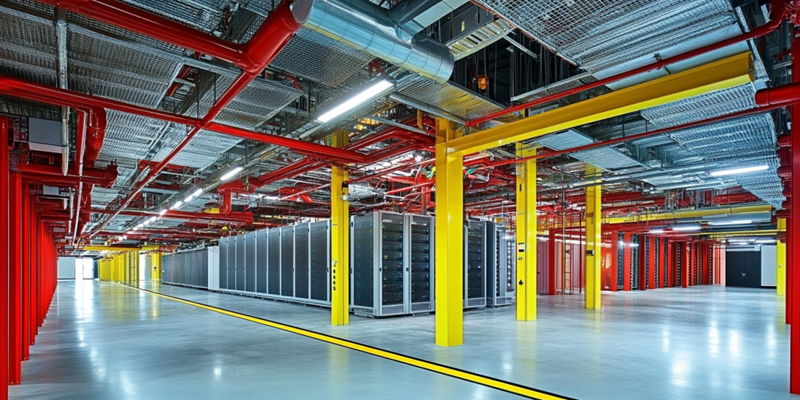
EcoDataCenter, a leading player in sustainable data infrastructure, has recently made headlines with its acquisition of a 20-acre plot at a former paper mill in Borlänge, Sweden. This move marks a significant step in the company’s ambitious plan to develop a “mega campus” data center. Located just 20 kilometers from EcoDataCenter’s existing site in Falun, the new location will not only bolster the company’s capacity but also potentially make it the largest data center in Sweden upon completion.
Strategic Location and Expansion Plans
Utilizing Existing Ecosystem
Strategically positioned, the new Borlänge site will benefit from proximity to EcoDataCenter’s initial data center in Falun, allowing for efficient interconnection between the two sites. This interconnectivity opens up opportunities for clients to build large compute clusters, taking advantage of the regional partner ecosystem already in place. According to Peter Michelson, CEO of EcoDataCenter, the existing infrastructure and partnerships offer significant strategic advantages, facilitating a more seamless scale-up process while enhancing overall operational efficiency.
The acquisition of the Borlänge site has been met with considerable excitement from local stakeholders. Previously owned by the Borlänge municipality, this site was initially intended for battery manufacturing by NorthVolt before the company withdrew. This change in plans presented an unexpected opportunity for EcoDataCenter to step in. Earlier this year, the company successfully acquired approximately one-third of the total plot. This move underscores EcoDataCenter’s commitment to expanding its capabilities in response to growing market demands for advanced data storage and AI infrastructure.
Job Creation and Economic Impact
The collaboration between EcoDataCenter and Borlänge Energi is set to have a profound impact on the local community and economy. The project is expected to create around 200 long-term jobs, while the initial establishment phase will involve approximately 400 individuals over the next seven to ten years. This development is not only a significant technological advance but also a considerable boon for local employment and economic activity. The influx of skilled professionals and infrastructure investment is likely to stimulate local businesses, promoting a thriving economic environment in Borlänge.
In alignment with its growth objectives and to support local infrastructure, EcoDataCenter has committed to partially fund infrastructure investments amounting to SEK 75 million (roughly $7.23 million). This financial contribution is a testament to the company’s dedication to supporting the local community while meeting its operational needs. With construction set to commence upon obtaining the necessary permits, the first data centers on the Borlänge site are expected to be operational by 2027, marking a significant milestone in EcoDataCenter’s journey towards expanding its data infrastructure footprint.
Sustainability and Technological Advancements
Renewable Energy Commitment
EcoDataCenter’s current operations across five data centers in three locations—Falun, Piteå, and Stockholm—are distinguished by a steadfast commitment to sustainability. The Falun site, in particular, is notable for being the first data center constructed entirely from wood. This unique facility runs exclusively on renewable energy sources such as hydropower and wind power, setting a high bar for eco-friendly data center operations. The site also features an innovative heat recovery system, which converts surplus energy into pellets, providing a renewable fuel source and further enhancing its green credentials.
This expansion in Borlänge is a natural extension of EcoDataCenter’s commitment to sustainable practices. The new mega campus will be designed to leverage renewable energy, ensuring that the growth in data capacity does not come at the expense of environmental responsibility. By integrating advanced energy efficiency technologies and sustainable building practices, EcoDataCenter aims to set new standards in the industry for eco-friendly data infrastructure. This focus on sustainability not only mitigates environmental impact but also aligns with the increasing demand from clients for greener compute solutions.
Boosting Local Economy and Technological Infrastructure
EcoDataCenter, a prominent name in sustainable data infrastructure, recently captured attention with its acquisition of a 20-acre site at a former paper mill in Borlänge, Sweden. This strategic move aligns with the company’s ambitious plan to establish a “mega campus” data center, situated just 20 kilometers from their existing facility in Falun. The new site’s proximity underscores EcoDataCenter’s commitment to scaling its operations while maintaining operational efficiencies.
Upon completion, this development could position EcoDataCenter as the largest data center in Sweden. The company’s focus on sustainability aims to set a new benchmark in the industry, leveraging renewable energy and innovative cooling solutions to reduce environmental impact. This expansion not only enhances their capacity but also strengthens their role as a leader in green technology.
The project reflects EcoDataCenter’s vision for the future, anticipating increased demand for data services while prioritizing ecological responsibility. As they pioneer advancements in sustainable practices, the new campus stands to significantly contribute to their long-term growth and industry influence.