

The sophisticated convergence of financial oversight and physical asset performance has become the defining characteristic of successful industrial enterprises in the current technological climate. The Dynamics 365 EAM integration represents a significant advancement in the industrial asset management sector, offering a bridge between the sterile world of corporate ledgers and the gritty reality of the production floor. This review explores the evolution of the technology, its key features, performance metrics, and the impact it has had on various applications. The purpose of this analysis is to provide a thorough understanding of the technology, its current capabilities, and its potential development patterns as organizations seek to optimize their physical infrastructure.
By moving beyond traditional silos, this integration allows for a fluid exchange of data that was previously locked in disparate systems. The core principle involves syncing the administrative power of Microsoft’s cloud ecosystem with the technical precision of specialized Enterprise Asset Management (EAM) tools. In the broader technological landscape, this distinction is vital. While Dynamics 365 excels at managing financial transactions, supply chain logistics, and human resources, it often requires an external partner to handle the intricate nuances of machine health and technical lifecycles. This synergy ensures that every repair performed on a machine is not just a technical event but a financial one, recorded and analyzed within the same digital framework.
Bridging the Operational Divide Between ERP and EAM
The emergence of unified maintenance ecosystems stems from a fundamental need to align the “brain” of the corporation with its “limbs.” Dynamics 365 serves as the central intelligence, housing the general ledger and overarching business logic. However, managing physical infrastructure through specialized EAM tools involves tracking variables that an ERP system is not inherently designed to process. For instance, while an ERP can record that a truck was purchased, it does not naturally monitor the vibrational frequency of its engine or the specific wear patterns on its brake pads. The integration fills this void by providing a technical layer that feeds specific, actionable maintenance data back into the financial core.
This context is essential because the modern industrial sector operates on razor-thin margins where equipment downtime can lead to catastrophic financial losses. The distinction between managing financial data and physical assets is becoming increasingly blurred as companies realize that asset reliability is a primary driver of profitability. By integrating a solution like LLumin CMMS+ with Dynamics 365, organizations can ensure that their financial office is never out of step with the maintenance floor. This creates a cohesive environment where procurement, budgeting, and technical operations function as a single, well-oiled machine rather than a collection of disconnected departments.
The evolution of this technology has moved toward a model of total visibility. In the past, maintenance teams might have operated in a vacuum, making decisions based on immediate needs without considering the long-term budgetary impact. Conversely, financial officers might have cut maintenance budgets without understanding the technical risks. The integrated approach dismantles these barriers. It provides a platform where the cost of a spare part and the necessity of its installation are visible to all stakeholders simultaneously. This transparency fosters a culture of accountability and strategic planning that is impossible to achieve with manual processes or disconnected software.
Fundamental Components of a Unified Maintenance Ecosystem
Automated Work Order Management and Specialized Workflows
One of the most transformative elements of this integration is the transition from paper-based or rudimentary digital systems to sophisticated, automated work order management. In an integrated environment, a work order is no longer just a request for repair; it is a data-rich document that triggers a cascade of events across the organization. When a technical anomaly is detected, the EAM system can automatically generate a work order, assign it to the most qualified technician based on their skills and availability, and reserve the necessary parts from the inventory managed within Dynamics 365. This level of automation significantly reduces the administrative burden on maintenance managers and ensures that no critical task falls through the cracks. The performance of these specialized workflows is measured by their ability to maintain asset longevity through consistent, standardized care. By digitizing the technical lifecycle, the integration allows for the creation of rigorous maintenance schedules that are adhered to with mathematical precision. These workflows also facilitate the capture of detailed historical data. Every repair, inspection, and part replacement is logged, creating a comprehensive “birth-to-death” record for every asset. This historical context is invaluable when it comes to making data-driven decisions about whether to continue repairing a piece of equipment or to replace it entirely.
Furthermore, these digital workflows allow for better compliance and safety management. In many industries, the failure to perform a scheduled inspection can lead to significant legal and financial penalties. The integrated system provides an unalterable audit trail, proving that all safety protocols were followed and all equipment was maintained according to regulatory standards. This is not merely a matter of convenience; it is a critical component of risk mitigation. The synergy between the EAM’s technical focus and the ERP’s administrative oversight ensures that compliance is a natural byproduct of daily operations rather than a separate, burdensome task.
IoT-Driven Predictive Maintenance and Real-Time Monitoring
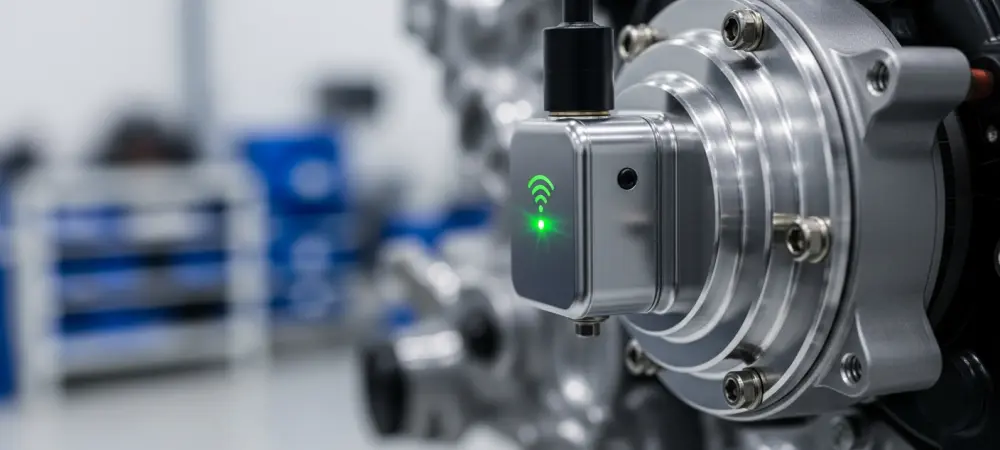
The integration utilizes sensor data and machine-to-machine communication to move beyond the antiquated model of reactive repairs. In a traditional setting, maintenance is often performed on a fixed schedule—regardless of the actual condition of the machine—or after a failure has already occurred. Both approaches are inefficient. Predictive maintenance, powered by the Internet of Things (IoT), changes this dynamic by monitoring equipment in real time. Sensors attached to critical assets track temperature, pressure, vibration, and other key indicators. When these metrics deviate from established norms, the system alerts the maintenance team before a failure happens.
This technical performance is a game-changer for asset-intensive organizations. By analyzing streams of data, the integration can identify subtle patterns that precede a breakdown. This allows for “just-in-time” maintenance, where repairs are performed only when necessary, but always before a critical failure. The impact on real-world usage is profound; it minimizes unplanned downtime and extends the useful life of expensive machinery. Instead of a production line grinding to a halt on a Tuesday afternoon, a technician can be dispatched on a Sunday morning to replace a bearing that was predicted to fail within forty-eight hours.
The real-time monitoring aspect also feeds critical information back into the Dynamics 365 environment. For example, if a machine is running hot, the system might not only trigger a work order but also adjust production schedules within the ERP to reduce the load on that specific asset. This high level of synchronization ensures that the business can adapt to physical realities in real time. It represents a shift from viewing maintenance as a necessary evil to seeing it as a proactive strategy for operational excellence. The integration of IoT data into the broader business logic allows for a level of agility that was previously unattainable.
Emerging Trends in Digital Asset Management and Industry 4.0
The shift toward “IoT-first” platforms is currently the most significant trend within the field of digital asset management. Modern EAM solutions are no longer just repositories for data; they are active participants in the industrial process. The influence of Industry 4.0 has forced a total rethink of how organizations synchronize their financial office with the maintenance floor. This movement emphasizes the use of smart technology and automated data exchange to create “smart factories” where machines, systems, and humans communicate seamlessly. In this context, the EAM integration acts as the vital link that translates mechanical data into business intelligence.
Another emerging trend is the democratization of data across the enterprise. In the past, only the maintenance department had access to equipment health data. Now, that information is increasingly available to production planners, financial analysts, and even executive leadership through integrated dashboards. This widespread access to information allows for more collaborative decision-making. When everyone from the shop floor to the C-suite is looking at the same real-time data, the organization can respond to challenges with greater speed and unity. This trend toward data transparency is a direct result of the deeper integration between ERP and EAM systems.
Moreover, there is a growing focus on mobility and remote access. As industrial operations become more geographically dispersed, the ability to manage assets from any location has become essential. Technicians in the field can now access work orders, technical manuals, and inventory data on their mobile devices, while managers can monitor the health of an entire fleet of assets from a central office. This mobile-first approach is highly integrated with the cloud capabilities of Dynamics 365, ensuring that data is synced in real time across the entire network. This trend is significantly reducing the time spent on administrative tasks and increasing the time spent on actual maintenance work.
Practical Implementations Across Asset-Intensive Sectors
Real-world applications of this technology are most visible in industries like manufacturing, where a single hour of downtime can cost thousands of dollars. By deploying an integrated EAM and ERP solution, manufacturers can synchronize their maintenance schedules with their production runs, ensuring that critical machinery is only taken offline during planned intervals. In the utility sector, the technology is used to monitor vast networks of pumps, transformers, and transmission lines. Here, the integration helps prevent service outages that could affect thousands of customers, while also ensuring that all maintenance activities are accurately reflected in the utility’s complex regulatory reporting.
Fleet operations represent another unique use case for this technology. Organizations managing large numbers of vehicles use the integration to track the total cost of ownership for every unit. By linking maintenance records with fuel consumption data and procurement costs in Dynamics 365, managers can identify which vehicles are becoming too expensive to maintain. This allows for optimized fleet replacement strategies based on hard data rather than intuition. Furthermore, the integration allows for the optimization of spare parts inventory through direct procurement links. When a specific part is used for a repair, the system automatically adjusts inventory levels and, if necessary, triggers a purchase requisition in Dynamics 365.
This direct link to procurement is a significant advantage. In many organizations, the maintenance department and the purchasing department operate independently, leading to delays and errors. With an integrated system, the procurement process is streamlined and automated. This ensures that the right parts are always available when they are needed, without the expense of overstocking. The ability to manage specialized “just-in-case” inventory within the same system that handles general office supplies provides a level of control that is essential for maintaining high-performance operations in a volatile global supply chain.
Navigating Technical Hurdles and Implementation Obstacles
Despite the clear benefits, the integration of ERP and EAM systems is not without its challenges. One of the most persistent hurdles is the existence of legacy data silos. Many organizations have decades of data stored in manual logs, spreadsheets, or outdated software that does not easily migrate to a modern cloud environment. Moving away from these manual processes requires a significant investment in time and training. There is often cultural resistance within maintenance teams who may be skeptical of new digital tools or concerned that automation will replace their expertise. Overcoming this resistance requires a clear demonstration of how the technology makes their jobs easier and safer.
Another complexity involves aligning maintenance needs with corporate budgeting. Maintenance is often viewed as a cost center, and during lean times, it is one of the first areas to see budget cuts. However, delaying maintenance often leads to much higher costs in the long run due to equipment failure. The integrated system helps address this by providing the financial office with clear evidence of the ROI on maintenance activities. Still, the technical difficulty of moving data between systems with different structures and priorities can be significant. Ongoing development efforts are focused on improving user interfaces and creating more robust data synchronization tools to mitigate these limitations.
Furthermore, the initial implementation phase can be daunting. It requires a deep understanding of both the financial workflows of Dynamics 365 and the technical requirements of the maintenance department. Organizations often struggle with data mapping—ensuring that a “part number” in the EAM system corresponds exactly to the “SKU” in the ERP. If these connections are not perfectly aligned, the integration will fail to provide accurate information. Continuous efforts in the software development community are directed toward creating pre-built connectors and standardized data models that simplify this process and reduce the time required for a successful rollout.
The Future of Maintenance: Predictive Intelligence and Automation
Looking forward, the technology is heading toward even deeper AI integration and the potential for autonomous maintenance scheduling. As artificial intelligence becomes more sophisticated, it will be able to analyze vast datasets to not only predict failures but also to recommend the most efficient repair strategies. We can expect to see systems that can autonomously negotiate with suppliers for the best prices on parts or reschedule production runs without human intervention when a machine health issue is detected. This move toward “self-healing” industrial ecosystems represents the next frontier of the ERP and EAM synergy.
The long-term impact on global supply chains will be significant. As organizations gain better visibility into their asset performance and maintenance needs, they will be able to operate with much lower levels of safety stock. This efficiency will ripple through the supply chain, reducing waste and improving the overall resilience of the industrial sector. The shift from maintenance as a cost center to a strategic investment will be complete as companies realize that their physical assets are their most valuable capital. The integration of advanced intelligence into these systems will provide a competitive edge that defines the market leaders of the next decade.
Additionally, we may see the rise of “as-a-service” models for industrial equipment, where manufacturers retain ownership of the machines and charge customers based on uptime and performance. This model is only possible with the kind of deep integration and real-time monitoring discussed in this review. By tracking every aspect of an asset’s performance and maintenance, manufacturers can guarantee reliability to their customers while optimizing their own service operations. This fundamental shift in business logic will be driven by the continued evolution of the digital bond between financial and technical management systems.
Assessment of the Dynamics 365 and EAM Synergy
The integration of Microsoft Dynamics 365 with specialized EAM solutions established a new benchmark for operational excellence in asset-intensive industries. The analysis demonstrated that while an ERP provided a necessary financial foundation, it was the specialized technical capabilities of the EAM that ensured the physical health and reliability of the enterprise. The dual-system approach allowed organizations to eliminate the traditional gap between the corporate office and the production floor, creating a unified environment where every technical action had a clear financial context. This synergy proved essential for companies looking to thrive in an era defined by rapid technological change and increasing competition.
The transition to an integrated maintenance ecosystem represented a shift from a reactive, “run-to-failure” mindset to a proactive, data-driven strategy. The implementation of IoT-driven predictive maintenance and automated workflows significantly reduced unplanned downtime and extended the life of critical assets. While challenges such as data silos and cultural resistance remained, the ongoing development of better synchronization tools and more intuitive user interfaces offered a clear path forward. The technology’s current state was robust, but its potential for future advancement through AI and autonomous automation suggested that the most significant benefits were yet to be realized.
Ultimately, the synergy between Dynamics 365 and EAM tools like LLumin CMMS+ redefined the role of maintenance within the modern enterprise. It was no longer viewed as an isolated technical function but as a core component of the organization’s overall financial and operational health. The assessment of this technology indicated that it was a vital investment for any company whose profitability depended on the reliability of physical infrastructure. By bridging the operational divide, organizations ensured that their most valuable assets were managed with the same level of precision and strategic oversight as their financial capital, securing their position in a high-performance future.