

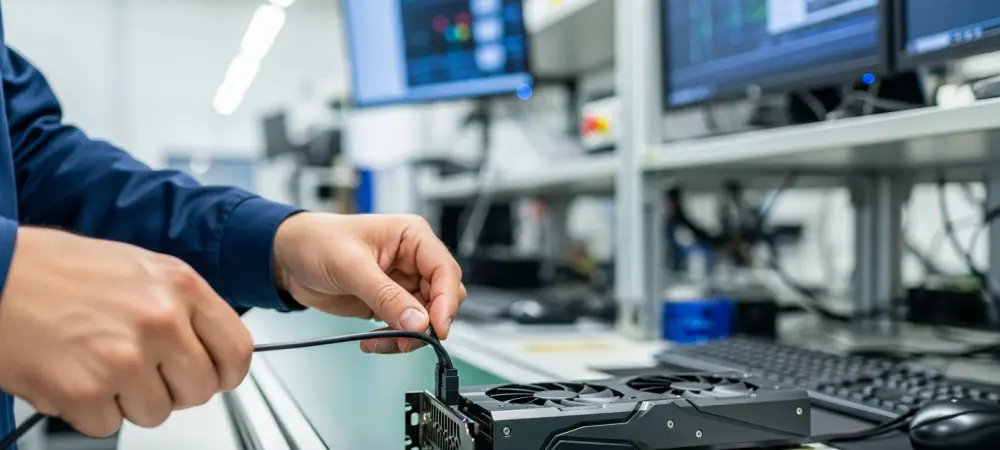
The rapid evolution of high-performance computing hardware often leads to a disconnect between physical design and actual electrical requirements, as seen in the recent decision to equip the GeForce RTX 5060 with a 16-pin power interface. This shift represents more than just a change in physical wiring; it signals a total departure from the legacy 8-pin PCIe standard that has dominated the mid-range segment for over a decade. While the Blackwell-based 60-series card typically operates within a thermal design power envelope of roughly 115 to 130 watts, the inclusion of a connector capable of delivering up to 600 watts has sparked a debate regarding necessity versus standardization. Critics argue that the bulk of the new cables is overkill for such a modest component, yet the move toward the 12V-2×6 specification suggests a strategy focused on long-term stability and streamlining the assembly process across all tiers of the current generation of hardware.
Engineering Standards: Refining Power Delivery Systems
Improving Electrical Efficiency Through the 12V-2×6 Revision
The implementation of the 12V-2×6 connector on the RTX 5060 serves a technical purpose that extends far beyond simple power throughput, primarily focusing on the intelligent communication between the power supply and the graphics card. Unlike the previous 8-pin standard, which provided power without any sophisticated feedback loop, this modern interface utilizes dedicated sense pins to ensure that the electrical connection is fully seated before the full current is allowed to flow. This safety mechanism is particularly beneficial in mainstream builds where builders might be less experienced with the tactile feedback of modern hardware installations. By enforcing a stricter standard for physical connectivity, the industry effectively mitigates the risks of high-resistance junctions that could lead to heat buildup. Furthermore, the 12V-2×6 revision introduces shorter sense pins that prevent the card from drawing significant power unless the connector is pushed in for a secure fit.
Simplifying Global Manufacturing and Board Layouts
Beyond the immediate electrical benefits, the decision to use a single connector type across the entire Blackwell product stack simplifies the logistical challenges associated with board manufacturing and shroud design. When a manufacturer can utilize a consistent layout for power delivery components, it reduces the complexity of the printed circuit board design and allows for more standardized cooling solutions across different models. For the RTX 5060, this means that even though the power draw is low, the internal circuitry can follow a refined blueprint that has been optimized for the latest power delivery protocols. This uniformity enables vendors to produce cards more efficiently, potentially lowering the manufacturing costs that would otherwise be spent maintaining different production lines for legacy and modern connectors. Moreover, this transition ensures that the mid-range market remains integrated into the current high-performance ecosystem which utilizes the most advanced cabling.
Consumer Impact: Navigating the Mainstream Hardware Shift
Addressing Compatibility Concerns for Legacy Power Supplies
For many enthusiasts, the arrival of a 16-pin connector on a mid-range card raises immediate questions about the longevity of their current hardware, particularly power supplies that lack native support for the new standard. While most manufacturers include an adapter in the box to bridge the gap between dual 8-pin cables and the new 12V-2×6 header, these solutions are often viewed as a temporary measure rather than a permanent fix. Using an adapter adds extra clutter to the case and introduces additional points of potential failure, which contradicts the goal of a clean and efficient PC build. However, as the market moves toward ATX 3.1 specifications, the native 16-pin cable becomes the preferred choice for its ability to handle transient power spikes more gracefully than older standards. Even though the RTX 5060 does not exhibit massive surges, having a power delivery system that can manage fluctuations with precision contributes to overall system stability and longevity.
Promoting Best Practices for System Stability and Safety
Navigating the transition toward the 16-pin standard required a balanced approach to hardware selection and system planning. Builders who prioritized future-proofing opted for ATX 3.1 power supplies to eliminate the need for adapters and ensured a more reliable electrical connection for their mid-range components. This shift encouraged the community to adopt better installation habits, such as verifying cable seating and avoiding aggressive cable bends near the connector interface. Moving forward, the industry benefited from this consolidation as it paved the way for more efficient power delivery systems that could be scaled across all performance tiers. Integrating these modern standards early allowed for a smoother upgrade path when users eventually transitioned to even more demanding hardware. Ultimately, the adoption of the high-capacity connector on the RTX 5060 served as a catalyst for a more unified and safer building ecosystem, proving that standardization was a vital step in the evolution of graphics.