

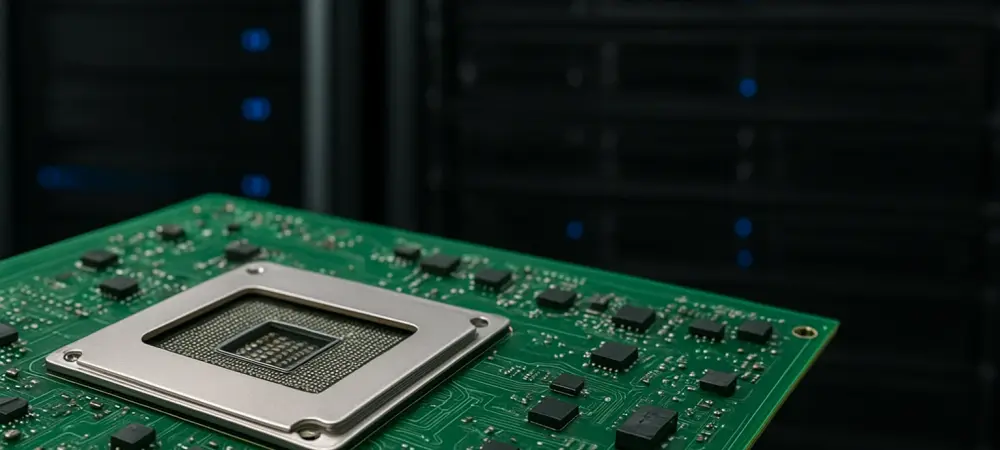
The presence of a legacy DB15 VGA port alongside modern digital standards ensures compatibility with existing data center crash carts and monitoring infrastructure. The AMD EPYC 8005 “Sorano” processor series addresses this need by providing the Zen 5 core architecture on a more streamlined SP6 platform. Unlike the larger SP5 socket, which is built for massive multi-socket configurations and maximum core counts, the SP6 focuses on providing a balanced performance-per-watt ratio that is ideal for edge computing and dedicated server roles. The ASRock Rack SORANOD8-2L2T serves as the flagship vessel for this architecture, offering a meticulously engineered platform that avoids the pitfalls of over-specification while delivering essential enterprise-grade features. Its ability to host up to 84 cores while maintaining a relatively compact footprint allows for a level of density that was previously reserved for much more expensive and power-hungry enterprise solutions.
Architecture and Physical Build
The physical layout of the SORANOD8-2L2T is a testament to the efficient distribution of modern high-bandwidth interfaces across a standardized footprint. While many enterprise boards require proprietary chassis or oversized enclosures, this motherboard adheres to an “ATX-like” specification that facilitates easier integration into existing infrastructure. Measuring 12 inches by 10 inches, it provides just enough extra width to accommodate the massive SP6 socket and its accompanying memory lanes without encroaching on the space required for standard mounting points. This specific sizing allows system builders to utilize a wider variety of rackmount chassis, including those originally designed for high-end workstations or legacy server systems. The board’s aesthetic is intentionally utilitarian, eschewing the colorful shrouds and integrated lighting found in consumer products in favor of exposed, high-quality components designed for 24/7 reliability. This approach ensures that airflow is unobstructed, a critical factor when the processor and high-speed networking components are operating under full load. By focusing on the structural integrity of the PCB and the strategic placement of expansion slots, ASRock Rack has created a platform that is as durable as it is capable, providing a stable environment for the latest Zen 5 silicon to perform at its peak without thermal throttling or electrical interference.
Processor Synergy: Leveraging the Sorano Platform
The core of the motherboard’s appeal lies in its native support for the AMD EPYC 8005 “Sorano” lineup, which brings full-performance Zen 5 cores to the mid-tier market. While previous iterations of the SP6 platform relied on the high-efficiency Zen 4c cores, the current transition to Zen 5 allows for significantly higher single-threaded performance and instruction-per-clock improvements. The SORANOD8-2L2T is engineered to handle the specific electrical and thermal demands of these chips, which can scale up to 84 cores while staying within a manageable 225W thermal design power. This efficiency is particularly important for edge deployments and smaller data centers where cooling capacity may be limited compared to massive hyperscale facilities. The motherboard’s BIOS and power delivery system are tuned to maximize the boost clocks of these processors, ensuring that even bursty workloads receive the necessary compute power instantaneously. Furthermore, the native integration of 96 lanes of PCIe Gen5 directly from the CPU allows the SORANOD8-2L2T to offer massive throughput for peripheral devices without the latency penalties associated with external chipsets or complex signal routing. This creates a highly responsive system that can handle simultaneous high-speed networking and intensive storage operations with ease, making it a formidable choice for contemporary virtualization and containerized applications.
Physical Design: Stability and Thermal Efficiency
Engineering a motherboard for the SP6 socket requires a careful balance of component density and thermal management, especially considering the 12-inch by 10-inch form factor. ASRock Rack has opted for a “rock-solid” design that utilizes a robust voltage regulator module system capable of providing consistent power to the CPU under sustained loads. The VRM heatsinks are low-profile and strategically placed to take advantage of the forced-air cooling common in 1U and 2U server chassis. This ensures that even when the system is packed into a dense rack, the power delivery components remain within safe operating temperatures. The physical layout also prioritizes the spacing of the four PCIe Gen5 x16 slots, which are double-spaced to allow for the installation of dual-slot professional GPUs or FPGA accelerators. This arrangement is a significant advantage for users looking to deploy the board in AI inference or media transcoding roles, where physical clearance is often as important as electrical bandwidth. The inclusion of open-ended PCIe slots further enhances the board’s versatility, allowing for the installation of longer cards that might only require x8 electrical connectivity. Every aspect of the physical build, from the thickness of the PCB to the reinforced expansion slots, is designed to withstand the rigors of industrial use, ensuring that the motherboard remains a reliable foundation for years of continuous service.
Memory and Storage Innovations
The storage and memory subsystems of a modern server often dictate its practical limitations more than the processor itself, and it is here that the SORANOD8-2L2T shows its true versatility. In a market where high-speed NVMe storage has become the standard, the board offers a sophisticated array of connectors that can be tailored to specific organizational needs. The inclusion of two M.2 slots that support both 2280 and 22110 form factors ensures that enterprise-grade SSDs with power-loss protection can be used for boot drives or high-speed caching. Beyond the standard M.2 interfaces, the motherboard introduces multi-modal MCIO connectors that serve as the backbone for high-density storage expansion. These connectors are particularly innovative because they can be reconfigured via the BIOS to operate in different signaling modes. This means a single motherboard can serve as the heart of an ultra-fast NVMe-based flash array or a high-capacity SATA storage server, depending on the cabling and drives used. This level of adaptability is rare in the mid-tier market and provides a future-proof path for organizations whose storage requirements might evolve over the course of the hardware’s lifecycle. By integrating these high-speed interfaces directly into the platform, ASRock Rack has eliminated the need for many expensive add-in cards, reducing the total cost of ownership for the system.
Hybrid Memory Configuration: Balancing Capacity and Density
The memory architecture of the SORANOD8-2L2T is perhaps its most unique feature, utilizing an 8-slot DDR5 RDIMM configuration to bridge the gap between standard memory layouts. Because the AMD SP6 platform is natively built on a 6-channel memory architecture, a standard 1-DIMM-per-channel setup would only offer 6 slots, while a 2-DIMM-per-channel setup would require 12. ASRock Rack’s choice to provide 8 slots is a calculated compromise that allows the motherboard to maintain its compact footprint while offering more capacity than a standard 6-slot board. To make this work, two of the six channels are equipped with secondary slots, allowing for a total memory capacity of up to 2TB when using high-density modules. While this configuration does result in a slight reduction in peak memory frequency to DDR5-5200 compared to the DDR5-6400 potential of a strictly 6-slot board, the trade-off for higher total capacity is often more beneficial for virtualization and large-scale database workloads. To assist system administrators in correctly populating these slots, ASRock has implemented a clear color-coding system where the primary slots are blue and the expansion slots are black. This helps prevent configuration errors during initial setup or memory upgrades, ensuring that the system operates at its maximum potential bandwidth for the given memory density.
Storage Flexibility: The Multi-Modal Interface Advantage
Expansion and storage flexibility are the hallmarks of a truly versatile server motherboard, and the SORANOD8-2L2T delivers this through its intelligent use of PCIe Gen5 lanes. The two MCIO x8 connectors on the board are capable of delivering 16 lanes of Gen5 bandwidth, which can be split to support multiple EDSFF NVMe drives for high-performance storage pools. However, for organizations that still rely on high-capacity mechanical drives or legacy SATA SSDs, these same connectors can be toggled to support up to 16 SATA 6Gbps connections. This flexibility is a game-changer for mid-tier deployments, as it allows the same hardware platform to be used for vastly different roles, such as a high-speed scratch disk for video editing or a massive cold-storage archive for regulatory compliance data. Furthermore, the motherboard supports advanced RAID configurations through its integrated controllers, providing a layer of data redundancy that is essential for mission-critical applications. The inclusion of thumbscrews for M.2 retention is a small but impactful detail that simplifies maintenance for data center technicians, allowing for quick drive replacements without the need for specialized tools. This focus on both performance and serviceability ensures that the SORANOD8-2L2T remains an efficient and adaptable part of the server environment, regardless of how storage technologies may shift in the coming years.
Connectivity and Power Management
The integrated networking and management capabilities of the SORANOD8-2L2T are designed to meet the rigorous demands of modern 10GbE environments without requiring additional expansion cards. The “2L2T” suffix in the product name refers to the dual 10GbE ports and dual 1GbE ports, which provide a total of four high-speed network interfaces directly on the rear I/O. The 10GbE connectivity is powered by the proven Intel X710-AT2 controller, which supports a variety of speeds and ensures compatibility with a wide range of enterprise switches and routers. This robust networking stack is essential for virtualization hosts where high-speed trunking and live migration traffic require dedicated bandwidth to prevent bottlenecks. Additionally, the inclusion of dual 1GbE ports provides a reliable path for management traffic or lower-priority services, allowing the 10GbE links to be dedicated entirely to data-heavy workloads. This integrated approach not only saves valuable PCIe slots for other expansion needs but also simplifies the cabling and configuration of the server. The board’s focus on high-speed, reliable networking reflects the reality of 2026 data centers, where connectivity is the primary driver of application performance and user experience.
Remote Management: The Role of the ASPEED AST2600
Reliable remote management is a non-negotiable requirement for server hardware, and the SORANOD8-2L2T provides this through the inclusion of the ASPEED AST2600 Baseboard Management Controller. This dedicated processor allows system administrators to monitor hardware health, perform remote BIOS updates, and access the system via KVM-over-IP from any location. The dedicated IPMI port ensures that management traffic remains isolated from the main data network, enhancing security and ensuring that the board can be accessed even if the main operating system is unresponsive. The AST2600 is widely recognized for its stability and extensive feature set, including detailed logging of thermal and electrical data that can be used for predictive maintenance. By providing a comprehensive view of the system’s internal state, the BMC allows for more efficient management of large-scale deployments, reducing the need for physical access to the server room. This is particularly valuable for edge computing scenarios where servers may be located in remote or unmanned locations. The persistence of the VGA port alongside these modern management features ensures that local troubleshooting is always an option, providing a failsafe for scenarios where network-based management is unavailable or compromised.
Power Infrastructure: Industrial Standards for Maximum Uptime
The power delivery system of the SORANOD8-2L2T is designed to meet the strict requirements of enterprise-grade power supplies, eschewing the standard 24-pin ATX header in favor of a 4-pin signaling connector. This configuration is typical of high-end server boards and allows for more precise communication between the motherboard and the power supply unit. Power is primarily delivered through three ATX12V connectors, ensuring that the high-current demands of the CPU and PCIe slots are met with minimal voltage drop. This industrial-focused power architecture is complemented by six 6-pin fan headers that provide more granular control and feedback than standard 4-pin consumer headers. These 6-pin headers are capable of driving high-RPM industrial fans, which are necessary for maintaining airflow in dense rackmount enclosures. The ability to monitor and adjust fan speeds based on real-time thermal data from the BMC allows for a more efficient cooling strategy, reducing noise and power consumption when the system is under light load. This sophisticated power and cooling management infrastructure ensures that the motherboard remains stable even in the most demanding operating conditions, providing the reliability that organizations expect from a professional server platform.
Market Purpose and Deployment
While the ASRock Rack SORANOD8-2L2T is marketed as a versatile solution for both servers and workstations, its true strengths lie in its ability to serve as a high-density compute node. The rear I/O panel is notably Spartan, featuring only the essential ports required for server operation, such as USB 3.2 Gen1 and the aforementioned networking and management interfaces. This lack of consumer-oriented features like integrated audio or high-speed USB-C ports is a deliberate choice that frees up PCB space and reduces the complexity of the board. For organizations deploying this hardware in a workstation role, the abundance of PCIe Gen5 slots allows for the addition of any necessary peripherals through expansion cards, ensuring that the primary focus remains on core compute and I/O performance. This modular approach is ideal for specialized professional environments where the specific hardware requirements can vary significantly from one project to the next. By providing a clean and efficient foundation, ASRock Rack has created a motherboard that can be adapted to a wide range of professional tasks, from local development servers to high-performance edge gateways.
Strategic Integration: Actionable Steps for Modern Infrastructure
Organizations looking to implement the SORANOD8-2L2T should begin by assessing their specific workload requirements to take full advantage of the platform’s multi-modal I/O. The primary benefit of this motherboard is its ability to adapt to different storage and networking configurations without requiring a hardware overhaul. For those focused on high-speed data processing, utilizing the MCIO ports for NVMe storage and the 10GbE links for data transfer will provide the best performance. In contrast, for high-density storage applications, reconfiguring the MCIO ports for SATA signaling and utilizing the PCIe slots for HBA cards can turn a single node into a massive repository. System architects should also consider the “ATX-like” form factor when selecting chassis, ensuring that the enclosure provides adequate clearance for the 10-inch width and sufficient airflow for the 225W CPU. By planning for these specific physical and electrical requirements, organizations can ensure a smooth deployment and maximize the lifespan of their investment. The SORANOD8-2L2T offers a unique opportunity to consolidate various server roles onto a single, reliable platform, simplifying the hardware stack and reducing long-term maintenance costs.
Historical Context: The Impact of the Sorano Architecture
The ASRock Rack SORANOD8-2L2T successfully established itself as a pivotal tool for organizations transitioning to the Zen 5 architecture on the SP6 platform. By providing a high-density, power-efficient foundation, it allowed for the deployment of sophisticated computing capabilities in environments that were previously limited by thermal or space constraints. The board’s ability to balance 84 cores with massive Gen5 I/O throughput was instrumental in the growth of edge computing and localized virtualization. In many ways, the SORANOD8-2L2T set the standard for the current generation of mid-tier servers, proving that enterprise-grade features could be delivered in a more accessible and versatile package. Its impact was felt most strongly in sectors where high-speed storage and reliable networking were the primary drivers of success, such as financial modeling, media production, and scientific research. As organizations looked back on their infrastructure decisions, the flexibility and reliability of the ASRock Rack platform remained a highlight of their hardware strategy. Ultimately, the SORANOD8-2L2T provided the stability and performance needed to navigate the complexities of the modern data-centric landscape, solidifying ASRock Rack’s reputation as a leader in specialized server hardware.