

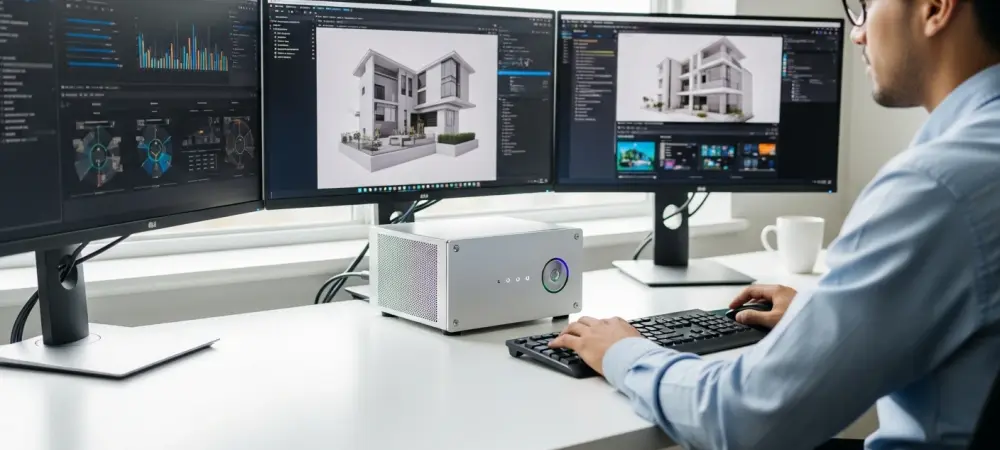
The modern professional workstation has moved far beyond the days when a higher clock speed was the only metric that mattered for productivity and success. As digital environments become increasingly complex, the introduction of the Ryzen AI 400 series signals a pivotal departure from traditional silicon design. AMD is now betting that the future of computing depends on how well a machine can think for itself, rather than just how fast it can push through raw numbers or render a single frame.
This transformation moves machine learning from the distant cloud directly into the heart of the local desktop. By prioritizing dedicated silicon for background tasks, AMD shifts the focus of the PC from a passive tool to an active assistant. This evolution suggests that the next generation of performance will be measured by how seamlessly hardware can anticipate user needs through real-time data processing and intelligent automation.
The Shift: From Traditional Power to Intelligent Processing
The desktop landscape is undergoing a fundamental transformation where raw clock speeds are no longer the sole metric of a powerful PC. With the introduction of the Ryzen AI 400 series, AMD is signaling that the future of the workstation lies in local silicon dedicated specifically to machine learning. This transition represents a departure from traditional performance upgrades, focusing instead on how a computer thinks and assists rather than just how fast it renders.
Moving away from the brute-force approach of the past, these new processors emphasize a balanced architecture that handles diverse workloads simultaneously. By delegating complex pattern recognition and predictive tasks to specialized components, the main CPU cores remain free to maintain system responsiveness. This structural change ensures that heavy computational demands do not paralyze the user interface, creating a more fluid and intuitive interaction between human and machine.
Why the Arrival of Desktop NPUs Changes the Computing Landscape
For years, heavy AI workloads were relegated to the cloud or high-end discrete GPUs, leaving the average desktop user dependent on internet connectivity and subscription services. The integration of a dedicated Neural Processing Unit (NPU) directly into the CPU architecture changes this dynamic by enabling low-latency, private, and efficient AI processing on-device. Local hardware now handles sensitive data without sending it to external servers, which significantly improves both security and speed.
As software developers increasingly lean into AI-driven features for video conferencing, content creation, and cybersecurity, having local hardware to support these tasks becomes a necessity rather than a luxury for the modern professional. The presence of an NPU allows for sophisticated noise cancellation, background blur, and real-time malware detection to run continuously without draining system resources. This shift empowers users to maintain a high level of performance even when working offline or in bandwidth-constrained environments.
Decoding the Ryzen AI 400 Series: Architecture and Performance
The Ryzen AI 400 series serves as a strategic mid-generation refresh of the Zen 5 architecture, specifically engineered to replace the Ryzen 8000 lineup. By combining the efficiency of RDNA 3.5 graphics cores with the power of the XDNA 2 NPU, these chips achieve a significant milestone in local processing. The integration of these technologies allows for a more cohesive data flow between the graphics and intelligence units, maximizing the efficiency of every watt consumed. These processors deliver up to 50 trillions of operations per second, comfortably meeting the hardware requirements for the Microsoft Copilot+ PC ecosystem. Led by the flagship Ryzen AI 7 Pro 450G—boasting 8 cores and a 5.1 GHz boost clock—the series prioritizes enterprise stability and efficiency. The range includes specialized “Pro” variants and lower-power models like the 440G and 425G, highlighting a focus on office productivity over the enthusiast gaming market.
Industry Implications: Why AMD Is Rebranding the Desktop Experience
Industry analysts view the Ryzen AI 400 series as more than just a product launch; it is a tactical pivot in marketing and supply chain management. By focusing on the professional and enterprise sectors, AMD can navigate potential semiconductor shortages while establishing a foothold in the burgeoning AI-PC market. This focus on the business sector ensures a steady demand for hardware that directly contributes to corporate efficiency and long-term digital transformation. The shift in nomenclature—moving away from traditional numerical sequences toward “AI” branding—suggests that the era of the Ryzen 10000 series may be bypassed entirely in favor of a nameplate that highlights machine learning capabilities. This move forces a broader conversation about whether standard CPUs without AI acceleration will soon be considered obsolete. Such rebranding reinforces the idea that intelligence is now a core component of the silicon identity, rather than a secondary feature.
Preparing Your Infrastructure for the Local AI Transition
Adopting this new era of desktop hardware requires a shift in how IT departments and professionals approach their hardware cycles. To maximize the utility of the Ryzen AI 400 series, users should focus on specific implementation strategies that align with their operational goals. This involves looking beyond the spec sheet to understand how integrated intelligence can solve specific bottlenecks within daily workflows.
Prioritizing the deployment of applications that specifically leverage NPUs for background tasks, such as noise cancellation and automated video editing, became a primary objective for early adopters. When upgrading fleet hardware, the evaluation criteria shifted from core counts alone to the efficiency of the NPU and its impact on thermal management in small-form-factor office PCs. Decision-makers ensured that new desktop deployments met the 50 TOPS benchmark to guarantee compatibility with evolving operating system features that required local acceleration.