

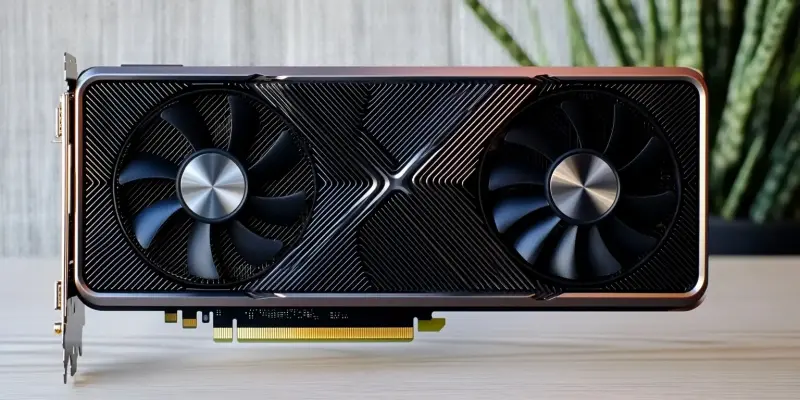
In a surprising turn of events that has sparked significant speculation among gaming and tech enthusiasts, a French retailer accidentally listed an Acer PC equipped with Nvidia’s upcoming GeForce RTX 5060 GPU. The premature listing occurred ahead of Nvidia’s anticipated official announcement of the RTX 50 series GPUs, including the eagerly awaited RTX 5060. It is worth noting that this GPU sports 8GB of memory, mirroring the specifications of its predecessor, the RTX 4060.
The leaked information came via the Acer Nitro 50 N50-656 tower, which was briefly available for €1,589 before being marked as “Currently unavailable.” This high-performance PC boasted a 14th Gen Intel Core i7-14700F processor, 32GB DDR5 memory, and a 1TB SSD, all housed in a tower with a subtle gamer aesthetic. The premature appearance of these robust specifications has only heightened the excitement for the official launch of Nvidia’s RTX 50 series.
Competitive Landscape and Expected Variants
The leak confirms expectations that the RTX 5060 Ti will come in 8GB and 16GB variants, following Nvidia’s strategy to offer multiple memory configurations catering to different budgets and user needs. Historically, lower memory models have been more affordable, with significant price differences. For instance, the RTX 4060 Ti’s 8GB model was $100 cheaper than its 16GB counterpart. This pricing strategy is likely to apply to the RTX 5060 as well, making it appealing to both cost-conscious consumers and those seeking higher performance.
The current RTX 50 series from Nvidia includes high-end models like the flagship RTX 5090 priced at $1,999, RTX 5080 at $999, RTX 5070 Ti at $749, and RTX 5070 at $549. Nvidia faces strong competition from AMD’s aggressively priced Radeon RX 9070 XT at $599 and RX 9070 at $549, with the RX 9070 XT noted for its impressive performance, heightening the rivalry in the GPU market.
While Manufacturer’s Suggested Retail Prices (MSRPs) provide a guideline, actual retail prices are often higher, especially post-launch. However, Nvidia’s partners are expected to ensure better supply for midrange GPUs like the RTX 5060, helping to mitigate some pricing and availability issues seen with high-end models.
The accidental leak of the RTX 5060 specs has generated excitement and underscored the competitive GPU market dynamics. As gamers and tech enthusiasts await Nvidia’s official announcement, the midrange offering, coupled with AMD’s aggressive pricing, promises an exciting period for GPU technology.