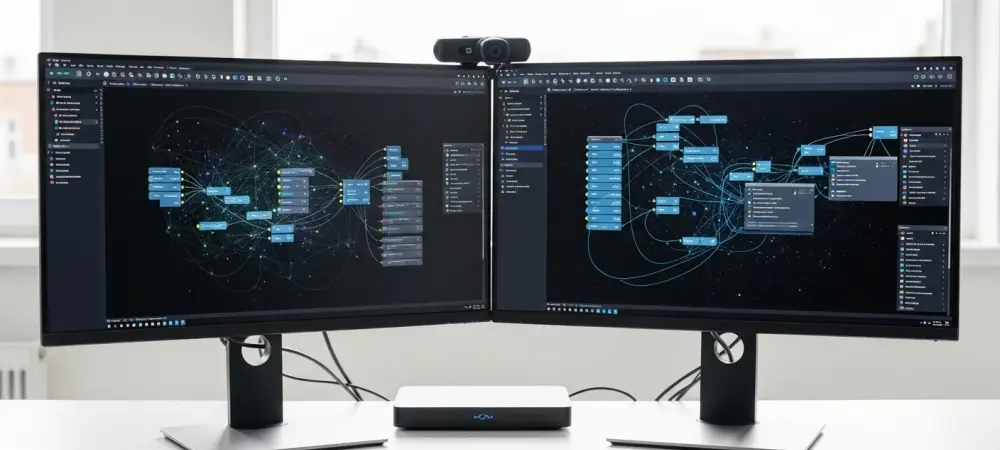
The silent ticking of a clock in a high-stakes deployment environment no longer signals progress but rather the mounting risk of a catastrophic legal oversight that could bankrupt a firm. For years, the DevOps mantra was simple: move fast and

The silent ticking of a clock in a high-stakes deployment environment no longer signals progress but rather the mounting risk of a catastrophic legal oversight that could bankrupt a firm. For years, the DevOps mantra was simple: move fast and

The silent ticking of a clock in a high-stakes deployment environment no longer signals progress but rather the mounting risk of a catastrophic legal oversight that could bankrupt a firm. For years, the DevOps mantra was simple: move fast and
Deeper Sections Await

The intricate web of microservices and ephemeral cloud resources powering today’s digital economy has finally surpassed the cognitive limits of even the most seasoned engineering teams. As organizations grapple with this unprecedented complexity, the traditional methods used to manage software

The velocity of software production has reached a point where human intervention is no longer the primary driver of development, but rather the most significant bottleneck in the security lifecycle. As generative tools produce massive volumes of functional code in
Browse Different Divisions

The intricate web of microservices and ephemeral cloud resources powering today’s digital economy has finally surpassed the cognitive limits of even the most seasoned engineering teams. As organizations grapple with this unprecedented complexity, the traditional methods used to manage software

The traditional image of a software engineer meticulously typing out every semicolon and bracket has rapidly faded, replaced by a reality where natural language prompts and intuitive “vibe coding” drive the production of millions of lines of code. This shift

The rapid evolution of artificial intelligence has forced a fundamental rethink of how developers interact with their codebases, and the Model Context Protocol (MCP) now stands at the very center of this transformation. As organizations move beyond simple chatbots toward

Modern development teams now face a landscape where the vast majority of their production code is actually composed of third-party dependencies, creating a sprawling and often invisible attack surface. This shift has transformed software supply chain security from a niche

The modern digital infrastructure that powers everything from global financial systems to personal smartphones rests upon a massive, invisible foundation of open source software that most users—and even many developers—take entirely for granted. As of 2026, industry data reveals that

The velocity of software production has reached a point where human intervention is no longer the primary driver of development, but rather the most significant bottleneck in the security lifecycle. As generative tools produce massive volumes of functional code in
Browse Different Divisions


Uncover What’s Next
B2BDaily uses cookies to personalize your experience on our website. By continuing to use this site, you agree to our Cookie Policy