
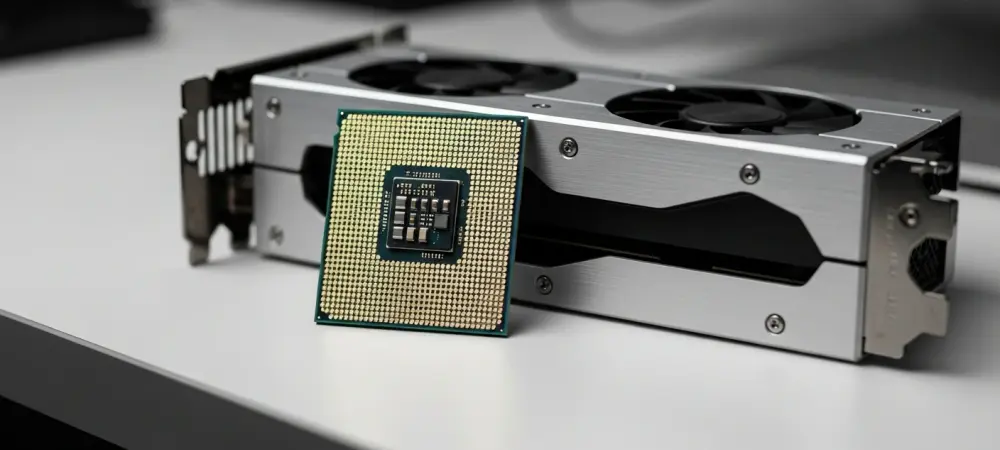
Developer Runs NVIDIA RTX 4060 Desktop GPU on Windows 11 Arm

Article Highlights
Off On

The Evolving Landscape of Windows on Arm and the Discrete GPU Divide

The long-standing barrier between energy-efficient Arm processors and high-performance desktop graphics cards has finally been breached by an independent technical experiment. Historically, the Arm-based PC sector relied on integrated graphics, leaving a gap between mobile efficiency and desktop power. Testing on the Huawei Qingyun W510 with its 24-core Kunpeng 920 processor identified massive potential for Arm computing. Major players like NVIDIA and Microsoft have traditionally maintained a strict divide, yet new architectures now challenge x86 dominance.

Analyzing the Shift Toward High-Performance ARM64 Architectures

Community-Driven Innovation and the Modification of RTX Spark Drivers

A developer known as VoidTech bypassed software barriers by repurposing specialized Arm64 driver packages for the RTX 4060. By modifying drivers, the developer enabled native support for DirectX 12 and CUDA on Windows 11 Arm. This proof of concept shows hardware versatility when software locks are removed. Community-led initiatives force manufacturers to reconsider their development roadmaps by proving that standard desktop GPUs can function in Arm environments.

Market Projections for Professional Rendering and Gaming on Arm Platforms

Arm workstation growth depends on official GPU support being commercialized. Native drivers would drive adoption for heavy workloads like 3D rendering. Indicators suggest software is the primary bottleneck for ecosystem expansion. Professional workloads would benefit immensely from the thermal efficiency of Arm processors combined with the raw compute power of discrete graphics cards.

Explore more

Trend Analysis: NVIDIA RTX Spark Platform

The traditional reliance on massive cloud data centers for artificial intelligence is currently being dismantled by a new breed of specialized silicon that places supercomputing capabilities directly onto a local desktop. This localized AI revolution signifies a departure from cloud-dependent processing, favoring high-performance workstations that offer immediate feedback and heightened security. NVIDIA is formally entering the AI PC segment with

Can NVIDIA Dominate the AI CPU Market With Vera?

The historical dominance of general-purpose x86 processors in the enterprise data center has begun to erode as the demand for specialized silicon accelerates at an unprecedented pace. While NVIDIA has long been the leader in graphics and tensor processing units, the introduction of the Vera CPU signifies a bold attempt to capture the foundational compute layer that manages data orchestration.

Trend Analysis: Ransomware Targeting AI Infrastructure

Digital extortionists have transitioned from broad-spectrum attacks toward the surgical encryption of specialized weights and foundational architectures that define modern enterprise artificial intelligence. The advent of artificial intelligence has introduced a high-value target for cybercriminals who have identified the foundational models and datasets that power modern enterprise as the ultimate leverage for extortion. As organizations invest millions of dollars into

How Is AI Redefining the Future of Job Security?

The long-standing assumption that a pair of capable hands or a specialized university degree serves as an impenetrable barrier against automation has vanished as artificial intelligence permeates the global economy. Modern economic landscapes are witnessing a fundamental departure from traditional views on automation, where physical labor was once considered a safe haven for the average worker. This evolution is significant

Will Ethereum’s Supply Squeeze Trigger a Price Breakout?

The current disconnect between Ethereum’s fundamental network performance and its secondary market valuation represents one of the most significant anomalies in the digital asset industry’s history. While the price of ETH remains anchored around the $1,900 mark, significantly lower than its historical peak, the underlying health of the decentralized ecosystem has reached unprecedented levels of maturity and stability. This specific