

Dominic Jainy stands at the forefront of the telecommunications revolution, specializing in the complex orchestration of high-density mobile networks. With a career dedicated to bridging the gap between hardware limitations and skyrocketing consumer demand, he has become a go-to expert for “mission-critical” connectivity in sports and entertainment venues. In this discussion, we explore the intricate technical overhaul of the BayArena, focusing on the logistical precision required to deploy advanced 5G systems within the high-stakes environment of the Bundesliga. Jainy breaks down the science of frequency allocation, the physical challenges of stadium-wide cabling, and the metrics used to ensure a seamless digital experience for tens of thousands of fans.
When managing a 30,000-capacity venue like the BayArena, how do you determine the optimal placement for 41 new antennas across upper and lower tiers? What specific technical challenges arise when installing five kilometers of high-frequency cabling within the tight window between Bundesliga seasons?
Determining antenna placement is a meticulous exercise in signal geometry and crowd physics, as 30,000 fans act as massive, mobile signal absorbers. We strategically distributed 15 antennas to serve the lower tier and 26 to cover the upper tier, ensuring that the signal “rains” down on the crowd with surgical precision. The logistical pressure was immense, as we had to install five kilometers of high-frequency cabling along with four specialized operations rooms in the few short weeks between seasons. This required teams to navigate complex cable trays and distribution boxes while the stadium was empty, essentially rewiring the venue’s nervous system before the first roar of the new campaign.
You have divided the stadium coverage into 14 separate mobile sectors using frequencies ranging from 800MHz to 3,600MHz. How does this specific sectoral division prevent network “choking” during instant traffic spikes, and what are the performance trade-offs between using lower bands for penetration versus higher bands for capacity?
By carving the arena into 14 distinct mobile sectors, we effectively transform a massive data bottleneck into a managed multi-lane highway, allowing each sector to handle its own local traffic independently. We utilize the 800MHz band as a workhorse for its superior penetration, reaching deep into the stadium’s concrete corridors and changing rooms where higher signals might bounce or die. However, when the crowd is active, the 3,600MHz band takes the lead, providing the massive throughput capacity needed for 5G services to flourish without congestion. This balance ensures that whether a fan is in a subterranean hallway or sitting in the front row, the network maintains its integrity despite the density.
Massive data surges typically occur in the first ten seconds following a goal. Beyond the stands, how do supplemental microcells on arrival routes and improved coverage in changing rooms stabilize the network for both fans and stadium operations? Please walk us through the metrics you use to define a successful deployment.
The ten seconds after a goal are the “golden window” of network stress, where success is defined by whether a fan can upload a high-definition video or is left staring at a frustrating loading bar. To support this, we deployed three microcells along key arrival routes, catching the initial surge of traffic as fans use transport apps and digital tickets before even entering the gates. A successful deployment is measured by low latency and high packet delivery rates during these peak moments, but it also extends to internal operations. By boosting signals in changing rooms and staff areas, we ensure that the club’s digital tools, media teams, and stadium management have a rock-solid connection that remains isolated from fan-generated traffic spikes.
Modern sports fans expect to stream and upload video simultaneously without seeing a loading bar. How does the infrastructure requirements for a “mission-critical” stadium network differ from standard urban 5G deployments, and what steps are taken to ensure the hardware remains unobtrusive within the stadium’s architecture?
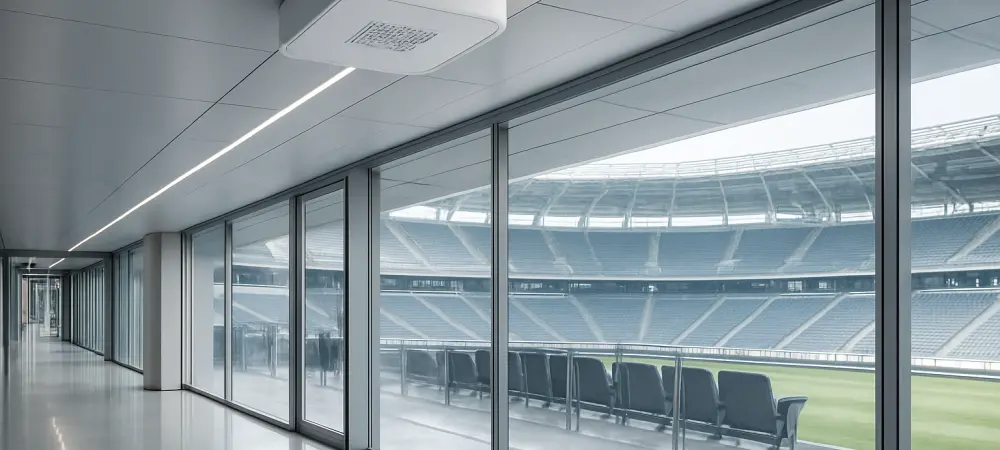
A mission-critical stadium network is fundamentally different from a standard urban rollout because it must handle a 100x increase in data demand within a few hundred square feet. The infrastructure requires hidden distribution boxes and miles of high-frequency cabling that are tucked away behind architectural elements to keep the stadium’s visual aesthetic clean. We use specialized cable trays and compact antenna housings to ensure that the hardware is practically invisible to the fan, yet powerful enough to support both 4G LTE and 5G simultaneously. The goal is to create a “silent” powerhouse where the fan experiences 3,600MHz speeds without ever noticing a single piece of the industrial machinery making it possible.
What is your forecast for stadium connectivity?
I believe we are entering an era where the stadium itself becomes an interactive participant in the game through ubiquitous, low-latency connectivity. From this year forward, we will see the integration of real-time augmented reality replays directly onto fans’ devices and the total virtualization of the stadium experience. The network is no longer just a utility; it is the backbone of a new kind of sports theater where the digital and physical worlds are completely indistinguishable. For readers, this means the end of the “offline” stadium experience, replaced by a world where your smartphone is just as essential to the matchday as your ticket.