

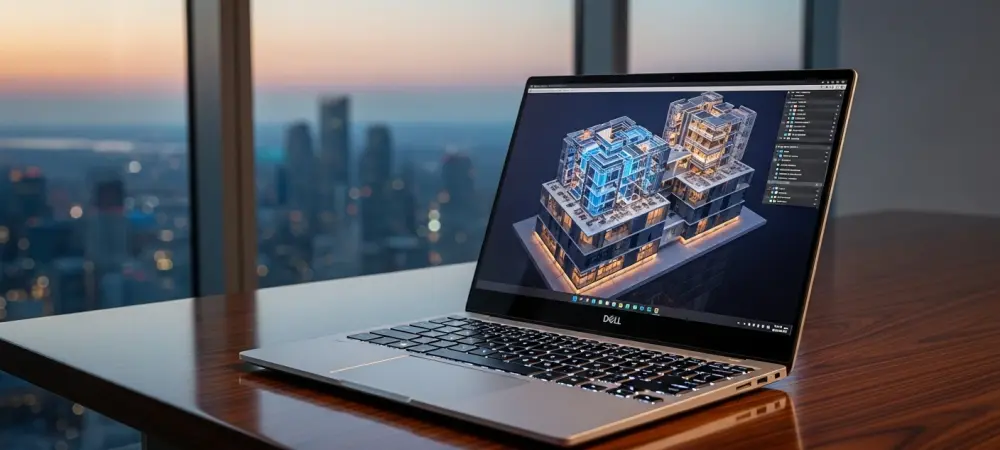
The relentless pursuit of combining desktop-level performance with feather-light portability has defined the premium laptop market for years, and Dell’s latest XPS lineup appears poised to set a new benchmark. The refresh of the celebrated XPS line with Intel’s cutting-edge Panther Lake architecture represents a significant step forward in the premium notebook sector. This review explores the evolution of the XPS brand, dissects its key new features, analyzes its performance metrics, and considers the impact it aims to have on the demanding productivity-focused market. The purpose is to provide a comprehensive understanding of these new machines, their capabilities, and their potential trajectory in the ultra-portable space.
A New Era for XPS The Panther Lake Refresh
The announcement at CES 2026 marked a major hardware and branding reset for Dell’s flagship notebook line. This strategic shift signals a confident return to the classic and highly regarded XPS identity, formally concluding the company’s brief and somewhat confusing experiment with the “Dell, Dell Pro, and Dell Pro Max” naming convention. This move is more than just a name change; it represents a recommitment to the core values that made the XPS brand synonymous with premium quality and performance.
By re-establishing the XPS name, Dell is tapping into a deep well of brand equity built over more than a decade. The decision serves to reassure loyal customers and clarify the product’s position at the pinnacle of Dell’s consumer offerings. This refresh establishes a clear context for a new generation of laptops designed to lead the market, not just compete within it, blending a familiar identity with a completely reimagined technological core.
Core Architecture and Performance
Intels Panther Lake Platform
At the heart of this new XPS generation lies Intel’s Core Ultra Series 3 “Panther Lake” mobile platform, a significant leap in processing power and efficiency. The lineup offers a scalable range of CPU options, from the capable Core Ultra 5 325 to the formidable flagship Core Ultra X9 388H. This top-tier processor is a powerhouse, boasting up to 16 CPU cores that can reach clock speeds of 5.1GHz, ensuring instantaneous responsiveness for demanding applications.
This raw processing capability is complemented by an integrated Xe3-based GPU with 12 cores, promising a substantial improvement in graphics performance. For professionals in creative fields, this means smoother video editing, faster 3D rendering, and a more fluid workflow without the need for a discrete GPU in many scenarios. For the everyday power user, this integrated solution delivers a robust experience for everything from complex spreadsheets to light content creation, setting a new standard for what an ultra-portable can achieve.
Next Generation Memory Storage and Display
Supporting the advanced Panther Lake processor is a suite of equally high-end components designed to eliminate bottlenecks and enhance the user experience. The new XPS models come equipped with up to 64GB of high-speed LPDDR5X RAM, with speeds ranging from an already fast 7467 MT/s to an astonishing 9600 MT/s. This allows for seamless multitasking and rapid data access, ensuring that even the most memory-intensive applications run without issue.
Storage solutions are similarly impressive, with NVMe options scaling from 512GB to a capacious 4TB. Crucially, the platform includes support for next-generation PCIe Gen5 SSDs, paving the way for even faster data transfer speeds as the technology becomes more widespread. Tying this all together are the brilliant high-refresh OLED display panels, which deliver vibrant colors, deep blacks, and smooth motion. This display technology is not merely an aesthetic upgrade; it significantly improves the user experience for content consumption, creative work, and general productivity.
Refined Design and User Experience
Premium Materials and Portability
The new XPS laptops continue the brand’s legacy of exceptional build quality, featuring a sleek chassis CNC-machined from a single block of aluminum and fortified with durable Gorilla Glass 3. This unibody construction provides a rigid and premium feel, while the minimalist aesthetic reinforces its position as a professional tool. Dell has meticulously engineered these devices to be as portable as they are powerful. With a starting thickness of just 14.6mm and a weight of around 3 pounds, the XPS 14 and XPS 16 are firmly positioned as ultra-portable productivity machines. This thin and light form factor makes them ideal companions for mobile professionals and digital nomads who require high performance without being weighed down. The design prioritizes a clean, uncluttered look that is both modern and timeless, ensuring it fits seamlessly into any professional environment.
Power Management and Battery Endurance
Dell has placed a significant emphasis on efficiency, making an ambitious claim of up to 27 hours of battery life for general use. This figure suggests a highly optimized power management system working in concert with the inherent efficiencies of the Panther Lake architecture. Achieving such endurance in a high-performance machine would be a game-changer for users who frequently work away from a power source.
To balance performance with efficiency, Dell provides clear power modes for different use cases. The XPS 16 operates at 25W in its Optimized mode and 35W in Performance mode, while the more compact XPS 14 runs at 19W and 27W, respectively. For intensive tasks, both models can boost up to 65W, a thermal challenge managed by a newly designed, quieter dual-fan cooling system. This system is engineered to dissipate heat effectively without the distracting fan noise often associated with thin and powerful laptops.
Market Positioning and Model Lineup
The refreshed XPS lineup is squarely aimed at professionals, content creators, and power users who demand high performance in a portable package. These are not gaming rigs but sophisticated productivity tools for individuals who rely on their laptops for demanding workloads, from software development and data analysis to video editing and graphic design. The premium components and refined design appeal to a discerning audience willing to invest in a top-tier device. The initial launch includes the XPS 16 and XPS 14, slated for immediate market availability with starting prices of $2,199 and $2,049, respectively. These price points place them firmly in the premium segment of the market. Furthermore, Dell has previewed an upcoming XPS 13, which is set to be the thinnest and lightest model in the family. This three-tiered lineup provides a clear choice for consumers based on their specific needs for screen size, portability, and performance.
Potential Challenges and Considerations
Despite the impressive specifications, the new XPS laptops face potential hurdles that will only be clarified through real-world testing. A primary consideration is the thermal management system. While the new dual-fan cooling is designed to be quieter and more efficient, its ability to sustain the 65W power boost under prolonged, heavy loads without significant thermal throttling remains to be seen. Consistent performance under pressure is critical for the target professional audience. Another significant challenge is validating the remarkable battery life claims. The “up to 27 hours” figure is likely based on very specific, low-intensity usage scenarios. Practical use cases involving brighter screen settings, multiple applications, and consistent connectivity will undoubtedly yield different results. Finally, the premium price point places the XPS lineup in direct competition with other established players in the high-end notebook market, making value perception a key factor for potential buyers.
The Future of the XPS Brand
This significant refresh signals a clear and confident direction for the XPS brand. The return to a classic, well-respected identity suggests that Dell is focused on solidifying its position as a leader in the premium notebook space by leaning into its legacy of quality and innovation. This move is less about reinventing the wheel and more about perfecting a proven formula, reinforcing customer trust and brand recognition for the years to come.
The preview of an even thinner and lighter XPS 13 offers a tantalizing glimpse into Dell’s future ambitions. It indicates a continued push toward ultimate portability without sacrificing the core tenets of the XPS experience—performance, premium design, and a superior user experience. This suggests that the Panther Lake refresh is not an endpoint but rather the foundation for a new era of innovation within Dell’s most prestigious notebook line.
Final Verdict and Summary
The Dell XPS Panther Lake lineup presented a compelling vision for the future of premium notebooks, blending next-generation processing power with a renewed focus on a classic brand identity. The integration of Intel’s powerful Core Ultra Series 3 platform, coupled with high-speed memory, advanced storage, and brilliant OLED displays, established a new benchmark for what was possible in an ultra-portable form factor. The commitment to a refined, CNC-machined aluminum chassis underscored the brand’s legacy of superior build quality.
Ultimately, the new XPS models successfully reasserted Dell’s dominance in the high-end productivity market. The ambitious battery claims and sophisticated thermal management system demonstrated a deep understanding of the needs of mobile professionals. While its real-world performance under sustained loads and the justification for its premium price point were initial considerations, the overall package of power, portability, and premium design made it a formidable contender and a highly recommended choice for users seeking the pinnacle of notebook engineering.