

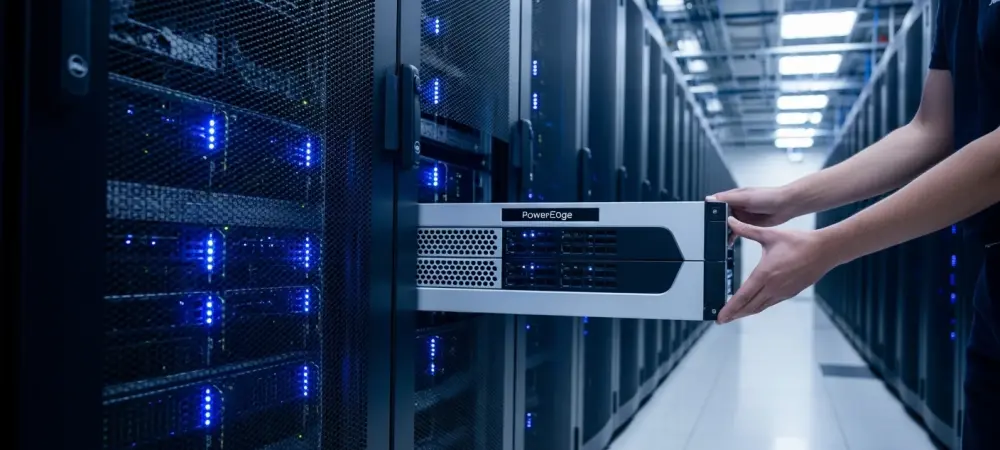
The long-standing dominance of a single virtualization provider has finally given way to a landscape where architectural agility is the primary currency for enterprise IT survival. As organizations grapple with escalating licensing costs and the need for more granular control over their data, the integration between Dell Technologies and Nutanix has emerged as a pivotal turning point. This partnership represents more than just a compatibility update; it is a fundamental reconfiguration of how private clouds are built, moving away from rigid, hyperconverged silos toward a fluid, software-defined ecosystem that prioritizes workload mobility over vendor loyalty.
Modernizing the Data Center: The Rise of Dell and Nutanix Integration
This technological shift is rooted in the “infrastructure adaptability” movement, which seeks to decouple the software intelligence of the data center from the underlying hardware. For years, the industry followed a VMware-centric model, but recent market volatility has forced a collective pivot toward multi-hypervisor flexibility. Dell’s embrace of the Nutanix Cloud Platform signifies a departure from exclusivity, offering a bridge for enterprises that require the reliability of Tier-1 hardware alongside the operational simplicity of Nutanix’s distributed file system.
The core principle here is the creation of a universal infrastructure foundation. By integrating Nutanix AHV—a license-free, high-performance hypervisor—directly into the Dell hardware stack, the companies have created a solution that addresses the “management tax” of traditional hybrid clouds. This context is critical because it allows a business to maintain a consistent deployment model across various branches or data centers, even if the specific virtualization needs vary by department. It effectively democratizes the private cloud, making it as consumption-friendly as its public counterparts.
Core Pillars of the Dell Nutanix Ecosystem
Multi-Hypervisor Support and Nutanix AHV
One of the most compelling aspects of this integration is the native support for Nutanix AHV on Dell PowerEdge servers. Unlike legacy systems that often required complex translation layers or third-party drivers, this implementation treats AHV as a first-class citizen. This native functionality matters because it eliminates the overhead associated with nested virtualization and ensures that security patches and performance updates are synchronized across both the hardware and software layers. This architectural flexibility is a direct strike against vendor lock-in. By providing a streamlined path for migrating workloads from ESXi to AHV on familiar Dell silicon, IT departments can regain leverage during contract negotiations. Furthermore, the ability to run multiple hypervisors within the same fleet of Dell servers allows for a “best-of-breed” strategy, where legacy applications stay on existing platforms while modern, cloud-native applications are deployed on AHV to take advantage of its built-in automation and lower total cost of ownership.
Disaggregated Storage with Dell PowerFlex and PowerStore
The evolution of this ecosystem is most evident in its shift toward disaggregated infrastructure. Traditionally, hyperconverged infrastructure required compute and storage to scale in lockstep, often leading to wasted resources. However, the pairing of Nutanix software with Dell PowerFlex changes this dynamic. PowerFlex provides a high-performance, software-defined storage layer that can be scaled independently of the compute nodes running Nutanix.
This separation is vital for data-intensive applications like large-scale databases or AI training models, where storage demands often outpace processing needs. By integrating with Dell PowerStore later this year, the platform will offer even more versatility for midrange enterprises. This unique implementation allows users to keep their data on a dedicated, high-availability storage array while leveraging the Nutanix control plane for management. It combines the simplicity of HCI with the robust performance and efficiency of a high-end Storage Area Network.
Emerging Trends in Private Cloud Infrastructure
We are currently witnessing a broader industry transition toward subscription-based, hardware-agnostic software stacks. This trend reflects a desire for “cloud-like” economics within the safety of a private data center. Dell and Nutanix are capitalizing on this by offering a unified lifecycle management experience. Instead of managing separate lifecycles for firmware, hypervisors, and storage controllers, the integrated platform uses an automated orchestration layer to handle updates as a single, validated package.
Moreover, the industry is moving toward “intent-based” infrastructure. This means that instead of manually configuring individual virtual machines or storage volumes, administrators define the desired state of their applications, and the Dell Nutanix stack automatically adjusts resource allocation to meet those requirements. This shift reduces human error and allows smaller IT teams to manage massive, complex environments that would have previously required an army of specialized engineers.
Real-World Applications and Sector Deployment
In sectors like finance and healthcare, the ability to decouple resources is not just a luxury; it is a regulatory and operational necessity. For a global bank, the Dell Nutanix Private Cloud allows for high-density containerized applications to run alongside massive transactional databases. The bank can scale its compute nodes to handle seasonal trading spikes without being forced to pay for extra storage capacity they do not need. This granular control directly translates to improved margins and better resource utilization.
Healthcare providers benefit from this modularity when managing high-resolution medical imaging data. These files require massive storage volumes but relatively moderate compute power for retrieval. By using a disaggregated Dell Nutanix setup, hospitals can expand their archival capacity indefinitely while keeping their server footprint small and energy-efficient. This adaptability ensures that the infrastructure grows at the pace of the data, rather than at the pace of the hardware manufacturer’s upgrade cycle.
Navigation of Technical and Market Hurdles
Despite the clear advantages, the journey toward a universal private cloud is not without its obstacles. One significant challenge is the “management tax” inherent in multi-platform environments. Even with unified tools like Nutanix Prism, the complexity of migrating legacy workloads that are deeply integrated into specific VMware APIs cannot be overlooked. Moving these “sticky” applications often requires extensive refactoring, which can delay the return on investment for the new infrastructure.
To mitigate these operational limitations, the Dell Automation Platform is undergoing continuous development. This platform aims to provide a single pane of glass that masks the underlying complexity of different hypervisors. However, the industry still faces a talent gap; finding engineers who are equally proficient in Dell’s storage protocols and the Nutanix software stack remains a hurdle. Organizations must invest in training to ensure that the theoretical benefits of this modular architecture are realized in daily operations.
Future Outlook: The Path Toward Universal Infrastructure
The trajectory of the Dell Nutanix partnership points toward a future defined by AI-driven autonomous management. We can expect deeper integration of machine learning algorithms that predict hardware failures before they occur and automatically migrate workloads to healthy nodes. This level of self-healing infrastructure will eventually become the standard, reducing the role of the human administrator from a “firefighter” to an architect who focuses on high-level service delivery.
Furthermore, breakthroughs in software-defined storage will likely lead to even more seamless integration between on-premises hardware and public cloud providers. The goal is a “borderless” data center where a workload can move from a Dell server in a private rack to a public cloud instance without changing its security posture or performance profile. As vendor-neutral private clouds become the global norm, the distinction between “hardware companies” and “software companies” will continue to blur, resulting in a more unified IT market.
Final Assessment: Redefining Private Cloud Flexibility
The shift toward a modular Dell Nutanix environment proved that the era of monolithic, single-vendor stacks was unsustainable for the modern enterprise. By prioritizing the separation of compute and storage, organizations successfully mitigated the risks of over-provisioning and gained the leverage needed to navigate a volatile software market. This integration did not merely offer a new set of features; it provided a strategic blueprint for maintaining operational continuity during a period of intense industry consolidation. The transition demonstrated that true data center modernization required a balance between high-performance hardware and flexible, license-efficient software. Moving forward, the focus must remain on refining the automation layers that bridge these diverse platforms to ensure that complexity does not erode the cost savings gained from multi-hypervisor adoption. For enterprises seeking to future-proof their digital foundations, the move toward such open, disaggregated ecosystems was the only logical step in an increasingly unpredictable technological landscape.