

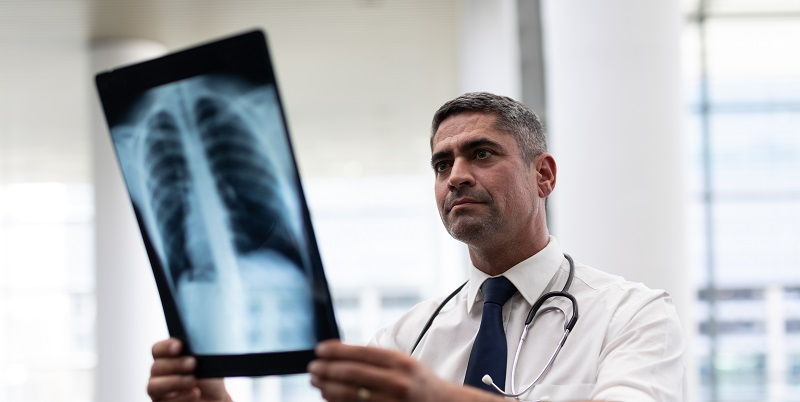
In the midst of the global COVID-19 pandemic, predicting the need for intensive care in patients has become crucial. One technique that doctors rely on is the examination of chest X-ray radiography (CXR) images. These images can provide valuable insights into a patient’s condition, aiding in the allocation of hospital resources effectively and efficiently.
The proposed deep learning model
A research group from the University of Chicago has recently developed a deep learning-based model that harnesses the power of CXR images to forecast a patient’s requirement for intensive care within specific timeframes. This groundbreaking model utilizes a technique known as “transfer learning,” which enables the scientists to build a robust and accurate predictive model.
Using a sequential transfer learning process, the researchers trained their model to analyze chest X-ray radiography images and determine if a patient will need intensive care within 24, 48, 72, and 96 hours after the examination. This approach maximizes the effectiveness of the deep learning algorithm in accurately predicting patient outcomes.
Benefits and implications
The utilization of the proposed deep learning model brings significant benefits to the medical field, particularly in streamlining the allocation of scarce hospital resources. By accurately predicting which patients will require intensive care, healthcare providers can proactively plan the necessary resources, including ICU beds, ventilators, and medical personnel, ensuring that the patients receive timely and appropriate care.
Furthermore, the model fills a significant gap in clinical practice, as only a handful of tools have been designed specifically to predict the prognosis of patients with COVID-19. The ability to rely solely on chest X-ray radiography images, rather than a combination of images and clinical data, simplifies the process and makes it feasible for healthcare facilities with limited resources.
Study Results and Performance Evaluation
In an independent in-house test set, the researchers evaluated the performance of their deep learning model. The system achieved an impressive area under the receiver operating characteristic (ROC) curve of 0.78 when predicting a patient’s need for intensive care 24 hours in advance. This demonstrates the accuracy and reliability of the model in forecasting patient outcomes.
Notably, the performance of the proposed model was on par with existing models that relied on a combination of images and clinical data. The ability to achieve comparable results solely with chest X-ray radiography images highlights the potential of this approach and its applicability in various healthcare settings.
The development of a deep learning model that utilizes chest X-ray radiography images to predict the need for intensive care in COVID-19 patients within specific time frames fills a crucial gap in clinical practice. The model’s effectiveness and accuracy, as shown through empirical evaluations, provide healthcare providers with a valuable tool to efficiently allocate resources and provide timely care to those in need.
Moving forward, this research paves the way for further advancements in the use of deep learning algorithms and AI models in predicting patient outcomes. As the COVID-19 pandemic continues to challenge healthcare systems worldwide, innovative approaches like this hold immense potential in enhancing patient care and optimizing resource allocation. With continued research and refinement, we can expect these models to play a vital role in shaping the future of healthcare.