

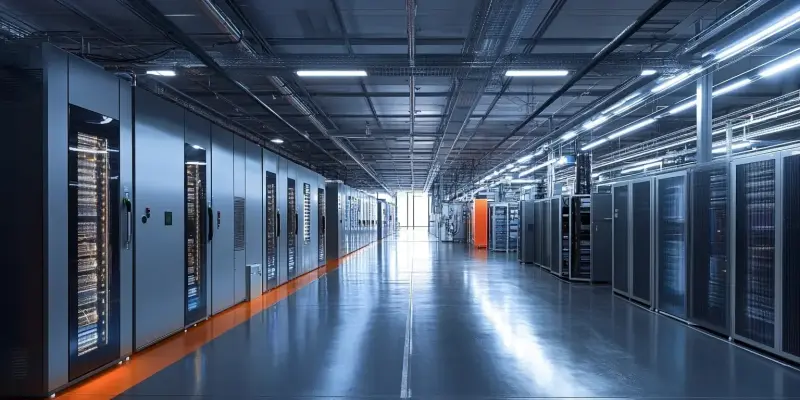
Data Center Partners (DCP) is spearheading a notable data center development in Munich, Germany, specifically targeting the growing demands for advanced computational power across various industries. Noteworthy sectors such as automotive, finance, aerospace, IT, and media stand to benefit significantly from this state-of-the-art facility. Located in Unterschleißheim, a Munich suburb well-connected to both national and international telecommunications networks, this future-ready data center aims to support AI, cloud, high-performance computing (HPC), and IT services. The importance of such a development can hardly be overstated in the context of today’s rapidly advancing digital landscape.
Targeted Capacity and PUE Standards
DCP’s new facility is strategically designed to meet the growing compute power requirements of Bavaria’s regional enterprises by providing an estimated 30 megavolt amperes (MVA) of power. Covering a substantial 10,000 square meter area, the center targets a power usage effectiveness (PUE) of 1.2, reflecting its commitment to energy efficiency. The first phase of the project is set to be completed by mid-2027 and will offer a robust 8 megawatts (MW) of capacity. Designed to meet Tier III standards, this phase emphasizes strong reliability and performance, catering to businesses seeking steadfast and high-performing IT infrastructure.
With Munich already established as a significant data center hub, housing leading companies such as NTT, EdgeConneX, EXA Infrastructure, and Equinix, the new development further solidifies the region’s prominence. Germany’s ongoing rise as a major European data center market is evidenced by projections, which anticipate a growth rate of 6.22% between 2025 and 2029. The market is expected to reach a total value of $25.29 billion by 2029. By being carrier-neutral and ensuring connectivity to major Tier I and Tier II carriers, the new center positions itself as a crucial piece in the larger framework of Europe’s data infrastructure.
Strategic Partnerships and Regional Footprint
DCP is bolstering its new facility through partnerships with well-established firms such as Gasline, EU-Networks, and DE-CIX. This ensures strong, reliable connectivity that is indispensable for the plethora of services the center aims to support. Established in 2021, DCP is quickly expanding its footprint, with an impressive 200MW of capacity either operational or under development across the DACH region, inclusive of Germany, Austria, and Switzerland. Additionally, current projects are underway in key cities like Frankfurt, Düsseldorf, Berlin, Heidelberg, and Graz, cementing DCP’s role as a key player in the region.
Jörgen Venot, Principal of Leasing at DCP, articulated the importance of additional compute power for applications in AI, machine learning, cloud, and storage specifically for Bavaria. Chief Commercial Officer Gian-Marco Krömer highlighted DCP’s evolution from a consulting firm to a comprehensive provider whose aim is to simplify the creation of sustainable data centers. The company’s methodology is comprehensive, involving the securing of land, obtaining necessary permits, and guiding projects seamlessly from development stages through to operational phases. This full-spectrum approach ensures a streamlined and efficient process for their clients.
Addressing the Growing Demand for AI and Cloud Solutions
Data Center Partners (DCP) is leading a significant data center development in Munich, Germany, catering to the growing need for advanced computational power across various industries. Key sectors like automotive, finance, aerospace, IT, and media are expected to reap substantial benefits from this cutting-edge facility. Positioned in Unterschleißheim, a well-connected suburb of Munich, this upcoming data center will link seamlessly to both national and international telecommunications networks. It aims to support emerging technologies such as AI, cloud computing, high-performance computing (HPC), and other IT services. In today’s fast-paced digital era, the significance of such an advanced data center cannot be overstated. By addressing the increasing demands for sophisticated IT infrastructure, DCP’s initiative will likely play an essential role in driving innovation and efficiency across industries. This development underscores the importance of robust and future-ready data centers in maintaining the momentum of digital transformation and technological advancements in various vital sectors.