

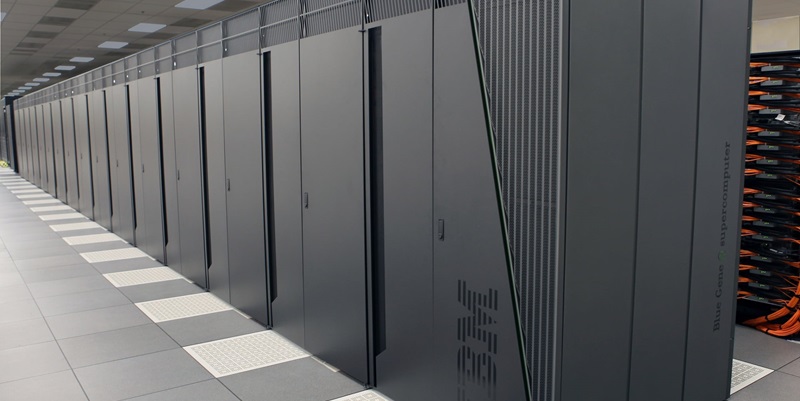
DataBank, a leading provider of data center solutions, has successfully raised $533 million in capital to build new data centers that will cater to the increasing demands of AI applications. The financing, consisting of a combination of debt and equity, will enable DataBank to expand its capacity and support the exponential growth of data-intensive technologies.
Capital raise breakdown
To secure the necessary funds for expansion, DataBank pursued a strategic approach of both debt and equity financing. With this innovative approach, the company successfully raised $533 million, paving the way for future growth and development. This capital infusion will enable DataBank to meet the escalating demands of AI applications that require robust computational power and storage capabilities.
Meeting capacity demands
In today’s rapidly evolving technological landscape, AI applications are driving the need for increased data center capacity. DataBank has recognized this pressing demand and embarked on a capital-raising campaign to ensure that it stays ahead of the curve. The $533 million capital raise positions DataBank to effectively meet the capacity requirements of businesses across various sectors, enabling them to leverage the power of artificial intelligence.
Previous funding
This recent capital raise is not the only financial achievement for DataBank in 2023. The company has been successful in securing significant funding in the form of secured notes and credit facilities. In February, DataBank issued $715 million of secured notes, demonstrating the market’s confidence in the company’s growth trajectory. Additionally, a $350 million credit facility was announced to support ongoing expansion plans. In total, DataBank has raised a staggering $1.6 billion in capital this year, underscoring its commitment to meeting customer demands.
New financing details
The $533 million financing consists of two separate transactions. The first involves $188 million in equity, raised from existing and new investors who believe in DataBank’s vision and potential. This demonstrates the continued trust and confidence of the investment community in DataBank’s growth prospects. The second transaction is a $345 million construction loan, which will be used to develop a new state-of-the-art data center in Atlanta, Georgia. This facility is designed to address the growing needs of businesses in the region for scalable, secure, and reliable data center solutions.
Sustainability focus
DataBank is committed to sustainable business practices, and its new Atlanta data center, ATL4, exemplifies this commitment. The facility will have 100 percent load-following renewable power, supplied through Georgia Power’s solar-based Renewable Energy Certificates. By leveraging clean and sustainable energy sources, DataBank aims to reduce its environmental impact while providing high-performing and energy-efficient data center solutions.
Key Players in Debt Transactions
DataBank partnered with esteemed financial institutions for its debt transaction. First Citizens, MUFG, and CoBank acted as joint lead arrangers and joint bookrunners. Among them, First Citizens served as the administrative agent. This collaboration emphasizes DataBank’s ability to forge strong relationships with industry leaders and secure favorable loan terms that support its long-term business strategy.
Company Statement
Kevin Ooley, DataBank’s President and CFO, expressed his enthusiasm regarding the recent financing. He commented, “This new financing will allow us to continue bringing important capacity to the market to meet the extremely high demand for data center space and power.” Ooley highlighted the favorable loan terms and the participation of existing equity investors, which demonstrate their confidence in DataBank’s growth potential. Moreover, he emphasized the significance of seizing the growth opportunity presented by the AI era.
Expansion Plans
DataBank’s commitment to growth is further evidenced by its recent acquisition of 85 acres of land in Culpeper, Virginia. The company intends to develop a new 192MW data center campus in this strategic location. This expansion will enable DataBank to cater to the increasing demand for secure and reliable data center solutions in the region, supporting businesses across various industries.
Portfolio Sale
In a recent strategic move, DataBank divested its French portfolio to Etix Everywhere for €63 million ($69 million). This transaction allows DataBank to focus on its core markets while simultaneously diversifying its financial resources. It signifies the company’s commitment to optimizing its business operations and maximizing shareholder value.
DataBank’s ability to raise $533 million in capital for the construction of new data centers showcases its determination to meet the demands of AI applications in an increasingly data-driven world. With a combination of debt and equity financing, DataBank is well-positioned to expand its capacity and support the growth of businesses relying on AI technologies. Moreover, the company’s commitment to sustainability and strategic acquisitions further solidify its position as a leading provider of data center solutions.