

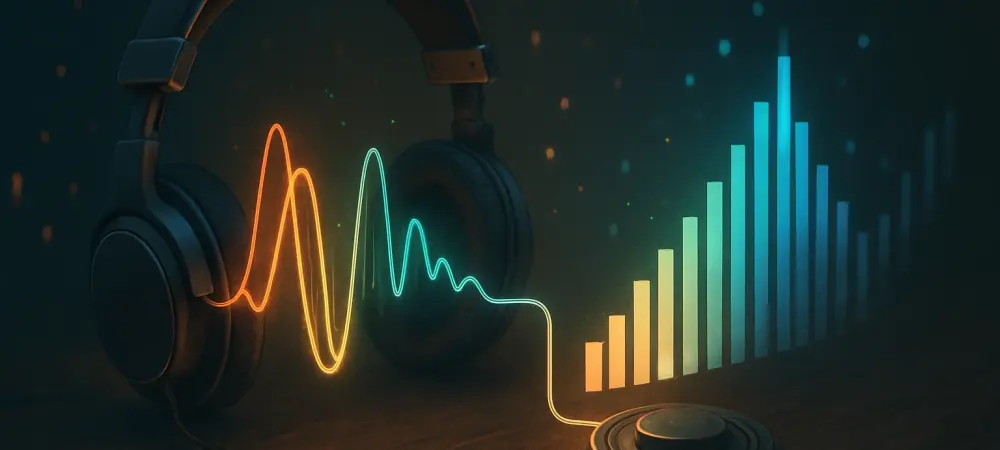
Imagine a world where the alarming rise in global temperatures isn’t just a line on a graph but a haunting melody that pierces through indifference. Picture the urgency of climate change not only seen but heard, resonating in a way that stirs emotions and compels action. Data sonification technology offers this transformative experience, converting complex scientific data into soundscapes that speak to human perception in profoundly unique ways. This review delves into the intricacies of this emerging field, exploring how it reshapes science communication, particularly in environmental contexts. By translating numbers into audible formats, this innovation bridges comprehension gaps, making abstract data tangible and emotionally impactful.
Understanding the Essence of Data Sonification
At its core, data sonification is the process of turning numerical datasets into sound within the human hearing range. Unlike traditional visualizations that rely on sight, this technology taps into auditory perception, enabling listeners to discern patterns, trends, and anomalies through pitch, rhythm, and tempo. It’s a method that transforms the invisible into the audible, offering an alternative lens for interpreting information. The emergence of sonification as a tool for science communication marks a pivotal shift in how society engages with complex issues like climate change. Where graphs might fail to evoke urgency or reach those with visual impairments, sound introduces a visceral dimension. It leverages the inherent emotional pull of music and noise, making data not just understood but felt.
Moreover, this technology fits into a broader societal push toward inclusive and multisensory approaches. In an era where information overload often dulls impact, sonification stands out by cutting through the noise—literally. Its relevance lies in its ability to democratize data, ensuring that critical insights are accessible to diverse audiences beyond the confines of academic or visual literacy.
Diving into Features and Functionalities
Translating Data into Soundscapes
The primary mechanism of data sonification involves mapping numerical values to auditory elements. This can mean converting temperature anomalies into rising musical notes or using temporal shifts to signify changes over decades. Through quantization, raw data points are assigned specific pitches or tones, crafting a narrative that unfolds through sound. This auditory mapping capitalizes on the human ear’s remarkable sensitivity to subtle variations. Unlike visual representations where small deviations might go unnoticed, sound can highlight minute changes with startling clarity. Such a feature proves invaluable in fields like climate science, where detecting gradual trends is crucial for understanding long-term impacts.
The significance of this lies in enhancing data interpretation beyond mere cognition. By engaging a different sensory pathway, sonification allows for pattern recognition that complements visual analysis, often revealing insights that might otherwise be overlooked. It’s a testament to how technology can amplify human perception in unexpected ways.
Pairing Sound with Visuals
Beyond standalone audio, sonification often integrates with traditional visualizations to create a multisensory experience. Imagine a graph of rising carbon emissions paired with a soundtrack where escalating pitches mirror the data’s upward trajectory. This combination enriches engagement by appealing to both sight and sound.
Technically, this pairing involves syncing auditory outputs with visual displays, ensuring that sound cues align precisely with data points on a chart. The result is a cohesive narrative that captures attention more effectively than isolated mediums. Real-world examples, such as multimedia climate presentations, demonstrate how this approach captivates audiences, making complex information more relatable.
Performance-wise, this integration excels in educational and public outreach settings. It transforms static displays into dynamic stories, fostering deeper connections with the material. As communication strategies evolve, such hybrid methods highlight the potential for technology to create immersive learning environments.
Innovations Shaping the Field
Recent advancements in data sonification have elevated its precision and expressiveness. Cutting-edge digital tools and algorithms now allow for finer control over sound synthesis, enabling more nuanced representations of intricate datasets. These developments ensure that even the most subtle data fluctuations can be conveyed with clarity.
Alongside technical progress, a notable trend is the growing acceptance of alternative science communication methods. Society is increasingly embracing multisensory and inclusive strategies, recognizing that traditional approaches may not suffice for all audiences. Sonification aligns perfectly with this shift, offering a fresh avenue to engage and inform.
Equally important is the role of interdisciplinary collaboration in driving innovation. Scientists, artists, and musicians are joining forces to refine how data sounds, blending technical expertise with creative flair. This convergence not only enhances the technology’s appeal but also broadens its application across diverse fields.
Real-World Impact and Applications
One of the most compelling uses of sonification lies in climate science, where it transforms abstract temperature anomalies and weather patterns into audible warnings. By turning data into sound, it provides a direct way to communicate the urgency of environmental changes, resonating with listeners on a personal level.
Beyond environmental contexts, this technology finds relevance in sectors like healthcare, where auditory signals in medical devices alert professionals to critical changes in patient conditions. Similarly, it supports accessibility by aiding visually impaired individuals in interpreting data through sound, thus fostering inclusivity in information access.
Notable case studies, such as the work of data scientist Harlan Brothers, underscore its potential for public engagement. By sonifying climate trends, Brothers has crafted soundscapes that evoke emotional responses, encouraging awareness and dialogue. Such applications illustrate how sonification can turn passive observation into active concern.
Navigating Challenges and Barriers
Despite its promise, data sonification faces significant technical hurdles. Accurately representing complex datasets through sound without oversimplifying remains a persistent challenge. Striking a balance between clarity and fidelity is essential to avoid misinterpretation, a task that demands ongoing refinement.
Additionally, widespread adoption is hampered by limited public familiarity with auditory data. Unlike graphs, which are culturally ingrained as standard, sound-based data requires a learning curve for many. The absence of standardized methods further complicates integration into mainstream communication.
Efforts to address these limitations are underway, with developers focusing on user-friendly tools to simplify usage. Educational outreach also plays a vital role, aiming to build comfort and understanding among broader audiences. These initiatives suggest a path forward, though patience and persistence will be key to overcoming current obstacles.
Looking Ahead at Potential Horizons
The future of data sonification holds exciting possibilities, particularly with anticipated breakthroughs in sound synthesis and data processing. Emerging technologies could enable even more sophisticated translations, capturing intricate data nuances in ways that resonate more deeply with listeners. Its long-term impact on science communication, education, and policy-making appears substantial. By offering new ways to convey critical issues like climate change, sonification could influence how information shapes public opinion and drives action. Its role in making data emotionally compelling may prove transformative.
Continued interdisciplinary collaboration will likely expand its reach further. As diverse fields converge, the technology could adapt to new contexts, engaging varied audiences with tailored auditory experiences. This adaptability points to a vibrant trajectory, promising broader influence in years to come.
Reflecting on the Journey So Far
Looking back, this exploration of data sonification revealed a technology that stood as a bridge between raw data and human emotion. Its capacity to render the invisible audible carved a unique niche in science communication, complementing visual methods with striking effectiveness. The journey through its features, applications, and challenges painted a picture of innovation with profound potential.
Moving forward, the focus should shift to actionable steps like investing in intuitive tools that democratize access to sonification. Partnerships across disciplines must be nurtured to refine its emotional and technical impact. Ultimately, embracing this technology as a standard tool in education and policy outreach could redefine how society connects with critical global issues, turning passive data into powerful calls for change.