

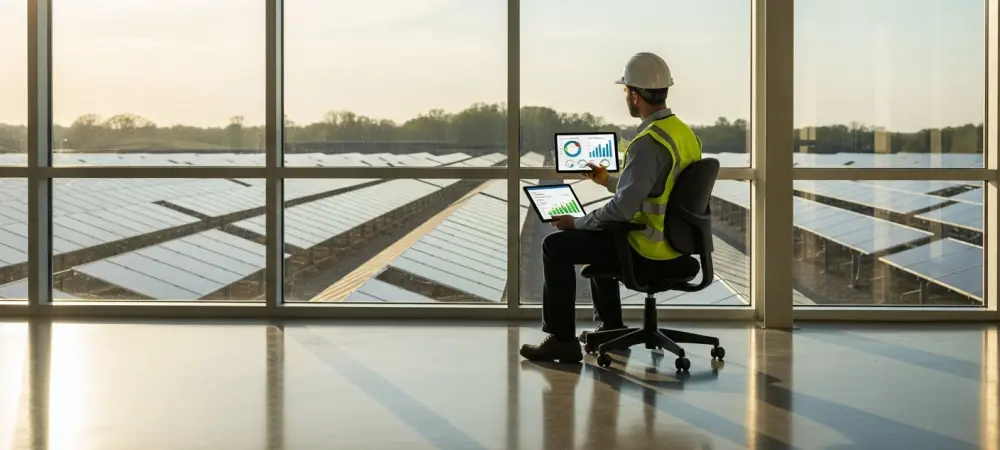
The silent hum emanating from unassuming buildings worldwide belies a voracious appetite for electricity, an escalating demand that is fundamentally reshaping the relationship between digital infrastructure and the power grid. Once viewed as monolithic, passive consumers of energy, data centers are now undergoing a critical evolution into dynamic, intelligent partners capable of stabilizing the very electrical networks they strain. This transformation is not merely an opportunistic venture but a necessary response to the explosive growth of a data-driven society, where the stability of the grid and the expansion of the digital world are inextricably linked. The core of this shift lies in a new paradigm: instead of simply drawing power, these facilities are learning to communicate, respond, and contribute, turning a potential liability into a cornerstone of a resilient and sustainable energy future.
From Energy Guzzlers to Grid Guardians
The central question facing the energy and technology sectors is whether the world’s most power-intensive facilities can pivot from being a primary cause of grid strain to becoming one of its greatest allies. As the digital economy accelerates, fueled by artificial intelligence, cloud computing, and the Internet of Things, the energy consumption of data centers is on a trajectory that existing power infrastructure cannot sustainably support. The challenge is to harness the inherent flexibility within these facilities—their sophisticated control systems, on-site power generation, and energy storage—to create a symbiotic relationship with the grid, where they can modulate their demand and even provide power back when it is most needed.
This challenge is underscored by sobering projections from government agencies. The U.S. Department of Energy has highlighted a dramatic surge in electricity usage by data centers, which climbed to 176 terawatt-hours (TWh) just a few years ago. Forecasts predict this demand could skyrocket to as high as 580 TWh by 2028, effectively tripling in a short span. This unprecedented growth rate far outpaces the development of new energy generation and transmission capacity, creating a critical imbalance that threatens grid stability and elevates the urgency for data centers to evolve from passive loads into active, responsive grid participants.
The Tipping Point for a New Energy Model
The relentless expansion of digitalization, particularly the computational demands of the AI boom, is pushing electrical grids to their breaking point. Legacy power infrastructure, designed for predictable, one-way energy flow, is ill-equipped to handle the concentrated, high-density loads of modern data center clusters. This strain is not a distant threat but a present-day reality, manifesting in grid instability, a heightened risk of blackouts, and significant challenges for utility planners attempting to forecast and meet future demand. The passive model of consumption, where data centers draw massive amounts of power without regard for grid conditions, is no longer a viable long-term strategy.
The real-world consequences of this fragile dynamic are already apparent. A notable 2024 incident in Fairfax County, Virginia, saw 60 data centers simultaneously disconnect from the grid and switch to backup generators, abruptly pulling 1,500 megawatts of demand and sending shockwaves through the local power system. The economic impact is equally tangible. In the PJM Interconnection, one of the nation’s largest electricity markets, the escalating load from data centers was a significant factor in a $9.3 billion price increase in the capacity market, a cost that is ultimately passed down to consumers through higher monthly utility bills.
In response to these growing pressures, a new regulatory landscape is solidifying. A consensus is emerging among policymakers and grid operators that data centers must transition from being passive consumers to active participants in grid management. This shift is supported by forward-thinking policies like the Federal Energy Regulatory Commission’s (FERC) Order 841, which removed barriers for energy storage resources to participate in wholesale electricity markets. Such regulations create the economic incentives and legal frameworks necessary for data centers to invest in the technologies that enable them to provide valuable services back to the grid, aligning their operational goals with the broader need for a stable and reliable power supply.
The Technological Toolkit for Intelligent Partnership
At the heart of the grid-friendly data center is a new generation of AI-driven Energy Management Systems (EMS). These platforms represent a leap from reactive monitoring to predictive, automated control. By analyzing vast datasets on energy prices, grid conditions, weather patterns, and internal workloads, systems like CoolGradient can orchestrate a facility’s energy consumption with remarkable precision. A key function is their ability to differentiate between time-sensitive workloads that require immediate processing and flexible tasks, such as data backups or model training, which can be shifted to times when renewable energy is abundant or electricity prices are low, optimizing for both cost and carbon footprint.
The role of Battery Energy Storage Systems (BESS) has fundamentally evolved, transforming them from simple backup power sources into versatile, revenue-generating assets. Modern BESS installations provide far more than just uninterruptible power; they offer instantaneous, campus-level control over energy flow. According to insights from industry leader FlexGen, the millisecond-level response time of today’s battery systems makes them a viable and superior replacement for legacy UPS technology. This rapid response capability allows data centers to perform critical grid services like frequency regulation and demand response, turning a sunk cost for resiliency into an active tool for grid partnership.
Furthermore, integrating on-site renewable energy sources is a critical component of this technological evolution. By deploying solar arrays and wind turbines, data centers can significantly reduce their dependence on the grid and lower their overall carbon footprint. This move toward self-sufficiency not only enhances a facility’s resilience but also positions it as a clean energy producer. Trailblazing examples include Sweden’s EcoDataCenter 1, which operates on 100% renewable energy, and Switch’s massive 495 MW facility in Las Vegas, which leverages large-scale solar power to meet its substantial energy needs, demonstrating that high-performance computing and environmental sustainability can coexist.
Validating the Model with Data and Case Studies
The financial and operational benefits of this transformation are well-documented. Research from Lawrence Berkeley National Laboratory quantifies the potential savings, indicating that strategically shifting flexible computing loads to off-peak hours can achieve facility-level cost reductions of up to 25%. This data provides a compelling business case for investing in the advanced software and control systems required for active grid participation, proving that aligning with grid needs directly translates to improved operational efficiency and a stronger bottom line.
The technological viability of these grid services is validated by national energy statistics. The U.S. Energy Information Administration reports that nearly 60% of all utility-scale battery capacity in the country is dedicated to frequency regulation—a critical service that maintains the stability of the power grid. This finding confirms that BESS technology is not only capable but is already a cornerstone of modern grid management, making data centers equipped with these systems ideal candidates to contribute to this essential function.
Beyond cost savings, a proven revenue model has emerged through innovative service offerings. In the Nordics, for example, Eaton’s “UPS-as-a-reserve” program compensates data center operators for allowing their energy storage systems to be used for grid support. Participants in this program can earn approximately €50,000 per megawatt of capacity they commit to the grid annually, establishing a clear and lucrative pathway for turning a capital investment in power infrastructure into a recurring revenue stream.
This market-based approach is further encouraged by supportive government policies. California’s Self-Generation Incentive Program (SGIP) provides substantial financial rebates to organizations that invest in distributed energy technologies like battery storage. By creating a favorable economic environment, such programs de-risk the initial investment and accelerate the adoption of the hardware and software necessary for data centers to function as distributed energy resources, fostering a more resilient and decentralized power grid.
A Blueprint for the Grid-Friendly Facility
The first step in transforming a data center into a grid partner involves upgrading its foundational infrastructure. This requires investing in systems that support bidirectional power flow, allowing energy to be both drawn from and supplied to the grid. Implementing medium-voltage-level battery storage provides more effective, facility-wide control over energy resources. Concurrently, the demands of dynamic power management necessitate upgrades to server racks, with many facilities moving from the traditional 15 kW per rack to designs capable of handling over 120 kW to accommodate the fluctuating loads of high-performance computing and active grid participation.
With the physical infrastructure in place, the next layer is the deployment of advanced control systems. Sophisticated power management software is essential to coordinate the complex interplay between internal computing workloads, the state of charge of the BESS, and real-time signals from the grid operator. These platforms must integrate seamlessly with workload schedulers and cooling systems to ensure that any adjustments made for grid support do not compromise the data center’s core mission of providing reliable IT services. This intelligent orchestration is what enables the facility to operate as a single, cohesive, and grid-responsive entity.
Building a bridge to the utility is another critical component. This requires establishing a secure, real-time, two-way communication channel between the data center’s energy management system and the utility’s grid control platform. This digital link facilitates the constant exchange of essential information, including dynamic electricity pricing, grid status alerts, and dispatch commands for ancillary services. It is this seamless integration that enables the data center to respond intelligently and automatically to the needs of the grid in real-time.
Finally, opening these new channels of communication with the power grid inevitably creates new cybersecurity vulnerabilities. Protecting against these threats requires a robust, defense-in-depth security strategy. This includes segmenting networks to isolate critical control systems, encrypting all communications between the data center and the utility, and implementing strong multi-factor authentication for all system access. Guarding these new digital gates is paramount to ensuring that the data center’s role as a grid partner enhances, rather than compromises, the stability and security of both the facility and the public power network.
The journey toward a symbiotic energy future was one of necessity, driven by the intersecting pressures of technological advancement and infrastructural limits. The technologies and strategies discussed became the blueprint for this new relationship. Data centers successfully moved beyond their role as passive consumers by integrating intelligent energy management, deploying advanced battery storage, and establishing deep, real-time communication with grid operators. This evolution not only mitigated the strain they once placed on the power grid but also unlocked new value streams and fortified the resilience of the digital world, marking a pivotal moment in the history of both the energy and technology sectors.