

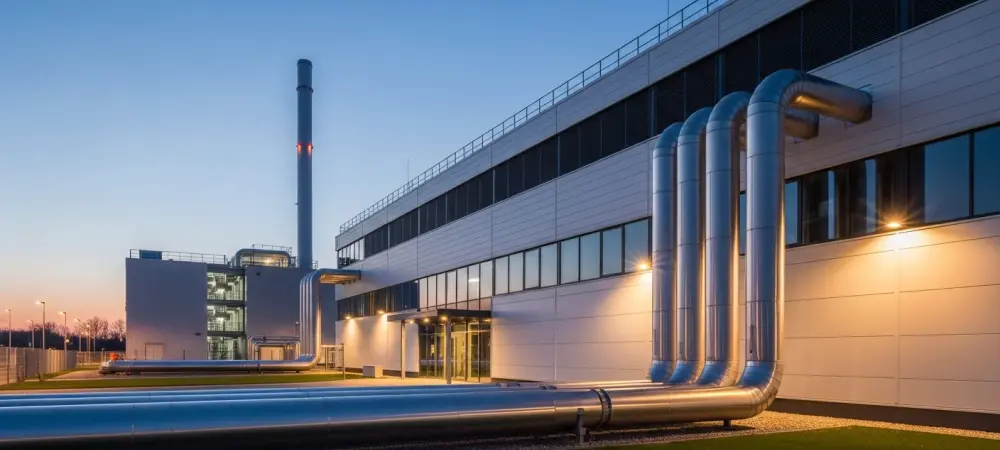
The immense thermal footprint generated by artificial intelligence accelerators has quietly become one of the most significant and costly operational challenges facing the digital infrastructure industry today. As the backbone of modern computing, data centers have long measured their efficiency through the lens of Power Usage Effectiveness (PUE), a metric that has driven remarkable innovation. However, the relentless escalation of compute density is now exposing the limitations of a component-centric approach, pushing the industry toward a critical inflection point where the very definition of efficiency must expand beyond the four walls of the facility. The next era of data center design is no longer just about optimizing individual pieces of equipment; it is about orchestrating a sophisticated dance of energy flows, integrating the facility into its surrounding ecosystem to achieve a new tier of sustainability and performance.
The Modern Data Center’s Energy DilemmPUE Under Pressure
The pursuit of a lower PUE has historically centered on the most energy-intensive component of any data center: the cooling system. Consuming between 30-40% of a facility’s total power, cooling infrastructure has been the logical focus for efficiency gains. This battle against heat has only intensified with the widespread adoption of AI workloads, whose specialized processors generate thermal loads that far exceed those of traditional servers. Managing this immense heat output is no longer just an operational task but a primary financial and engineering hurdle that dictates both the design and viability of next-generation facilities.
In response, the industry has witnessed a rapid evolution in cooling technologies, moving from conventional air-based methods to more potent liquid cooling solutions. Innovations such as direct-to-chip and full immersion cooling have transitioned from niche applications to mainstream requirements for effectively managing the high thermal densities of modern hardware. Furthermore, sophisticated strategies like thermal energy storage have emerged, allowing operators to shift cooling-related power consumption to off-peak hours. This tactic cleverly reduces operational costs and eases the strain on the power grid, demonstrating a more intelligent approach to energy management rather than just raw consumption reduction.
Charting the Next Wave of Data Center Efficiency
Despite these technological advancements, the rate of PUE improvement across the industry is showing clear signs of deceleration. Data from recent global surveys indicates that while new, hyperscale facilities can achieve impressive efficiency scores, the average PUE is plateauing. This slowdown suggests that the era of securing easy wins through component upgrades is drawing to a close. Many existing facilities have already implemented the most accessible and cost-effective enhancements, and further incremental gains are becoming disproportionately expensive and complex to achieve. This reality signals an urgent need for a fundamental shift in strategy, moving beyond isolated improvements toward a more integrated, architectural vision of efficiency.
From Component Tweaks to Holistic Design: The New Efficiency Frontier
The emerging paradigm for data center efficiency redefines the problem entirely. Instead of viewing waste heat as simply a byproduct to be expelled as efficiently as possible, this holistic approach treats it as a potential asset. The central question is evolving from “How can our chillers be made more efficient?” to “How can we fundamentally reduce the need for mechanical cooling by intelligently capturing and repurposing energy?” This comprehensive framework measures efficiency not just by the power consumed by IT and cooling hardware but by the degree to which a facility’s design avoids energy consumption in the first place.
This system-level thinking is already being put into practice through established designs that integrate the data center with its external environment. For example, free-cooling architectures, which utilize favorable ambient air or water temperatures to cool the facility without engaging energy-intensive refrigeration cycles, are a prime example of this principle. Similarly, the practice of waste heat reuse—capturing thermal energy from servers and exporting it to power district heating networks—demonstrates how a data center can function as a productive part of a larger energy ecosystem. While this does not directly lower the internal PUE calculation, it dramatically improves the overall energy effectiveness of the community by displacing fossil fuels that would otherwise be burned for heating.
Decoding the DatWhy PUE Is Plateauing and What Comes Next
The plateau in PUE improvement is a direct consequence of focusing too narrowly on optimizing equipment in isolation. Once a facility has installed the most efficient chillers, pumps, and fans available, there is little room left for significant improvement within that framework. The next frontier of efficiency, therefore, lies in rethinking the data center’s relationship with its energy inputs and outputs. The future demands a design philosophy that sees the facility not as an isolated consumer of power but as an active node within a complex energy landscape, capable of both consuming and contributing in a symbiotic manner.
This transition requires a broader perspective, where a facility’s architectural intelligence becomes as critical as the performance of its hardware. It involves analyzing all energy flows—electrical, thermal, and even kinetic—that pass through or around a site to identify opportunities for capture and integration. The goal is to create a system where outputs from one process become valuable inputs for another, minimizing waste and maximizing the utility of every kilowatt-hour. This holistic vision represents the necessary evolution of PUE, transforming it from a simple ratio into a measure of a facility’s systemic elegance and integration.
Overcoming Hurdles in the Shift to Energy Integration
The move toward system-level energy integration presents both significant opportunities and formidable challenges. One of the primary hurdles is the complexity of implementation, which requires collaboration across different industries and regulatory bodies. For instance, creating a symbiotic relationship between a data center and a municipal district heating system necessitates long-term planning, infrastructure investment, and agreements between private operators and public utilities. These partnerships are inherently more complex than simply procuring new hardware for a standalone facility.
Moreover, the financial models for such integrated projects must be re-evaluated. Traditional return-on-investment calculations for data centers focus on internal metrics like PUE and operational costs. However, a system-level approach introduces externalized benefits, such as reduced community-wide carbon emissions or enhanced grid stability, which are not always captured in a facility’s direct profit and loss statement. Developing new financial and valuation frameworks that can accurately account for these broader ecosystem advantages will be crucial for justifying the upfront investment required for these innovative designs.
Navigating the Intersection of Regulation and Innovation
As data centers become more deeply integrated with public infrastructure, they will inevitably face a more complex regulatory landscape. Policies governing energy markets, environmental standards, and urban planning will all play a significant role in shaping the feasibility of system-level projects. Proactive engagement with policymakers is essential to ensure that regulations encourage, rather than stifle, innovation in energy reuse and integration. This includes creating incentive structures that reward facilities for contributing to grid stability or providing waste heat to local communities.
A particularly compelling example of this intersection is the integration of data centers with natural gas infrastructure. By siting a facility near a natural gas pressure let-down station, operators can harness a unique synergy. Using a turboexpander, the energy released during pressure reduction can generate “behind-the-meter” electricity while simultaneously producing a stream of cold exhaust. This cold exhaust can then be used to cool the data center through a heat exchanger, drastically reducing or even eliminating the need for mechanical chillers. This innovative model turns a waste energy stream into two valuable resources—clean power and free cooling—but its deployment depends on navigating the regulations governing both the energy and data infrastructure sectors.
The Symbiotic Data Center: A Blueprint for the Future
The concept of a symbiotic data center represents the culmination of this system-level approach. In this model, the facility is no longer an energy silo but an active participant in a circular energy economy. The integration with natural gas pressure let-down stations perfectly illustrates this blueprint. The process harnesses the Joule-Thomson effect, where expanding gas becomes intensely cold, to provide a continuous source of cooling. The data center’s waste heat is effectively neutralized by warming the cold gas, creating a closed-loop thermal system that benefits both operations.
This symbiotic relationship extends beyond new constructions. With millions of miles of existing natural gas pipelines, there is a substantial opportunity to retrofit existing data centers that are already located near these pressure reduction points. This unlocks a new path to efficiency for legacy facilities that may have reached their limits with traditional upgrades. Ultimately, this model changes the calculus of site selection, making proximity to synergistic infrastructure as important as access to fiber and affordable power. It transforms the data center from a passive consumer into an intelligent, integrated component of a larger, more efficient energy system.
Redefining Efficiency for the Next Generation of Computing
The evolution of data center efficiency is moving decisively beyond the optimization of individual components. The industry is now embracing a more holistic philosophy where a facility’s PUE is a reflection of its architectural intelligence and its symbiotic relationship with the surrounding energy landscape. This shift redefines efficiency as a measure of how effectively a data center integrates with and leverages external energy flows to minimize its own consumption.
This new paradigm has profound implications for the future of digital infrastructure. Site selection criteria are expanding to include proximity to sources of waste energy or synergistic industrial processes. Facility design is becoming a multidisciplinary exercise, requiring expertise in thermodynamics, urban planning, and energy policy. For designers and operators, the directive is clear: to unlock the next level of efficiency and sustainability, they must look beyond the chiller and envision the data center as an active, integrated, and indispensable part of our global energy ecosystem.