

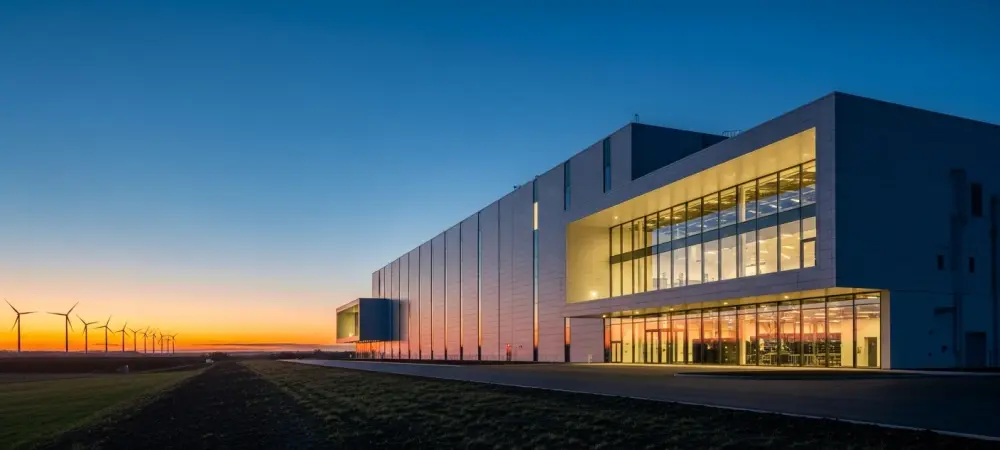
Far from the silent, climate-controlled warehouses of the past, today’s data centers are rapidly transforming into dynamic, thinking ecosystems that mirror the very intelligence they were built to support. The insatiable computational demands of artificial intelligence have ignited a revolution, forcing a fundamental reimagining of the digital infrastructure that underpins modern society. No longer passive containers for servers, these facilities are becoming sophisticated, self-optimizing “AI factories” that are as crucial to business success as the algorithms they run. This evolution marks a critical inflection point, where the physical environment of AI is becoming as intelligent as the technology itself.
Beyond the Hype What Happens When the Buildings Housing AI Become as Intelligent as the Technology They Support
The data center industry is undergoing a profound identity shift, moving away from its traditional role as a passive host for digital infrastructure toward becoming an active, intelligent partner in computation. Gordon Johnson of Subzero Engineering captures this evolution by describing the modern facility as an “intelligent, adaptive system in its own right.” This new paradigm is characterized by a move from reactive problem-solving to proactive, predictive management. Instead of technicians responding to alerts, AI-driven systems now anticipate thermal fluctuations and power demands, self-optimizing the environment in real time for peak performance and efficiency. This transformation is not a choice but a necessity, driven by the extreme physical demands of AI workloads. The density of next-generation GPUs generates heat and consumes power on a scale that legacy systems simply cannot handle. Consequently, the traditional siloes between cooling, power, and IT infrastructure are dissolving. The data center of today operates as a single, coordinated entity, where integrated control systems orchestrate every component. This holistic approach ensures that the facility can dynamically respond to the intense and fluctuating needs of AI model training and inference, maintaining stability and maximizing computational output.
The Unseen Engine Why the Physical Foundation of AI Is a Critical Business Concern
The artificial intelligence revolution, often perceived as a software-centric phenomenon, possesses a massive and growing physical footprint. The algorithms and models that power business innovation do not exist in an abstract cloud; they reside within powerful, energy-hungry hardware housed in highly specialized buildings. This physical foundation has transitioned from a background operational cost to a primary strategic asset. For businesses, securing access to AI-ready data center capacity is now a critical determinant of competitive advantage, directly impacting their ability to develop, deploy, and scale AI-driven services.
This strategic shift is occurring against a backdrop of unprecedented demand that is fundamentally reshaping global infrastructure. The AI boom has triggered a worldwide scramble for data center space, causing vacancy rates to plummet and placing immense pressure on power grids and supply chains. The market can no longer be served by generic, one-size-fits-all facilities. Instead, the industry is moving toward purpose-built infrastructure tailored to specific AI workloads, from high-density training clusters to distributed inference nodes. This new reality forces businesses to consider their physical infrastructure strategy as a core component of their AI ambitions.
Anatomy of the AI Factory Deconstructing the Next-Generation Data Center
The term “AI Factory,” coined by Steven Carlini of Schneider Electric, perfectly encapsulates the new purpose of these next-generation data centers. More than just a building with powerful servers, an AI Factory is an end-to-end ecosystem designed to support the entire AI lifecycle. This process begins with training foundational models on massive datasets, moves to fine-tuning them for specific applications, and culminates in inference, where the AI generates tangible business value by making predictions or creating content. The industry is witnessing a significant pivot from a primary focus on training to the more commercially critical workloads of inference, a shift that demands the latest and most advanced GPUs and redefines return on investment.
This new function requires a revolution in infrastructure design. To manage the extreme heat generated by high-density computing, operators are abandoning traditional cooling methods in favor of sophisticated hybrid systems that blend air and liquid solutions. These dynamic architectures can adapt in real time to workload intensity. Similarly, power delivery systems are being entirely rethought to support the immense electrical demands of advanced GPUs. This shift away from standardized designs is happening amid a great capacity crunch, a market of extreme scarcity where securing space, power, and equipment has become a race against time. For operators, speed to market is now the key differentiator.
Voices from the Vanguard Industry Leaders on the AI-Driven Transformation
Industry leaders offer a unified perspective on this rapid transformation, each highlighting a different facet of the same fundamental shift. Gordon Johnson’s vision of the data center as an “intelligent, adaptive system” emphasizes the internal evolution of the facility, where automation and predictive analytics allow it to think alongside the technology it houses. This view moves beyond simple efficiency metrics to a more profound concept of a self-regulating ecosystem that actively enhances the performance of the AI workloads within it. Adding a business-centric layer, Steven Carlini’s “AI Factory” concept frames the data center as the core production asset for the digital economy. His focus on the complete AI lifecycle—from training to the value-generating stage of inference—underscores why these facilities are no longer just IT infrastructure but are central to corporate strategy and revenue generation. Meanwhile, Anders Fryxell of atNorth provides a crucial reality check, pointing to the external bottlenecks that threaten to slow this progress. He highlights how aging power grids and insufficient connectivity can stifle development, contrasting this with regions like the Nordics, where abundant renewable energy creates a significant competitive advantage for scaling AI operations quickly.
Blueprint for the Future Strategic Pathways to Building AI-Ready Infrastructure
In this high-stakes environment, data center operators face a critical choice: build new, purpose-built AI facilities or retrofit existing ones. While new builds offer a clean slate for designing high-density environments, retrofitting has emerged as a crucial and viable strategy for accelerating deployment. The availability of solutions like larger IT racks, high-power Power Distribution Units (PDUs), and modular liquid cooling systems, such as rear door heat exchangers, is enabling operators to upgrade legacy sites to meet the demands of AI workloads, democratizing access to this critical infrastructure.
Ultimately, speed remains the most critical factor. To overcome supply chain disruptions and regulatory hurdles, leading operators are forging deep, strategic collaborations with contractors and suppliers. These partnerships are drastically shortening construction timelines, with some large-scale projects now being completed within 12 months of breaking ground. This accelerated deployment is complemented by a more sophisticated approach to design, focusing on workload segmentation to ensure facilities are precisely tailored to their intended use. Looking ahead, the most advanced data centers are also being designed as grid partners, capable of interacting with energy infrastructure to support stability and integrate renewable power sources, embracing a symbiotic relationship that ensures sustainable growth.
The evolution of the data center from a passive utility into an intelligent AI factory was a defining feature of the technological landscape. This article explored how the intense demands of artificial intelligence catalyzed a fundamental reinvention of digital infrastructure, forcing a shift toward self-optimizing systems, purpose-built designs, and unprecedented speed in deployment. The industry’s journey underscored that in the age of AI, the physical and digital worlds are inextricably linked, and the buildings that house our data have become as critical to innovation as the code they run.