

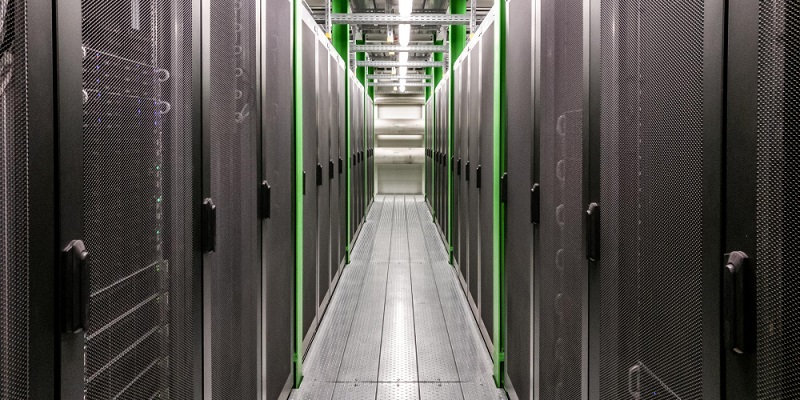
In today’s ever-evolving digital landscape, data centers play a vital role in supporting the vast amount of information and critical applications that power our modern world. Within these data centers, rack enclosures have emerged as strategic assets, revolutionizing the efficiency and productivity of the supported hardware while ensuring system uptime, data center availability, and overall reliability. This article explores the evolution of rack enclosures, the integration of IT racks in modular data centers, the importance of rack monitoring solutions, and Vertiv’s expertise in driving efficiency and security within data centers.
Evolution of Rack Enclosures
The traditional perception of racks as simple storage units has radically transformed. Contemporary rack enclosures are sophisticated pieces of equipment, meticulously engineered to enhance the efficiency of the hardware they support. These enclosures play a pivotal role in boosting the productivity of data center personnel by providing organized, easily accessible, and adaptable structures that optimize space utilization. As power density per rack continues to increase, averaging around 7-8kW today with projections for further growth, rack enclosures are at the forefront of enabling this expansion.
Rack enclosures have evolved from mere support structures to become the fundamental framework of modern IT infrastructure. Their impact on system uptime, data center availability, and overall reliability cannot be underestimated. By providing a stable and secure environment for critical hardware, rack enclosures minimize the risk of downtime and ensure seamless operation. With the ability to house essential components such as servers, switches, and power distribution units, these enclosures serve as the backbone of a well-organized and efficient data center.
The integration of IT racks in modular or prefabricated data centers has brought a new level of efficiency and ease to the industry. These data centers come equipped with all the necessary infrastructure, including IT racks and servers, to function seamlessly right from the beginning. By incorporating rack enclosures into the modular design, data center operators can save time, cost, and effort in the installation and configuration process. This integration ensures that the entire data center infrastructure is harmoniously aligned, providing optimal performance and reducing deployment complexities.
Importance of Rack Monitoring Solutions
As rack enclosures play a critical role in data center operations, monitoring their performance is of utmost importance. Essential factors such as temperature, humidity, leakage, power, and airflow need to be closely monitored to ensure optimal conditions and prevent any potential damage or failures. Vertiv, a leader in critical infrastructure technologies, offers rack monitoring solutions that provide data center and facilities managers with essential information on the health and performance of their rack systems. These solutions empower proactive decision-making, mitigate risks, and ensure the smooth operation of critical infrastructure.
Detection and Prevention of Water Leaks
Among the numerous challenges faced by data centers, water leakage poses a significant threat to sensitive equipment. Vertiv’s rack monitoring solutions incorporate advanced leak detection capabilities. They not only detect water leaks originating from external sources but also spot potential leaks within water-cooled racks. By promptly identifying leaks, these solutions safeguard valuable equipment from potential damage and prevent costly downtime, ensuring uninterrupted data center operations and customer satisfaction.
Proactive Approach to Downtime Prevention
Vertiv understands the importance of taking a proactive approach to prevent downtime and protect customers’ assets. Investing heavily in an ongoing learning process, Vertiv’s monitoring solutions are designed not only to detect but also to predict the causes of downtime. By harnessing the power of predictive analytics, Vertiv empowers data center operators with valuable insights, enabling them to take proactive measures and address potential issues before they escalate. This proactive approach mitigates downtime risks, protects critical applications, and provides enhanced security for data center operations.
Vertiv’s Expertise in Business-Critical Technologies
Vertiv is renowned for its expertise in designing, building, and servicing business-critical technologies that facilitate the seamless functioning of data centers, communication networks, and various commercial and industrial environments. With a long history of innovation and a deep understanding of the evolving needs of the industry, Vertiv is at the forefront of driving efficiency, security, and reliability within data centers. By providing comprehensive solutions for critical applications, Vertiv empowers data center operators to maximize performance, achieve scalability, and address the increasing demands of the digital era.
In conclusion, rack enclosures have become crucial elements in data center operations, revolutionizing efficiency, productivity, and overall reliability. Vertiv’s rack monitoring solutions play a pivotal role in ensuring optimal performance, safeguarding equipment, and mitigating risks. With a proactive approach to downtime prevention and deep expertise in critical infrastructure technologies, Vertiv continues to drive innovation and set industry standards. By utilizing the power of rack enclosures and implementing advanced monitoring solutions, data centers can enhance efficiency, achieve security, and meet the increasingly demanding needs of our rapidly evolving world.