

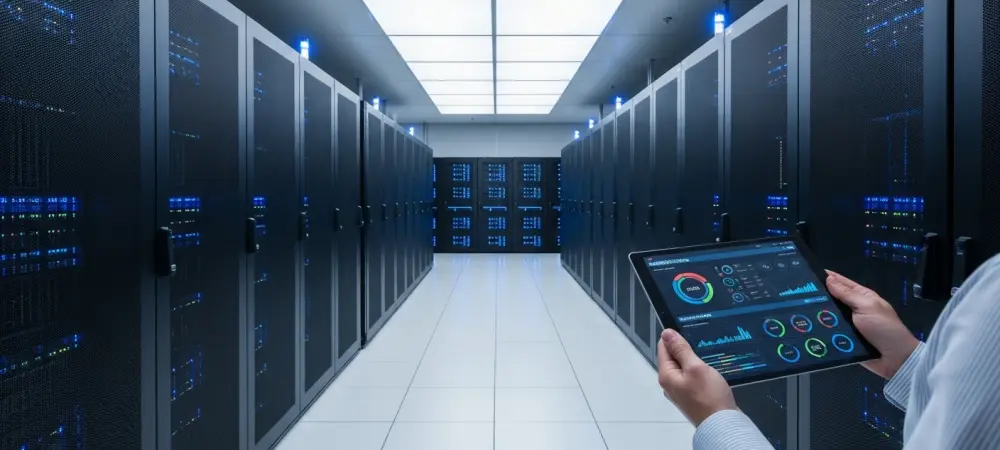
The seamless execution of a global digital economy relies less on the sophisticated code running in the cloud and more on the physical availability of a single specialized semiconductor or a stable megawatt of power. This realization has forced a radical transformation in how organizations perceive the data center supply chain. Historically, infrastructure components were treated as commodities that were easily replaced or upgraded according to standard lifecycle schedules. However, a series of global disruptions and an unprecedented surge in computational demand have elevated supply chain management from a logistical back-office task to a critical strategic priority.
The evolution of this sector is defined by a transition toward predictive resilience. In the past, “just-in-time” delivery models were the gold standard, aimed at minimizing inventory costs. Today, the core principle has shifted toward “just-in-case” architectures. This involves deeper integration between hardware procurement and long-term capacity planning. By understanding the context of raw material availability and geopolitical trade routes, organizations can better navigate the complexities that previously caused years-long delays in facility expansions.
Evolution and Fundamentals of Data Center Supply Chain Management
The fundamental architecture of the data center supply chain involves a complex orchestration of hardware components, specialized facility equipment, and utility services. Initially, the focus was primarily on server density and floor space efficiency. As cloud computing became the backbone of modern enterprise operations, the scope expanded to include the entire lifecycle of hardware—from the sourcing of rare-earth metals for high-performance chips to the decommission and recycling of obsolete units. This shift represents a move toward a more holistic view of infrastructure as a living system rather than a collection of static assets.
The relevance of this technology in the current landscape cannot be overstated, especially as the thirst for high-density computing continues to outpace traditional manufacturing speeds. The integration of advanced analytics into the supply chain allows for real-time monitoring of component lead times and cost fluctuations. This transparency is vital for maintaining the momentum of digital transformation projects. Without a robust and transparent supply chain, even the most innovative software solutions remain tethered to the ground, awaiting the physical hardware necessary to run them.
Core Components of a Resilient Infrastructure
Strategic IT Procurement and SCM Integration
The integration of supply chain management into the broader IT strategy marks a departure from fragmented procurement practices. Modern data center operations require a unified approach where procurement is not just about cost-cutting but about securing future capacity. This involves a deep alignment between the Chief Information Officer and the logistics team to ensure that hardware roadmaps match the organization’s digital growth projections. By treating hardware availability as a variable risk rather than a constant, companies can allocate capital more effectively and avoid the “bottleneck effect” that occurs when software development outpaces physical capacity.
Performance in this area is measured by the ability to pivot between different hardware configurations based on market availability. For instance, if a specific generation of GPUs faces a production lag, a resilient procurement strategy provides pre-validated alternatives that can maintain system performance without requiring a total redesign. This significance extends to the financial health of the enterprise, as proactive procurement shields the organization from the extreme price volatility that has characterized the hardware market over the past several years.
Vendor Ecosystem and Multi-Tier Health Assessment
Maintaining a healthy infrastructure requires an in-depth understanding of the vendor ecosystem beyond the primary contractor. A multi-tier health assessment involves auditing the secondary and tertiary suppliers who provide critical sub-components, such as power supplies or cooling modules. A failure at the third tier can be just as catastrophic as a failure at the primary level. Organizations are now utilizing automated risk assessment tools to monitor the financial stability, security compliance, and delivery performance of every link in their chain.
This technical scrutiny ensures that the vendor ecosystem is not just a list of names but a verified network of reliable partners. Real-world usage of these assessments has revealed that many organizations were unknowingly dependent on single-source suppliers for niche components. By identifying these “weak links,” data center operators can diversify their supplier base, thereby reducing the risk of a “domino effect” where one small failure leads to a total system shutdown. This proactive mapping is essential for maintaining the high availability required by modern service-level agreements.
Current Trends and Technological Shifts
A major shift in the industry is the rapid reshoring and regionalization of manufacturing. To mitigate the risks of long-haul logistics and geopolitical instability, many hardware providers are moving assembly plants closer to the major data center hubs. This geographic shift is accompanied by an increasing reliance on Artificial Intelligence to optimize logistics. AI-driven platforms can now predict potential delays by analyzing weather patterns, port congestion, and labor trends, allowing operators to reroute shipments before a delay occurs.
Furthermore, there is a visible move toward circularity in the hardware lifecycle. Instead of a linear “buy-use-discard” model, industry leaders are implementing systems where components are refurbished or harvested for valuable materials. This trend is driven by both sustainability mandates and the sheer scarcity of certain raw materials. By reclaiming components from retired servers, organizations can create a secondary internal supply chain that provides a safety net during periods of market shortage.
Real-World Applications and Implementation Models
Hybrid Infrastructure and Cloud Failover Systems
The implementation of hybrid infrastructure models serves as a primary defense against supply chain volatility. By balancing on-premises data centers with cloud-based resources, companies can maintain operational continuity even when hardware deliveries are delayed. In this model, the cloud serves as a massive buffer, absorbing workloads that would otherwise require new physical servers. This failover capability ensures that business-critical applications remain online, regardless of the physical constraints affecting the local data center.
Technical implementation of these systems requires sophisticated load-balancing and synchronization tools. These technologies allow for the seamless movement of data and applications between physical and virtual environments. The hybrid model is particularly effective for organizations with fluctuating demand, as it allows them to scale rapidly using cloud resources while waiting for long-term hardware investments to arrive. This flexibility is a direct response to the unpredictability of physical equipment timelines.
On-Site Power Generation and Microgrid Deployment
Energy has become one of the most volatile components of the data center supply chain, leading to the deployment of on-site power generation and microgrids. A microgrid is a localized energy system that can disconnect from the traditional electrical grid and operate autonomously in “island mode.” This provides a level of energy security that was previously unattainable. By incorporating renewable sources like solar or hydrogen fuel cells, data centers can insulate themselves from the rising costs and instability of the national grid.
These implementations are unique because they turn the data center from a passive energy consumer into an active participant in the energy ecosystem. Some facilities even feed excess power back into the public grid, creating a new revenue stream and supporting local community stability. The technical challenge lies in managing the transition between power sources without interrupting the millisecond-sensitive operations of the servers. This shift toward self-sufficiency is a defining characteristic of the modern, resilient data center.
Critical Challenges and Market Obstacles
Despite these advancements, significant hurdles remain, particularly regarding the regulatory landscape and the environmental impact of rapid expansion. Stricter ESG (Environmental, Social, and Governance) reporting requirements mean that every step of the supply chain must be documented for its carbon footprint. Meeting these standards often requires replacing legacy equipment with newer, more efficient models, which in turn places additional pressure on the hardware supply chain.
Moreover, the technical hurdle of integrating disparate systems into a single visible supply chain remains a major obstacle. Many organizations still struggle with “data silos,” where procurement, operations, and facility management teams use different tools that do not communicate effectively. Overcoming this requires a cultural shift toward transparency and the adoption of unified management platforms. Market competition for specialized labor—technicians who understand both traditional logistics and advanced IT infrastructure—also creates a talent gap that can stall implementation.
Future Outlook and Longitudinal Impact
Looking ahead, the integration of blockchain technology for supply chain transparency is expected to become standard practice. This will allow for an immutable record of a component’s journey from the mine to the server rack, ensuring ethical sourcing and authenticity. As these technologies mature, the long-term impact will be a more ethical and efficient global infrastructure. The ability to track every capacitor and processor will significantly reduce the risk of counterfeit hardware entering the mission-critical environment.
The long-term influence of these shifts will extend beyond the tech sector, setting a new standard for industrial resilience. As data centers become more self-sufficient through microgrids and circular manufacturing, they will serve as models for other resource-intensive industries. The shift toward predictive, AI-managed logistics will likely spill over into general manufacturing, ushering in a new era of global supply chain stability that is less vulnerable to localized shocks and more focused on sustainable growth.
Summary of Findings and Strategic Assessment
The review of the data center supply chain revealed that resilience was no longer a luxury but a core operational requirement. The transition from reactive procurement to strategic, integrated management provided a necessary safeguard against global volatility. Successful implementations utilized hybrid infrastructure and on-site energy solutions to decouple digital growth from physical constraints. These strategies proved essential in maintaining service levels during periods of extreme market pressure and hardware scarcity.
Strategic assessments indicated that the most successful organizations were those that treated their vendors as long-term partners rather than simple service providers. This collaborative approach, supported by advanced analytics and AI-driven forecasting, allowed for a level of agility that was previously impossible. Looking back, the organizations that invested in supply chain visibility and energy independence achieved a significant competitive advantage. This evolution transformed the data center into a more robust, sustainable, and reliable foundation for the global economy. Moving forward, the focus must remain on refining these predictive models and further integrating circularity into the hardware lifecycle to ensure long-term stability.