

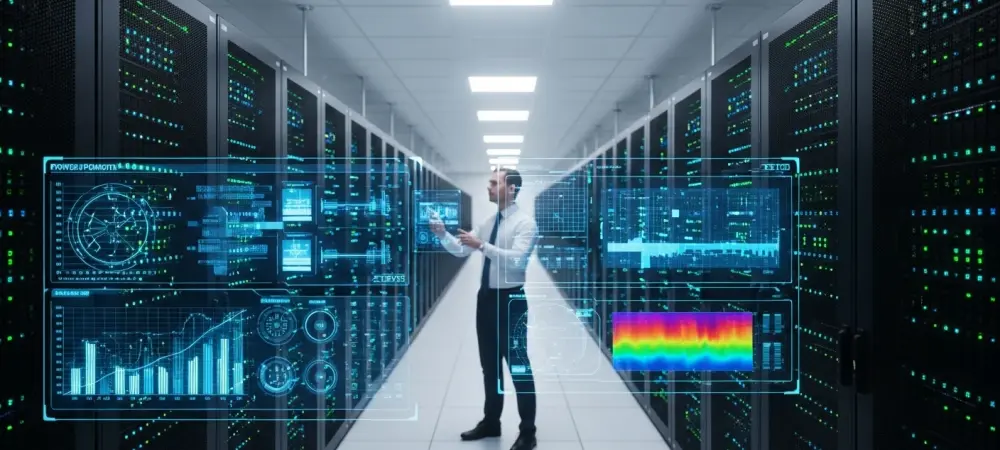
The modern data center has evolved from a simple repository for enterprise data into the foundational heartbeat of national sovereignty and global economic stability. In the current landscape, these facilities are no longer mere “digital warehouses” but are increasingly recognized as the most critical assets within a nation’s infrastructure portfolio. This shift is driven by the explosive growth of high-density artificial intelligence workloads, which require an unprecedented concentration of power, cooling, and specialized hardware. As these facilities grow to gigawatt-scale, the traditional boundaries of security are dissolving, merging cyber defense with physical resilience and geopolitical strategy. The following review examines how this evolution has fundamentally altered the threat landscape and what it means for the future of digital reliability.
The Transformation of Data Centers into Critical Infrastructure
The elevation of data centers to the status of critical national infrastructure represents a paradigm shift in how Western economies view digital assets. In previous years, a localized outage was viewed as a private inconvenience; today, a disruption in a major hyperscale cluster can paralyze government services, halt financial markets, and interrupt the basic functions of daily life. This transition is not just a matter of scale but of integration, as the logic and data housed within these walls now dictate the operations of physical systems like energy grids and transportation networks.
This new reality has forced a complete overhaul of the core principles governing facility design. Security is no longer an “add-on” feature but is baked into the very architecture of the building and its surrounding environment. The context of this evolution is rooted in the “AI arms race,” where the ability to process massive datasets securely has become a primary metric of national power. Consequently, the technology under review is not a single product but a complex ecosystem of hardened hardware, automated monitoring, and strategic geographic placement designed to withstand both digital and kinetic threats.
Technical Components of Modern Security Frameworks
Geopolitical Resilience and Physical Hardening
In an era where digital infrastructure has become a valid target in regional conflicts, physical hardening has moved far beyond high fences and biometric scanners. Modern facilities are now designed with “geopolitical resilience” in mind, treating the data center as a fortress that must survive disruptions to its external dependencies. This includes the implementation of redundant, off-grid power generation and hardened utility corridors that are shielded from physical tampering or environmental catastrophes. The performance of these systems is measured by their ability to maintain “island mode” operations, where a facility can function entirely independently of the local municipal infrastructure for extended periods.
Furthermore, the significance of this hardening lies in the protection of the “target dependencies” surrounding the site. Rather than attacking the server room directly, adversaries now target the shared substations and fiber optic lines that feed the campus. By decentralizing these intake points and utilizing armored, subterranean routing, operators are mitigating the risk of a single point of failure. This shift in physical strategy acknowledges that the most vulnerable part of a data center is often what lies just outside its perimeter, making the securing of the “last mile” of utility access a top priority for national security.
Advanced Cyber-Physical Integration and AI Safeguards
The integration of artificial intelligence into the security stack has created a new layer of “cyber-physical” defense. These systems use machine learning to monitor the heartbeat of the facility—tracking everything from the fluctuations in power draw to the acoustic signatures of cooling fans. If an anomaly is detected, such as a sudden drop in power demand that could signify a coordinated cyberattack or a hardware failure, the system can automatically redistribute workloads across a global network before a “stop-the-world” event occurs. This level of automation is essential for managing the high-density environments required by modern GPUs, where even a micro-fluctuation in temperature can lead to catastrophic hardware degradation.
However, this integration introduces a unique “self-preservation paradox.” As these facilities become more automated, their internal safety mechanisms—such as rapid load shedding to protect sensitive hardware—can inadvertently destabilize the regional electrical grid. This creates a feedback loop where the data center’s attempt to save itself could potentially cause a wider blackout. Therefore, the most advanced security frameworks now include real-time coordination with utility providers, ensuring that the facility’s digital defenses do not become a physical liability for the surrounding community.
Emerging Trends in Digital Infrastructure Protection
One of the most notable shifts in the industry is the move toward “east-west” security visibility within the data center. Traditionally, security focused on “north-south” traffic—the data entering and leaving the building. In the current environment, where AI training involves thousands of chips communicating simultaneously, the vast majority of traffic stays within the facility’s internal network. Emerging innovations now allow operators to monitor this internal fabric with granular precision, identifying lateral movement by intruders who may have breached the perimeter but are attempting to remain undetected while harvesting sensitive model weights.
Moreover, there is a growing trend toward “sovereign cloud” architectures, where data centers are built to comply with the specific legal and security requirements of a single nation-state. This shift is a direct response to the fragmentation of the global internet and the rising demand for data residency. By isolating infrastructure at the national level, operators can provide a higher level of assurance that sensitive data will not be subject to foreign subpoenas or cross-border cyber espionage, effectively creating a “digital border” that mirrors physical geopolitical boundaries.
Real-World Applications and Strategic Deployment
The strategic deployment of these hardened data centers is most visible in the “Silicon Alleys” of Northern Virginia and the burgeoning tech hubs of the Middle East. In these regions, hyperscale campuses serve as the nerve centers for multinational corporations and defense agencies alike. A unique use case can be found in the deployment of specialized AI clusters for healthcare, where the security framework must protect not only the physical hardware but also the integrity of medical datasets. Any breach or “data poisoning” in these environments could lead to inaccurate diagnostic models, illustrating that the stakes of infrastructure security are now measured in human lives.
In the public sector, governments are increasingly utilizing these secure environments to host critical “digital twins” of national infrastructure. By simulating the performance of power grids or water systems within a protected data center environment, officials can test resilience against cyberattacks or natural disasters without risking the actual assets. This deployment highlights the data center’s role as a “proving ground” for national security, where the facility itself must be as secure as the vital systems it is designed to protect.
Challenges and Systemic Vulnerabilities
Despite these advancements, the industry faces a significant “supply cliff” that creates a form of passive vulnerability. The concentration of the supply chain for critical components—such as specialized cooling fluids, high-end semiconductors, and power transformers—means that a disruption in one part of the world can halt construction and maintenance globally. This creates a window of opportunity for “passive sabotage,” where minor defects or delays in the supply chain can undermine the long-term reliability of a facility without ever triggering a traditional security alarm.
Furthermore, the regulatory landscape remains fragmented, with a clear disconnect between private operators and public oversight bodies. While a data center may be critical to national security, it is often owned and operated by a private entity whose primary loyalty is to its shareholders. This creates a tension between the need for transparency in the event of a breach and the desire to protect a company’s reputation. Ongoing development efforts are focused on creating unified defense frameworks that allow for real-time information sharing between the public and private sectors, though legislative hurdles continue to slow the adoption of these collaborative models.
Future Outlook: The Path toward Integrated Defense
The trajectory of the industry points toward a future where the data center is no longer a standalone building but a node in a “distributed fortress.” Breakthroughs in edge computing and decentralized storage will likely reduce the reliance on massive, centralized campuses, spreading the risk across a wider geographic area. However, this will require a new level of synchronization, where thousands of smaller sites are secured with the same rigor currently reserved for gigawatt-scale hyperscale facilities. The long-term impact will be a more resilient digital society, but one that requires constant vigilance against an ever-evolving array of threats.
As we look further ahead, the focus will likely shift from protecting the data itself to protecting the “intelligence” generated by that data. The theft of AI model weights—the “crown jewels” of the digital age—will become the primary objective of state-sponsored actors. To counter this, we can expect the development of “confidential computing” at scale, where data is encrypted not just at rest or in transit, but even while it is being processed by the CPU. This would represent the ultimate evolution of data center security: a system where even the operators of the facility cannot access the sensitive logic being executed within their own servers.
Conclusion and Strategic Assessment
The assessment of modern data center security revealed a sector that has successfully transitioned into a pillar of national defense, yet remains haunted by systemic interdependencies. The investigation showed that while physical hardening and AI-driven monitoring have reached unprecedented levels of sophistication, the reliance on a fragile global supply chain and the “self-preservation paradox” of the power grid present ongoing risks. It was clear that the industry has moved past the era of simple perimeter defense, embracing a holistic model that treats digital and physical threats as two sides of the same coin. Future efforts should prioritize the synchronization of private security protocols with national grid management to prevent cascading infrastructure failures during high-stress events. Stakeholders ought to invest in supply chain diversification and “sovereign” manufacturing of critical components to mitigate the risk of passive sabotage from foreign adversaries. Ultimately, the stability of the global economy will depend on the ability to treat data centers not just as assets to be guarded, but as dynamic participants in a unified national defense strategy. The verdict on the current state of the technology was that it is robust but requires a more cohesive regulatory framework to bridge the gap between private innovation and public safety.