

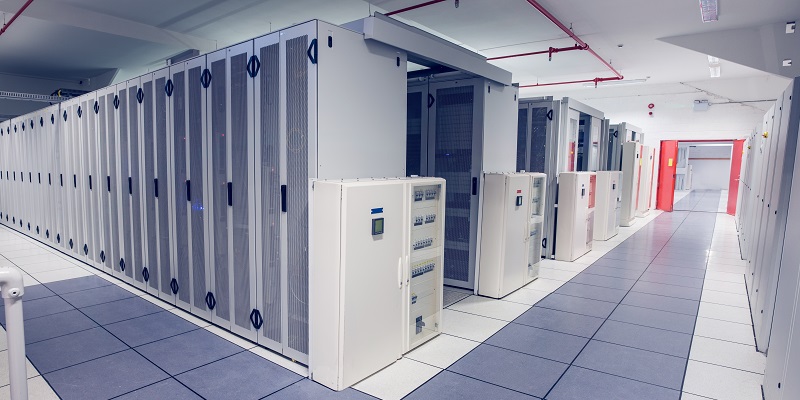
As data demands continue to surge across industries, leading data center provider CyrusOne is gearing up to build its next facility in Frankfurt. Named FRA6, this state-of-the-art data center will be situated on the recently acquired Europark site in Sossenheim. With an unwavering commitment to Frankfurt as the digital heart of Europe, CyrusOne’s expansion in the area aims to meet the growing needs for scalable and reliable data center solutions.
FRA6 will boast impressive capabilities, offering a massive total IT capacity of 72 MW. The facility will be spread over four floors, with each level delivering a robust 18 MW. This unparalleled capacity will help satisfy the increasing demand for data storage, cloud computing, and digital services. To support this ambitious project, CyrusOne has secured over 27,500 square meters (6.8 acres) of land at the Europark site, providing ample space for the construction and operation of this cutting-edge data center.
Frankfurt, with its central location and exceptional connectivity, has emerged as a critical hub for data centers. Recognizing this, CyrusOne is fortifying its presence in the European market by investing in the region. By strategically selecting Frankfurt as the location for FRA6, the company aims to leverage the city’s robust digital infrastructure, reaffirming its commitment to serve its customers and meet their evolving data storage needs.
When news spread about CyrusOne’s plans for FRA6, hyperscale customers and large enterprises immediately showed keen interest. Initial discussions have hinted at the overwhelming demand and enthusiasm for this upcoming facility. CyrusOne’s reputation as a market specialist, their ability to deliver tailor-made and scalable solutions that drive business success, and their expansion goals have further solidified interest from potential customers.
With FRA6, CyrusOne aims to build upon its already impressive European portfolio, which currently includes over 270 MW of IT capacity spread across several major European cities. By expanding its reach in Frankfurt, the company ensures that it remains at the forefront of the rapidly expanding data center market, enabling it to effectively address the increasing data storage requirements of businesses across multiple industries.
Frankfurt’s appeal as a digital hotspot stems from its strategic location and impeccable connectivity. Situated in the heart of Europe, Frankfurt allows for seamless access to major European markets, making it an ideal choice for business operations that need to serve international customers. Additionally, Frankfurt’s strong links to key network routes and its well-established digital infrastructure make it an attractive location for data center facilities.
The demand for data center space in Frankfurt has been driven by various factors, including the surge in cloud computing, the proliferation of digital services, and the need for secure and reliable data storage solutions. As businesses continue to transition towards digital transformation, the need for scalable and secure data centers has become paramount. Frankfurt’s strategic advantages perfectly position it to meet these growing demands.
The construction of FRA6 not only demonstrates CyrusOne’s commitment to meeting the evolving needs of its customers, but also highlights the company’s focus on expanding its presence in the European market. Being able to offer cutting-edge data solutions in Frankfurt will undoubtedly strengthen CyrusOne’s position as a leading provider of reliable, scalable, and efficient data center services in Europe.
In conclusion, CyrusOne’s plans for the development of FRA6 in Frankfurt showcase their dedication to providing innovative and robust data center solutions. With its impressive IT capacity, strategic location, and early interest from potential customers, FRA6 is poised to make a significant impact in the European market. As demand for data storage continues to rise, CyrusOne’s expansion in Frankfurt positions them as a formidable player in the industry, ready to transform the way businesses manage and store their valuable digital assets.