

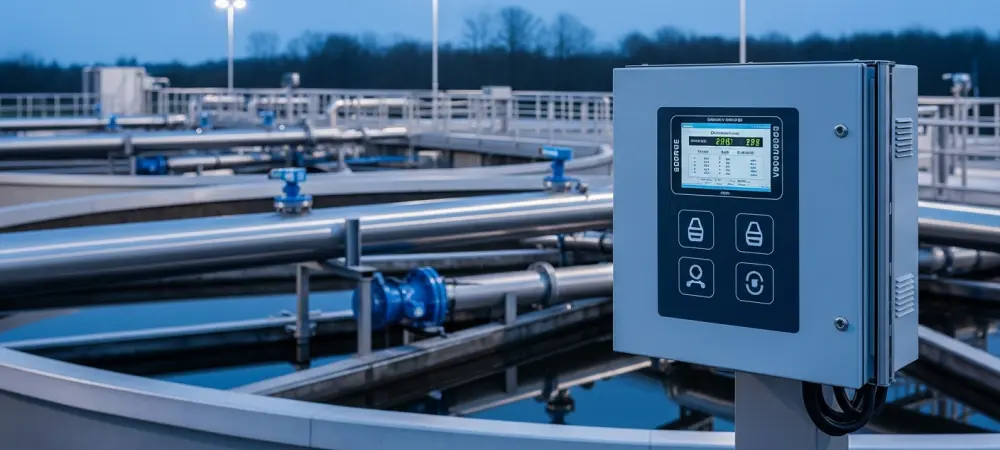
The sudden realization that a small town of two thousand residents could lose its entire clean water supply to a remote hacker highlights a profound crisis in the modern digital landscape. In late July 2026, this theoretical risk transitioned into a national emergency as unauthorized actors successfully infiltrated municipal water systems across twelve U.S. states. The most jarring reality of these breaches was not the mechanical complexity of the intrusion but the utter simplicity of the access. Thousands of critical controllers were found to be connected directly to the public internet, completely defenseless and waiting for a malicious command to disrupt local life.
These incidents proved that the digital locks on physical infrastructure are often nonexistent. While urban centers often possess the capital to secure their networks, smaller municipalities are struggling to keep up with the rapid pace of technological change. The breach in Minnesota, where over thirty systems were targeted simultaneously, served as a stark reminder that geography provides no protection in a hyper-connected world. Public safety now relies on the integrity of software just as much as the strength of concrete and steel.
The Exposed Digital Open Doors of the Physical World
Industrial infrastructure is currently undergoing a rapid digital transformation often referred to as the industrial internet of things. This evolution connects physical hardware to global networks to facilitate remote monitoring and operational efficiency. While such connectivity offers significant convenience for understaffed utilities, it simultaneously creates a massive attack surface for adversaries looking to disrupt essential services. When these physical systems are bridged to the web without adequate security, the results are predictably catastrophic. Water systems are particularly vulnerable because they sit at the intersection of aging legacy hardware and a lack of dedicated cybersecurity resources. Many facilities operate on tight budgets that prioritize immediate repairs over digital defense, making them the weakest link in the national security chain. Consequently, an adversary does not need to be a state-sponsored mastermind to cause chaos. A basic understanding of network scanning is often enough to find a pathway into the heart of a small-town utility.
Why Water Infrastructure Has Become a Primary Cyber Target
The attractiveness of water utilities as a target stems from their critical role in daily survival and the relative ease with which they can be compromised. Unlike financial institutions that have spent decades hardening their digital perimeters, water districts often lack the technical personnel required to monitor for suspicious activity. This makes them a “soft target” for those seeking to create maximum social leverage or psychological impact with minimal effort.
Furthermore, the decentralized nature of water management complicates a unified national defense. With thousands of independent operators running diverse sets of equipment, implementing a standardized security protocol is an uphill battle. Adversaries recognize this fragmentation and exploit the fact that a vulnerability in one small district might be mirrored in hundreds of others. This systemic fragility has turned basic utility management into a high-stakes front for digital warfare.
A Technical Autopsy: The 2026 Water Utility Breaches
The July attacks focused on specific hardware models, specifically the Rockwell Automation Allen-Bradley MicroLogix controllers used for managing water flow and treatment. Investigations revealed that these devices were exposed on port 44818 using the EtherNet/IP protocol. This specific protocol is notorious for lacking native authentication, meaning that any entity able to reach the device over the network can potentially issue commands. This design flaw was never intended for public internet exposure, yet that is exactly where these controllers were found. Network scanners identified nearly three thousand of these devices in the United States that were accessible via mobile carrier networks without the protection of firewalls. This configuration allowed unauthorized actors to modify IP addresses and change administrative credentials, effectively locking out the legitimate operators. In several cases, utility staff watched helplessly as their screens showed unauthorized changes being made to chemical dosing levels and pump speeds.
The Systemic Failures: The Industrial Automation Ecosystem
The persistence of these vulnerabilities highlights a significant responsibility gap between hardware manufacturers, third-party integrators, and utility owners. Manufacturers like Rockwell issued warnings about these risks as early as 2018, yet those warnings often failed to reach the technicians on the ground. Many systems were installed by contractors who prioritized initial functionality and cost-effectiveness over long-term security maintenance, leaving the equipment exposed from day one.
This creates a dangerous brownfield environment where legacy equipment remains in service for decades without receiving necessary security patches. As the industry moves toward Edge AI and robotics, the risk of a missing chain of accountability becomes even more acute. These powerful new systems are often sold through the same flawed integrator channels that installed the vulnerable controllers of the past. Without a change in how systems are deployed, new technology will simply provide new ways for hackers to gain control.
Concrete Solutions: Hardening Industrial Control Systems
Securing the water supply required a departure from the “set it and forget it” mentality that defined industrial installations for years. Experts determined that utility operators had to move all legacy hardware behind robust firewalls immediately. The transition away from public mobile networks toward private access points became a mandatory step in preventing remote manipulation. These measures provided a necessary buffer between the sensitive control logic of a water plant and the chaotic environment of the open web.
On a broader scale, the industry recognized the need to shift toward secure-by-design platforms where identity, networking, and updates were managed by centralized technology providers. By shifting the burden of security from small-town operators to standardized, professionally managed operating systems, the nation began to close the gaps that hackers previously exploited. This evolution ensured that critical infrastructure remained resilient against the evolving landscape of digital warfare, turning the lessons of the 2026 breaches into a foundation for a more secure future.