

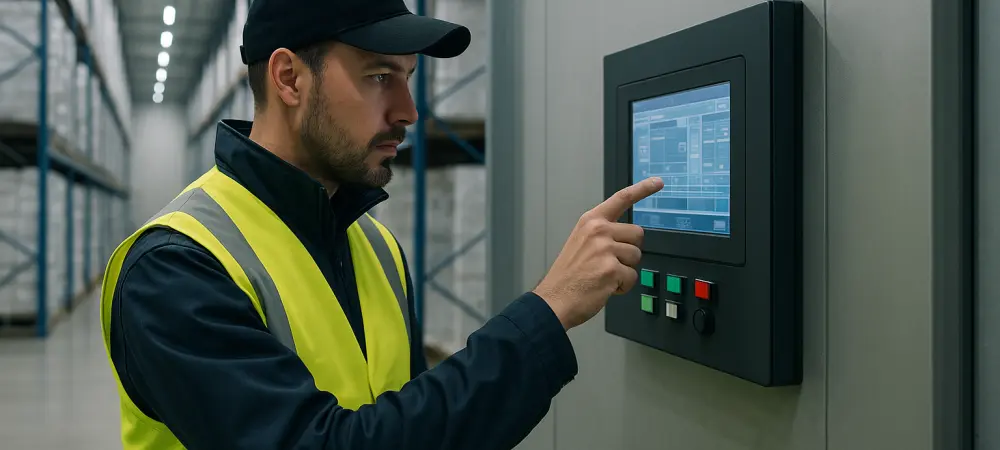
The convenience of remote monitoring for food infrastructure acts as a double-edged sword, allowing maintenance access for technicians but also providing entry points for remote sabotage. In a startling demonstration of this reality, a recent cyber incident involving a major French supermarket chain revealed how fragile the modern agricultural supply line has become. Hackers gained unauthorized control over refrigeration software at approximately 150 retail locations, specifically targeting systems manufactured by industry leaders like Danfoss. By remotely altering temperature settings, the attackers forced industrial freezers to climb to 50°C, rendering massive quantities of perishable inventory useless and even sparking localized equipment fires. This event was not merely a technical glitch but a calculated exploitation of outdated digital architecture. It proved that the transition from traditional logistics to a “smart” ecosystem has introduced risks that can bypass physical security entirely, threatening national food supplies.
Recent Retail Disruptions: The Economic Impact
The United Kingdom has recently served as a critical case study for the devastating economic ripple effects that follow a targeted digital strike on the retail sector. In late 2024, a sophisticated ransomware attack crippled the operations of Blue Yonder, a primary software provider used by major grocery chains for sophisticated inventory forecasting. When the systems at Morrisons failed, the supermarket was suddenly unable to track stock levels or predict consumer demand for fresh goods. This forced store associates to revert to archaic, manual stock-counting methods that proved wholly inadequate for the speed and volume of modern consumerism. The resulting gaps on shelves were not caused by a lack of food in the country, but by the failure of the digital “nervous system” that tells the supply chain where products need to go. This incident underscored that efficiency gains from automation are lost the moment the underlying software platform is compromised by external threats.
Economic volatility for food retailers is now intrinsically linked to the reliability of their digital infrastructure, as shown by concurrent system failures at high-end supermarkets. During 2025, disruptions at Marks & Spencer demonstrated that even if physical stores remain operational, the loss of automated stock allocation leads to catastrophic levels of markdowns and inventory waste. For a sector that operates on razor-thin profit margins, the inability to move fresh produce before its expiration date creates a financial hole that is difficult to fill. These risks are amplified in geographically isolated regions, such as the Scottish Isle of Skye, where residents depend on a single supply link. In these communities, a corporate IT failure is not just a financial nuisance but a direct threat to the local population’s access to nutrition. The digital disruption effectively turns a logistics error into a localized humanitarian crisis, highlighting the lack of robust safety nets in a lean retail market.
Upstream Vulnerabilities: Logistics and Processing
Vulnerabilities within the food supply chain often originate far upstream from the supermarket shelf, specifically within the massive refrigerated warehousing hubs that serve as regional distribution anchors. A single point of failure in the digital management system of a global logistics giant like Americold can effectively paralyze the operations of multiple international food and beverage brands simultaneously. When warehouse management software is taken offline by a cyber intrusion, perishable products are frequently rendered unreachable, even if they are physically present and properly chilled. Without the digital tracking data required to verify the contents, origin, and expiration of each pallet, the food becomes “digitally lost” and cannot be legally or safely moved into the retail stream. This creates a massive bottleneck that stalls the flow of essential goods across entire continents, proving that the physical security of food is entirely dependent on the integrity of the data that tracks its movement.
Industrial meat processors have also emerged as high-value targets for digital extortion groups due to their central role in the global protein supply and the time-sensitive nature of their output. Ransomware organizations have recognized that the pressure to restore operations is exponentially higher when dealing with live animals or raw meat that must be processed within tight windows to avoid spoilage and regulatory violations. Past incidents involving global leaders like JBS have forced corporations to pay multi-million dollar ransoms to prevent a total collapse of their production lines and distribution networks. These events demonstrate that a retailer’s overall security posture is only as robust as the weakest link within its extensive network of third-party vendors and raw material processors. As the industry continues to consolidate, the potential impact of a single successful cyberattack on a primary processor grows, making the entire global food system more susceptible to sophisticated financial blackmail.
The Perishability Paradox: National Security Implications
A fundamental challenge unique to the food sector is the “perishability paradox,” which creates a distinct disadvantage for cybersecurity teams compared to their counterparts in finance or technology. In a standard data breach, affected digital assets can be frozen, backed up, or recovered over several days without the physical assets losing their inherent value. However, in the agricultural sector, biological products like berries, leafy greens, and fresh meats continue to ripen, wilt, or decay regardless of whether the IT department has successfully restored a compromised server. This biological ticking clock creates an immense amount of time pressure that directly favors the cybercriminal, who can demand higher ransoms by leveraging the imminent threat of total inventory loss. National security experts have begun to classify ransomware as the most significant threat to food stability, noting that integrated systems designed for maximum logistical efficiency were never built to withstand dedicated adversarial actions.
Despite the escalating frequency of digital attacks on essential infrastructure, institutional preparation across the globe remains dangerously inadequate for a large-scale systemic failure. Official oversight bodies have pointed out that the collective ability of governments to withstand a truly catastrophic disruption to the food supply has never been properly tested through rigorous simulation. There is currently a concerning “information gap” regarding the prevalence of vulnerable legacy technologies that remain in use across the industry, often hidden within the automated systems of smaller suppliers. Without comprehensive data on these digital weak points, policymakers and defense agencies struggle to formulate effective strategies that could protect the public from a coordinated strike. The reliance on private sector security measures, which are often prioritized based on cost rather than national resilience, has left a gaping hole in the defense of the world’s most critical resource: the food supply.
Digital Resilience: Redefining Global Food Security
The cumulative evidence from recent years suggests that the definition of food security must undergo a radical transformation to remain relevant in the digital age. It can no longer be viewed strictly through the lens of traditional factors like weather patterns, soil health, or international trade agreements, as digital resilience has become a core pillar of national stability. The industry’s global shift toward a “just-in-time” delivery model means that even a temporary 24-hour digital delay can trigger a cascade of empty shelves and cause millions of dollars in irreparable waste. Furthermore, many agricultural businesses continue to operate on antiquated legacy software that was never intended to be connected to the public internet, making it impossible to patch against modern exploits. This creates a persistent state of vulnerability where the pursuit of lean operational efficiency has inadvertently removed the redundancies that once protected the supply chain from catastrophic failure.
The necessary transition toward a truly secure food infrastructure demanded a fundamental shift in how industry leaders viewed the relationship between technology and survival. Achieving a defensible supply chain required the implementation of regular, mandatory software audits and the adoption of government-led resilience testing that mimicked actual cyber warfare scenarios. Forward-thinking organizations began to reintroduce decentralized backup systems that allowed for manual operation during digital blackouts, ensuring that essential goods could still reach consumers. As the management of global food resources moved entirely into the realm of code and automated logic, the integrity of those digital scripts became as vital to human longevity as the fertility of the soil itself. Experts successfully argued that the “smart” systems used to monitor temperatures or manage livestock deserved the same level of security scrutiny as the vaults within a central bank, eventually forging a more resilient path.