

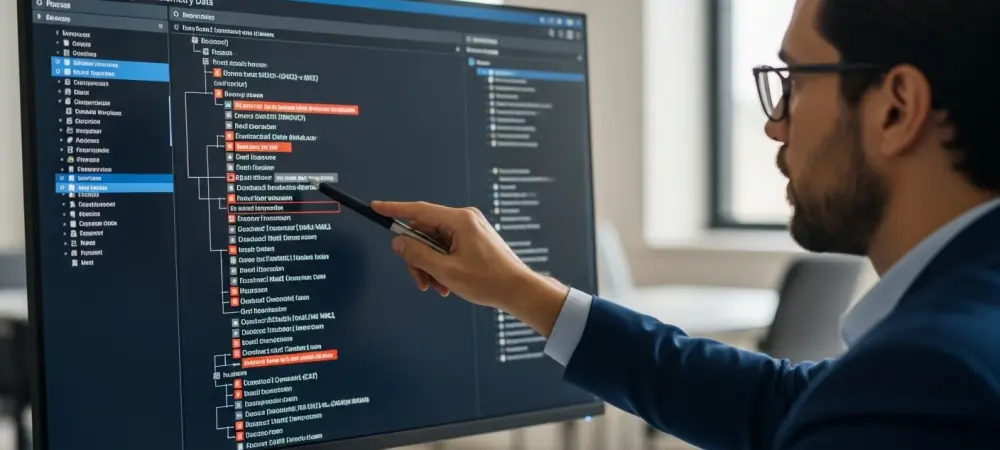
The common narrative surrounding cybercrime often portrays threat actors as ghost-like figures, executing flawless, automated campaigns that bypass defenses with surgical precision, but a detailed examination of the digital residue left behind on compromised systems paints a dramatically different and far more human picture. Comprehensive analysis of Windows Event Logs and endpoint telemetry from recent security incidents reveals that the reality of a cyberattack is not a clean, methodical operation but a messy, iterative process fraught with errors, frustration, and real-time adaptation. The forensic data shows attackers fumbling with security controls, misconfiguring their tools, and being forced to change their tactics on the fly when their initial plans are thwarted. This granular view into their struggles provides a powerful counter-narrative, demonstrating that even determined adversaries are prone to mistakes, and it is within these moments of failure that a critical opportunity for defense emerges, challenging the industry to look beyond successful breaches and focus on the tell-tale signs of an attacker’s struggle.
The Anatomy of a Flawed Campaign
Initial Infiltration and Immediate Setbacks
A series of interconnected cyberattacks investigated by security researchers between November and December of the last year provides a compelling case study in adversarial fallibility. The campaign targeted a diverse set of organizations, including a residential development firm, a manufacturing company, and an enterprise shared services provider, yet the initial point of entry was remarkably consistent. In each case, the attackers exploited known vulnerabilities within public-facing web applications running on Microsoft Internet Information Server (IIS), which allowed them to achieve remote command execution and gain an initial foothold. Their primary objective was to deploy a versatile, Golang-based Trojan identified as agent.exe, often supplemented with other tools like SparkRAT to establish long-term persistence. However, the first incident in this campaign immediately demonstrated a significant gap between the attackers’ intentions and their capabilities. After gaining access, their attempt to download the malicious payload using certutil.exe, a legitimate Windows utility frequently co-opted in “Living Off The Land” (LOTL) attacks, was instantly detected and blocked by the endpoint’s native Windows Defender. This immediate setback highlighted that even standard, well-documented attack techniques are no longer a guaranteed path to success against modern, behavior-based security monitoring.
The digital footprints left on the compromised system during that first incident chronicled a persistent but clumsy effort to overcome the initial defensive roadblock. Instead of a single, decisive action, the logs revealed a sequence of repeated and failing attempts to execute the payload, painting a clear picture of a human operator struggling against an automated defense system. This phase of the attack was far from stealthy; it was a noisy process of trial and error that generated numerous security alerts. Further analysis of the forensic evidence, including process trees, showed highly anomalous activity, such as the web server process w3wp.exe spawning a command prompt to execute tools like whoami.exe. This type of activity is a classic indicator of compromise, as a web server should not be initiating system-level commands to identify the current user context. The attackers also ran a series of standard enumeration commands, including netstat and various user account checks, which indicated they had little to no prior intelligence about the internal network environment. This need to perform basic reconnaissance post-exploitation further dismantled the myth of the all-knowing adversary, revealing an attacker who was exploring the network and discovering its layout in real time, just as a defender might.
Learning from Mistakes in Real Time
The crucial insight from this campaign emerged when observing the attackers’ methodology in the subsequent breaches. Having been stymied by Windows Defender in their initial attempt, the threat actors demonstrated a clear learning process, fundamentally altering their tactics for the attacks on the manufacturing company and the shared services organization. Instead of trying to sneak their malware past active defenses, they shifted to a more aggressive strategy of preemptively disabling the security controls altogether. In these later incidents, one of the first commands issued post-exploitation was a specific PowerShell instruction: powershell -command Add-MpPreference -ExclusionPath C: -ExclusionExtension .exe,.bin,.dll -Force. This command instructs Windows Defender to ignore all files with common executable extensions across the entire C: drive, effectively blinding the primary antivirus solution on the machine. This adaptation was not an act of high-level sophistication but a direct, reactive measure born from the frustration of their previous failure. It proved that the attackers were not operating from a rigid, unchangeable playbook but were instead engaged in a dynamic, iterative process, modifying their behavior based on the specific obstacles they encountered on each target system.
Despite this successful adaptation in bypassing antivirus detection, the attackers’ campaigns were far from seamless, as they continued to encounter significant difficulties in other critical phases of the attack lifecycle. Forensic data from all three incidents showed a consistent pattern of failure when they attempted to establish persistence by creating a new Windows service for their malware. Logs indicated repeated errors related to misconfigurations and system limitations, forcing the attackers to abandon this method. This recurring struggle highlights their technical limitations and underscores that their operations were not perfectly planned or rehearsed. In response to these failures, they were observed returning to the compromised endpoints with different tools and methods, such as deploying SparkRAT as an alternative means of maintaining access. This pattern of improvisation and tool-swapping paints a portrait of an adversary who is both persistent and demonstrably flawed, working through a checklist of techniques and troubleshooting on the fly rather than executing a master plan. Their clumsy, determined efforts left a rich trail of forensic evidence for investigators to follow.
Implications for Modern Cyber Defense
The Strategic Value of Detecting Errors
The detailed documentation of these attacker failures provides more than just a fascinating glimpse into the messy reality of cybercrime; it offers a strategic roadmap for enhancing defensive postures. For security teams, the key takeaway is that an attacker’s mistakes are a powerful and often overlooked source of threat intelligence. Instead of focusing exclusively on detecting the final, successful execution of a malicious payload, organizations can gain a significant advantage by tuning their monitoring systems to detect the process of an attack, including the errors and failed attempts that precede a successful compromise. A blocked certutil.exe download, a series of failed commands to create a Windows service, or repeated, unsuccessful attempts to run a payload are not just isolated log entries; they are early warning indicators of an active, human-driven intrusion. This approach necessitates a shift in security mindset, moving from a signature-based model that looks for known-bad artifacts to a behavioral analysis model that identifies anomalous patterns of trial and error. By hunting for the struggle, defenders can open a critical window for intervention, enabling them to disrupt an attack before the adversary can adapt and overcome their initial failures.
Rethinking the Adversarial Narrative
The comprehensive analysis of these real-world intrusions ultimately served to demystify the prevailing image of the infallible cyber adversary. It replaced the cinematic notion of a flawless hacker with a more realistic and actionable portrait of a determined human operator who made predictable errors and adapted under pressure. This refined understanding prompted a necessary re-evaluation of cyber defense strategies, advocating for a move beyond a purely preventative posture. The incidents demonstrated that a security architecture that embraced the detection of attacker fumbles as a primary signal was inherently more resilient. Organizations that adjusted their monitoring and threat-hunting practices to specifically look for these signs of struggle—anomalous process chains, repeated command failures, and clumsy reconnaissance—found themselves better positioned to interrupt attack chains in their most vulnerable, formative stages. The forensic evidence unequivocally underscored that the most robust defense was one that planned not just for an attacker’s potential success, but for their inevitable and observable failures as well.